Eight Things Nobody Tells You Before You Start a Faceless YouTube Channel
Spend an evening on YouTube and the same set of thumbnails will find you. Someone quit their job after six months. Someone built a faceless channel that “runs itself”. Someone points at a revenue graph and tells you AI did the rest.
None of that is illegal to say, and some of it is even true for the person saying it. What is missing is everything that happened around it.
I have been making videos since 2017 – nine years – mostly faceless channels built for viewers in the US, the UK, Germany and Japan. In that time I have started channels that went nowhere, kept ones that took a year to move, and coached other people through the same stretch. What follows is the list I wish somebody had handed me on day one. It is not discouraging. It is just the version with the boring parts left in.
1. Not every view is worth the same amount
This is the first thing that surprises people, and it is worth understanding before you pick a topic rather than after.
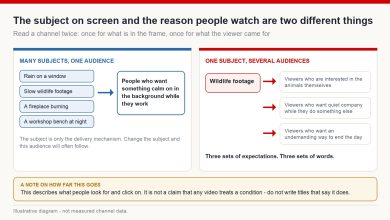
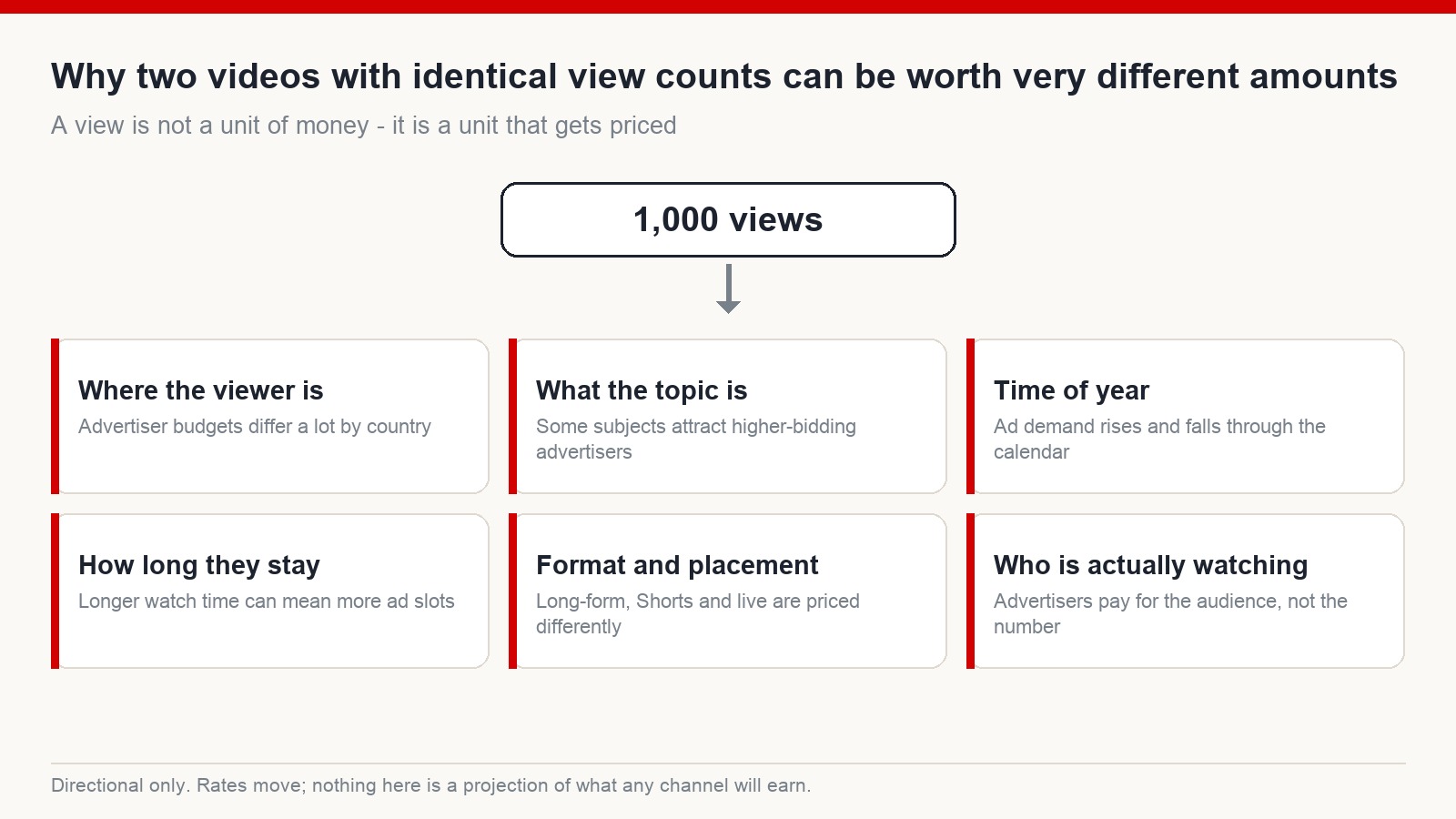
A view is not a unit of money. It is a unit that gets priced, and the price depends on things that have very little to do with how hard you worked on the video:
- Where the viewer actually lives, because advertiser budgets are wildly uneven between markets
- What the subject is, because some topics attract advertisers with much deeper pockets than others
- When it happens, because ad demand rises and falls through the year
- How long people stay, because watch time affects how many ad slots a video can carry
- Whether the audience is one an advertiser wants to reach at all
Two videos can finish the month with the same view count and be worth completely different amounts. That is not a glitch; it is how the auction works.
The practical takeaway is not “chase the highest-paying country”. It is that the audience you are building for is a decision, and you make it before you script anything. Most beginners never make it consciously at all.
2. Long videos and Shorts are two different businesses
There was a period when I assumed shorter always meant better, because shorter travels further. That is half right, and the half it gets wrong is expensive.
Short-form is a discovery engine. It is very good at putting a channel in front of people who have never heard of it, and very bad at holding them there. Long-form is where watch time accumulates, where a viewer decides you are worth subscribing to, and where a video can keep working months after you published it.
Documentary, storytelling, meditation, explainers, history – these formats support genuinely long runtimes, and some of the strongest faceless channels are essentially libraries of them. If you want a channel that keeps producing when you stop uploading for a month, that library is the thing that does it.
The honest version: Shorts get you noticed, long-form gets you paid, and treating one as a replacement for the other is how people end up with a large subscriber count and a dead channel.
3. You do not have to speak the language natively
This one stops more people than any technical problem I have seen. Someone decides their English is not good enough and never starts.
It is worth separating two different jobs. Producing a video in a language you do not speak fluently is now a solved workflow: you write in the language you think in, translate carefully, generate a narration track, cut against a subtitle file, and answer comments with help. That part is tooling.
Deciding what deserves twelve minutes of a stranger’s attention is not tooling. It is judgement, and it does not translate. A video nobody wanted to watch does not become watchable because the pronunciation is perfect.
So the language barrier is real, but it sits somewhere different from where people put it. Two cautions, though: proper nouns and numbers are where synthetic narration embarrasses you, and platform rules on disclosing synthetic voice and altered media keep changing. Read the current guidance rather than a tutorial from two years ago.
4. AI speeds up production, and that is all it does
The most common misunderstanding right now is that AI removes the hard part. It removes the slow part, which is not the same thing.
AI will help you research faster, draft faster, narrate faster and produce more in a week than you used to produce in a month. What it will not do is decide which idea is worth making, structure a story so people stay past the first minute, or supply the specific detail that makes a viewer feel like a person made this.
The market has already noticed. There is a great deal of machine-generated video on the platform now, most of it competent and forgettable, and the effect is that the bar for the human part has gone up rather than down. A video that holds someone for twenty minutes is worth more than fifty videos nobody finishes – and it always was.
5. It is mostly a survival game
This is the part nobody enjoys hearing.
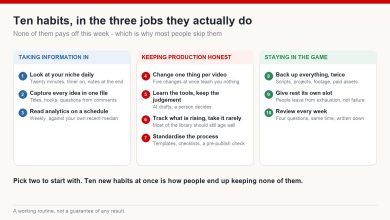
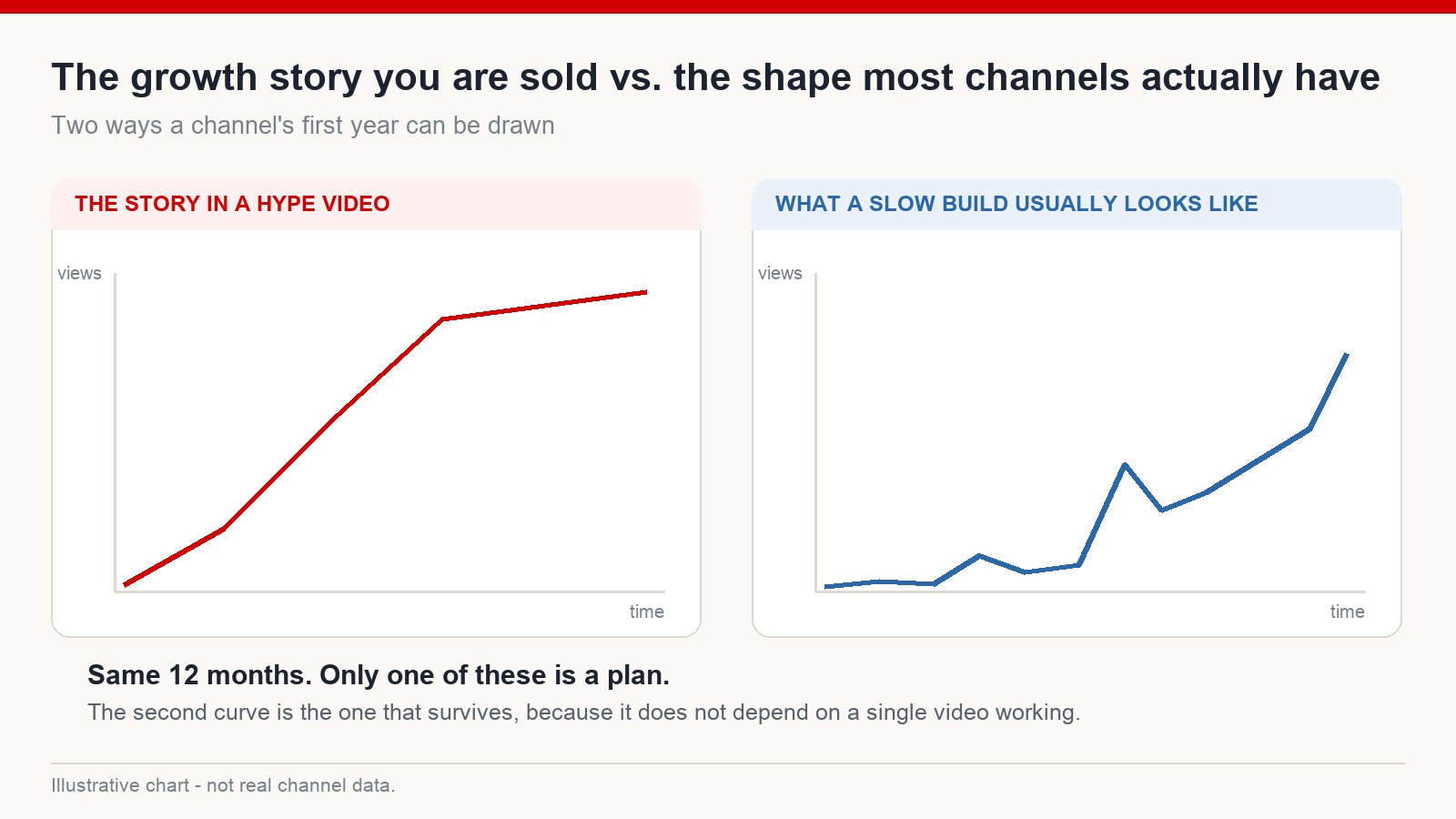
Plenty of channels do nothing for ten videos. Some do nothing for thirty. Then one video gets picked up, one topic starts showing a signal, and the whole thing changes shape. That is a normal trajectory, not a rescue story.
The uncomfortable implication is that the creators who make it are not reliably the most talented ones. They are the ones still publishing when the talented ones stopped. If you set your expectations around “this should be working by video ten”, you will quit exactly when the useful data starts arriving.
Set them around “I am running an experiment that needs a sample size” instead. It is less romantic and it survives contact with reality.
6. The narrower the niche, the bigger the opening
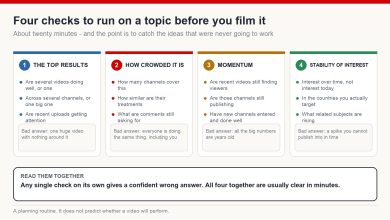
New creators are drawn to big subjects: making money online, AI, health, business. They sound like large audiences, and they are – which is exactly the problem. A large audience is already served by thousands of channels with better production and a five-year head start.
The move is to find the niche inside the niche:
- Not “AI”, but AI-narrated historical retellings
- Not “health”, but sleep for people over fifty
- Not “personal finance”, but what happens to your money in the first year after moving countries
A narrow topic gives you three things a broad one cannot: a viewer who feels the video was made specifically for them, a competitor set small enough to actually study, and a clear reason for the algorithm to file you somewhere. You are not looking for a big idea. You are looking for a gap narrow enough to stand in.
7. Copying well beats originality you have not earned yet
Everyone wants to make the thing that has never existed. Early on, that instinct mostly costs you time.
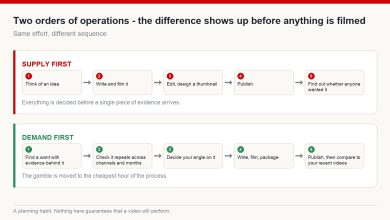
There is a better first move: take three or four channels that are clearly working in your niche and study the mechanics rather than the topics. How is the first thirty seconds constructed? Where does the story turn? What does the thumbnail actually promise, and does the video pay it off? How long are they, and why?
Then build your own version of a structure that already demonstrably holds attention. That is not plagiarism – copying someone’s script or re-uploading their footage is, and it will end your channel. This is learning the form before you break it, which is how every craft is learned.
8. A channel is an asset, not a job
This is the reframe that changed how I work.
Most work pays you once. A video that answers a question people keep asking can be found next year and the year after, and it does not care whether you were at your desk that day. Some of my steadiest traffic comes from videos I have not thought about in a long time.
That is why it is worth building each video as if it will be in the catalogue for a while – evergreen framing rather than news, a title that will still make sense later, a subject that does not expire in six months. The compounding is the entire point, and it is also why the first year feels so slow: you are stocking a shelf that has not started selling yet.
The flip side deserves saying plainly. It is an asset with real risk attached. Policies change, formats fall out of favour, a niche can cool, and nothing about a channel is guaranteed to keep producing. Build accordingly, and do not bet money you need on it.
What the list adds up to
None of these eight things is a trick. Taken together they describe a fairly ordinary discipline: understand who is watching, understand what the platform rewards, learn to tell a story, and stay in the game long enough for the data to mean something.
What they are not is a promise. Results depend on your niche, your execution, the market you choose and how long you last, and plenty of people do all of this carefully and still end up with a channel that never takes off. Anyone who tells you otherwise is selling something.
If you want a structured way to work through this for an English-speaking audience, that is what I teach at mmoyoutube.com.
Frequently asked questions
Do I need to show my face to build a channel?
No. Faceless formats work across a lot of niches, and some of the largest channels in documentary, explainer and relaxation categories have never shown a presenter. It changes the production problem rather than removing it – without a face to carry the video, the writing and pacing have to carry it instead.
Do I need fluent English to build a channel for an English-speaking audience?
Not fluent, but you do need a review step. Tools handle translation and narration well; they handle idiom, names and cultural references badly. Most people who scale this workflow end up with a native speaker checking the script or at least the final audio.
Do long videos earn more than Shorts?
Often, because watch time and ad placement both favour longer runtimes – but it is not a rule, and it varies by niche and market. Treat the two formats as doing different jobs rather than competing for the same one.
How long before a channel starts earning?
There is no fixed answer, and be suspicious of anyone who gives you one. It depends on the niche, the quality of the work, the market you target and how consistently you publish. Some channels never get there. Plan your finances on the assumption that this takes far longer than the videos suggest.
Is it too late to start now?
The bar for production quality is higher than it was, and there is more competition. What has not changed is that specific, well-made content for a defined audience still finds that audience. “Too late” is usually a description of a crowded topic, not of the platform.