The Niche Within a Niche: How to Cut a Crowded Topic Down Until You Can Win It
Most channels that fail do not fail on quality. They fail on arithmetic. They walk into a room that already holds thousands of people who arrived years earlier, and then wonder why nobody notices them.
Look at the topics beginners reach for: news, technology, general knowledge, health, finance. Every one of them sounds like a serious, professional choice. Every one of them is a red ocean where large channels have spent a decade building the trust the recommendation system now hands them by default.
After enough time doing this, one thing became obvious to me. YouTube does not reward you for working on a big topic. It rewards you for answering a specific group of people properly. That is the whole case for the niche within a niche.
Think of the topic as a pizza
A category is the whole pizza. Health, discovery, education, entertainment, news. If everyone is fighting for the entire pizza, a new channel has effectively no chance – not because the food is scarce, but because there is no space at the table.
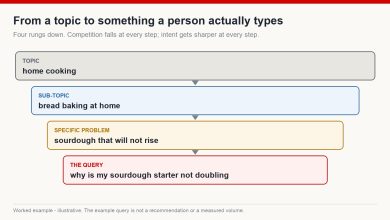
So cut it. Then cut what you cut.
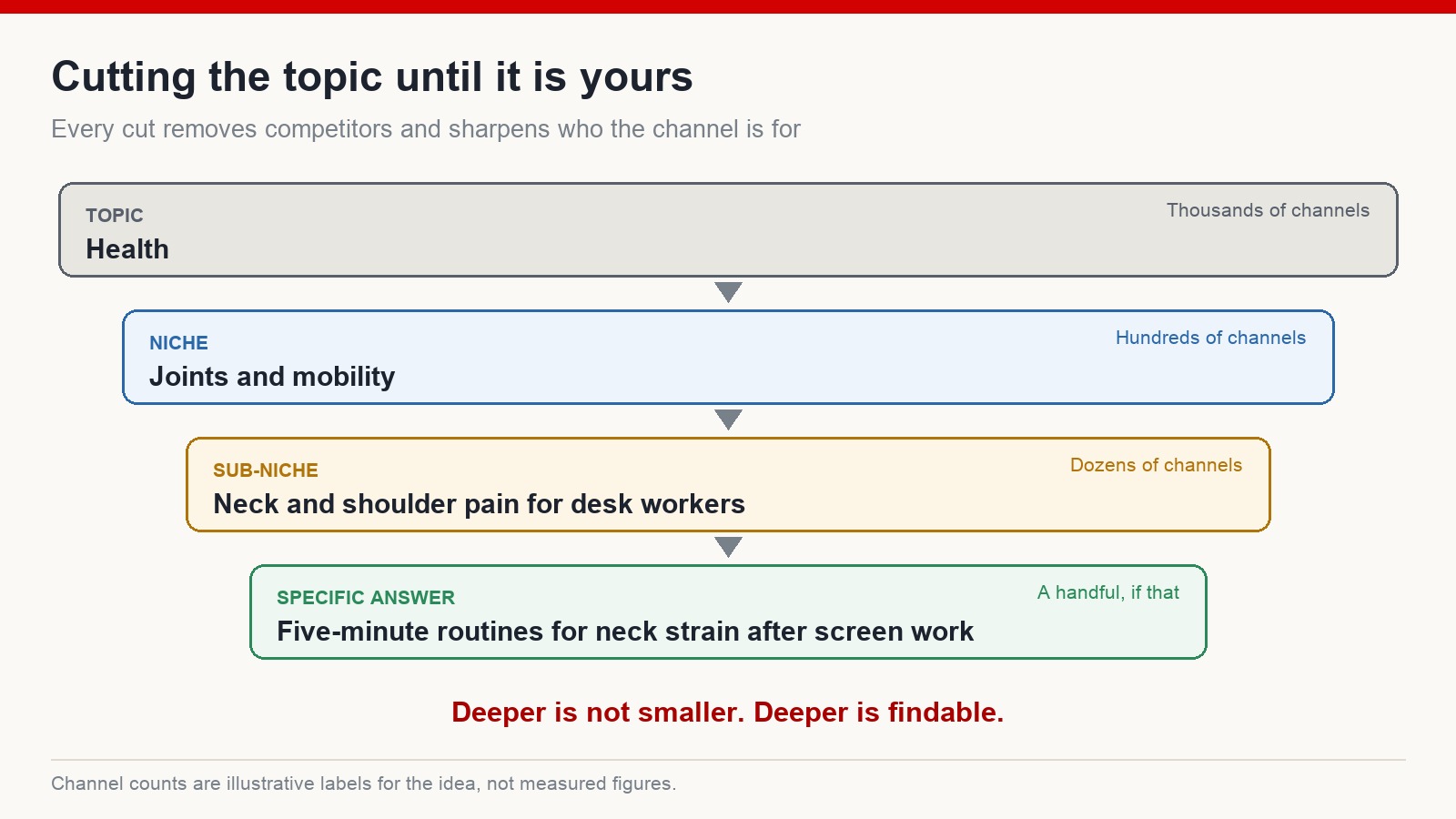
Health is the topic. Joints and mobility is a niche. Neck and shoulder pain for people who sit at a desk is a sub-niche. Five-minute routines for neck strain after screen work is a specific answer to a specific question, and it is a completely different competitive situation from where you started.
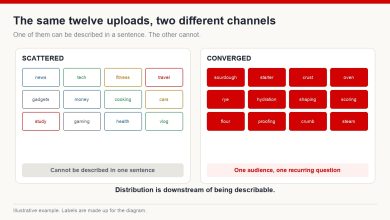
Each cut does three things at once. Fewer competitors. A clearer audience. And a channel the system can label, which is the part most people underestimate. Distribution is not a reward for effort; it is a consequence of the system being confident about who to show you to.
The objection, and why it is mostly wrong
“A small niche means a small audience.” That sounds like arithmetic but it skips a variable.
A topic with millions of interested people also has thousands of creators serving them, most with more history, more subscribers and more accumulated watch time than you. A topic with a fraction of that interest may have almost nobody serving it properly. The audience you can actually reach is the interested population divided by the competition, and the second number moves far more violently than the first.
You are not trying to beat a channel with a million subscribers. You are trying to be the best available answer to one narrow question. Those are wildly different jobs.
Using AI to find the sub-niches
The mechanical part of this – generating candidate slices – is exactly what language models are good at, and it collapses a week of thinking into an afternoon.
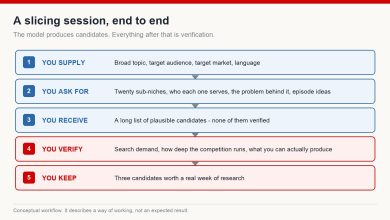
Give it a broad topic: history, military, health, exploration, puzzles. Then ask it to break the topic into sub-niches, flag the ones likely to be underserved, suggest video ideas for each, describe who the audience for each would be, and sketch an evergreen series that could run for a hundred episodes.
You will have dozens of candidates in minutes. Treat every one of them as a hypothesis. A model produces plausible-sounding topics, not verified demand, and the two are easy to confuse when the writing is confident. The decision still belongs to data and to your own reading of the competition.
Checking the candidates against search demand
Once you have a keyword list, the question becomes whether anyone is actually looking for those phrases.
A working principle a lot of creators settle on is to favour mid-sized search volume over the largest phrases available – big enough that demand is real, small enough that the incumbents have not fully occupied it. My own working band sits in the tens of thousands of monthly searches at the upper end, and I go considerably narrower than that for a channel with no history at all.
Two honest caveats on that. First, it is a personal working range from running these channels, not a rule YouTube publishes anywhere. Second, the ceiling flexes: when in doubt, take the smaller threshold, because the cost of being invisible is much higher than the cost of a slightly smaller audience.
Reach past that band and you are competing with established channels, major brands, news organisations and creators with years of proven watch time behind them. The system tends to favour content that has already demonstrated it satisfies viewers, which is precisely the thing a new channel does not yet have.
Four tests before you commit
Low competition on its own is not a reason to build a channel. Some niches are uncrowded because nobody wants them. A niche worth a year of your life should pass most of these.
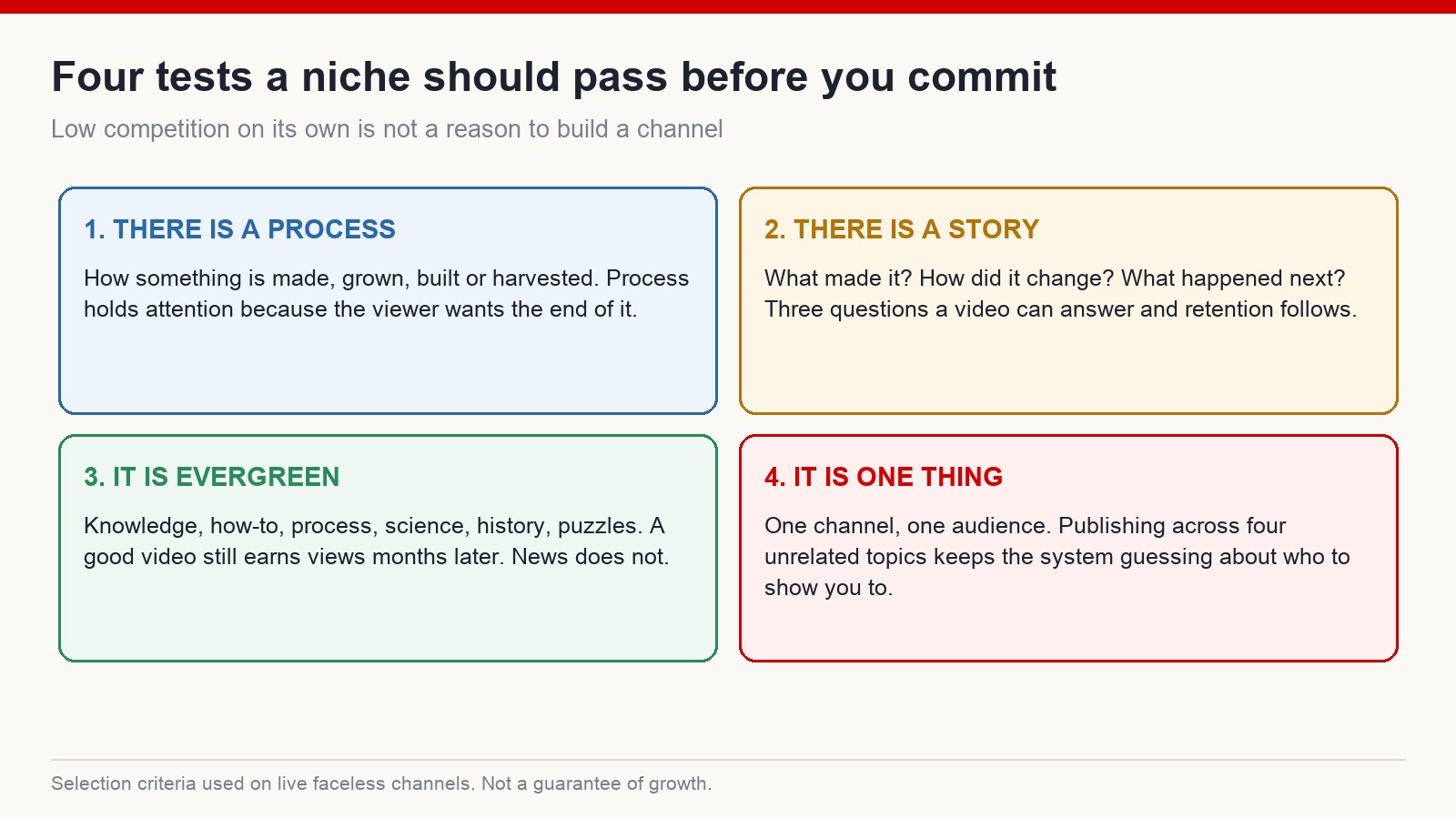
1. There is a process in it
People are reliably curious about how things are made, grown, built or harvested. How a pencil is manufactured. How coconuts are harvested at scale. What happens inside a chocolate factory. How a ship is assembled. What a year of beekeeping looks like. Process holds attention because the viewer wants to see the end of it, which is retention you get for free from the structure itself.
2. There is a story in it
Three questions: what made this thing, how did it change, and what happened next? A niche where every video can answer those has a natural spine. A niche where videos can only list facts runs out of ways to hold anyone past the first thirty seconds.
3. It is evergreen
A good evergreen video is still earning views months and years after it went up. Knowledge, how-to, process, science, history, exploration, puzzles – all of it has a long shelf life. News does not. If your entire library expires within a week of upload, you are not building an asset, you are running on a treadmill.
4. It is one thing
An AI video today, football tomorrow, a film breakdown the day after, something about making money next week. Every switch resets what the system knows about your audience. One channel, one audience. Expansion comes later, and it comes from strength.
Spend more hours researching than producing
Most creators assume growth comes from publishing more. In practice the research hours compound and the production hours do not.
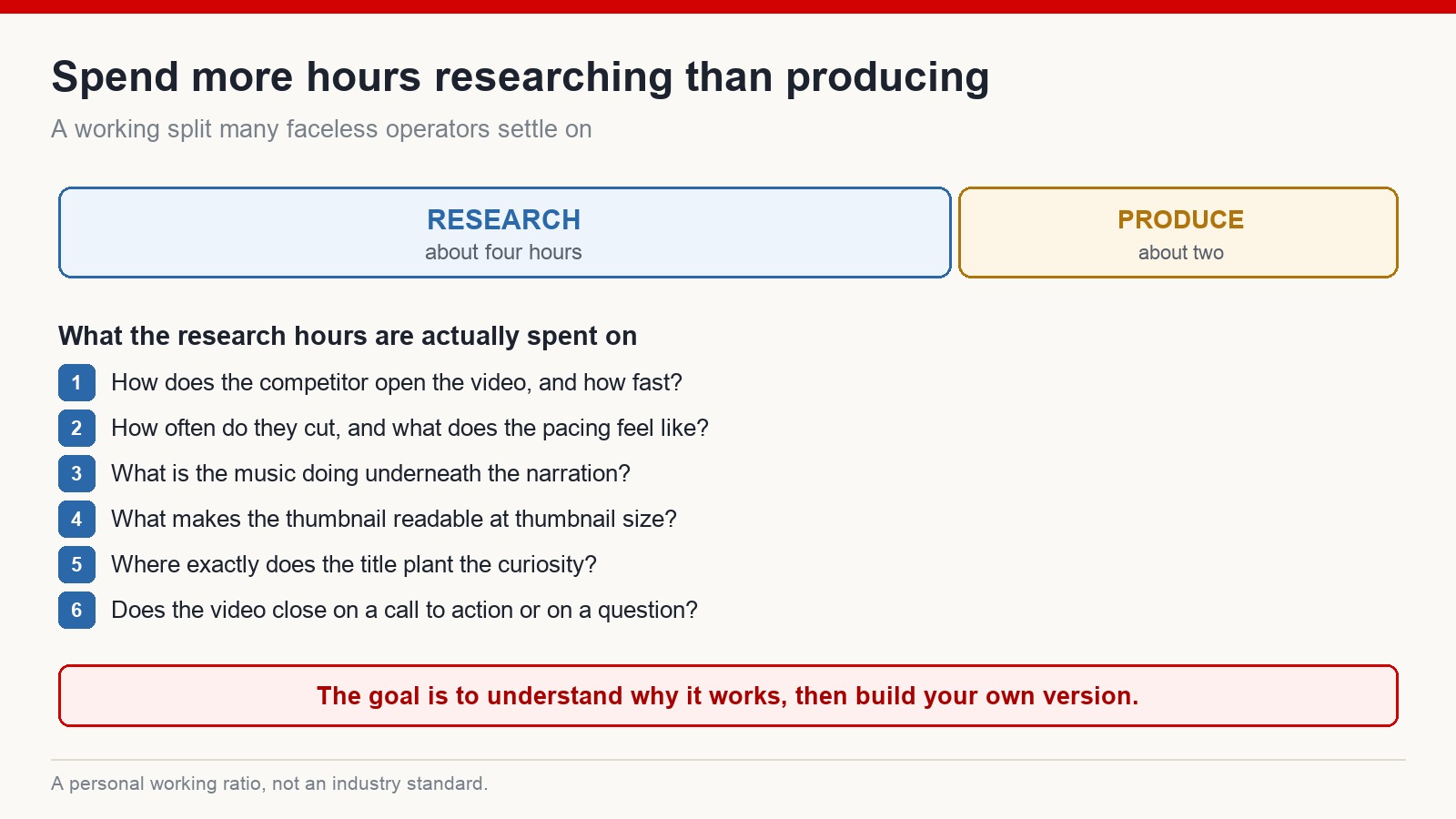
The split I work to is roughly four hours of research to two of production and optimisation. That is a personal ratio rather than an industry standard, but the direction of it is the point.
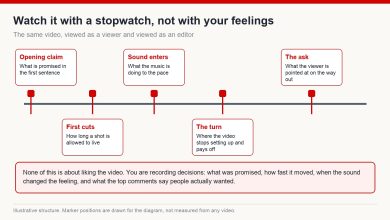
What the research hours actually go on, when you study a competitor:
- How do they open, and how fast does the first idea arrive?
- How often do they cut, and what does the pacing feel like?
- What is the music doing underneath the narration?
- What makes the thumbnail readable at the size it is actually seen?
- Where exactly in the title does the curiosity get planted?
- Do they close on a call to action, or on a question?
The goal is never to reproduce their video. It is to understand the mechanism, then build your own version of it with something of yours in it.
The mistakes that keep repeating
- Choosing a topic too broad to describe in one sentence
- Chasing whatever went viral last week
- Changing the content type every few uploads
- Never checking keywords against real demand
- Never studying the competition properly
- Producing constantly and optimising never
Each one has the same effect: the system takes longer to work out what your channel is, and while it is working that out, your videos go nowhere.
If I had to compress all of it
Do not try to be big at the start. Try to be deep.
One niche. Little competition. Real demand. Evergreen. With a story in it. That combination beats a crowded topic almost every time, and it keeps beating it as the library grows.
YouTube does not need you to cover everything. It needs you to be the best answer to something specific enough that a viewer remembers where they found it.
What does “niche within a niche” actually mean?
Cutting a broad topic into progressively more specific content groups until you reach a question a definable group of people actually asks – reducing competition and sharpening who the channel serves at the same time.
Should I choose a topic that is trending hard right now?
You can, but a new channel usually struggles when the space is already occupied by large creators. Look for a narrower angle inside the trend, or a specific problem within it that nobody is covering properly.
Can AI find a niche for me?
It can generate and group candidates fast, which is genuinely useful. It cannot verify demand. Check every candidate against search data and against what competitors are actually publishing before you commit.
How many niches should one channel cover?
One, at least until there is a loyal audience to expand with. Focus is what lets the system identify your audience quickly, and speed of identification matters most when the channel is new.
If you are building a channel and still cannot describe it in a sentence, narrow rather than widen. Once the sub-niche is right, keyword research, competitor analysis and consistent output have something solid to sit on.
The full system I use for building faceless channels aimed at international audiences is at mmoyoutube.com. Results vary, and platform rules change – build with that in mind.