Your Viewers Are Not Watching What You Think They Are
Years ago I found a video in my niche with a few million views and decided to learn from it properly. So I rebuilt it.
Same subject. Same thumbnail style. Similar pacing, similar length, similar edit. I was careful about it.
The result was nothing like the original. The click-through rate was acceptable. The views never lifted. The video simply did not get picked up, and for a while I could not work out what I had left out, because on the surface I had copied everything.
What I had actually copied was the visible layer. The layer that decided the outcome was one I had never even looked at — and it was sitting in plain sight, inside the title.
What I Copied and What I Never Checked
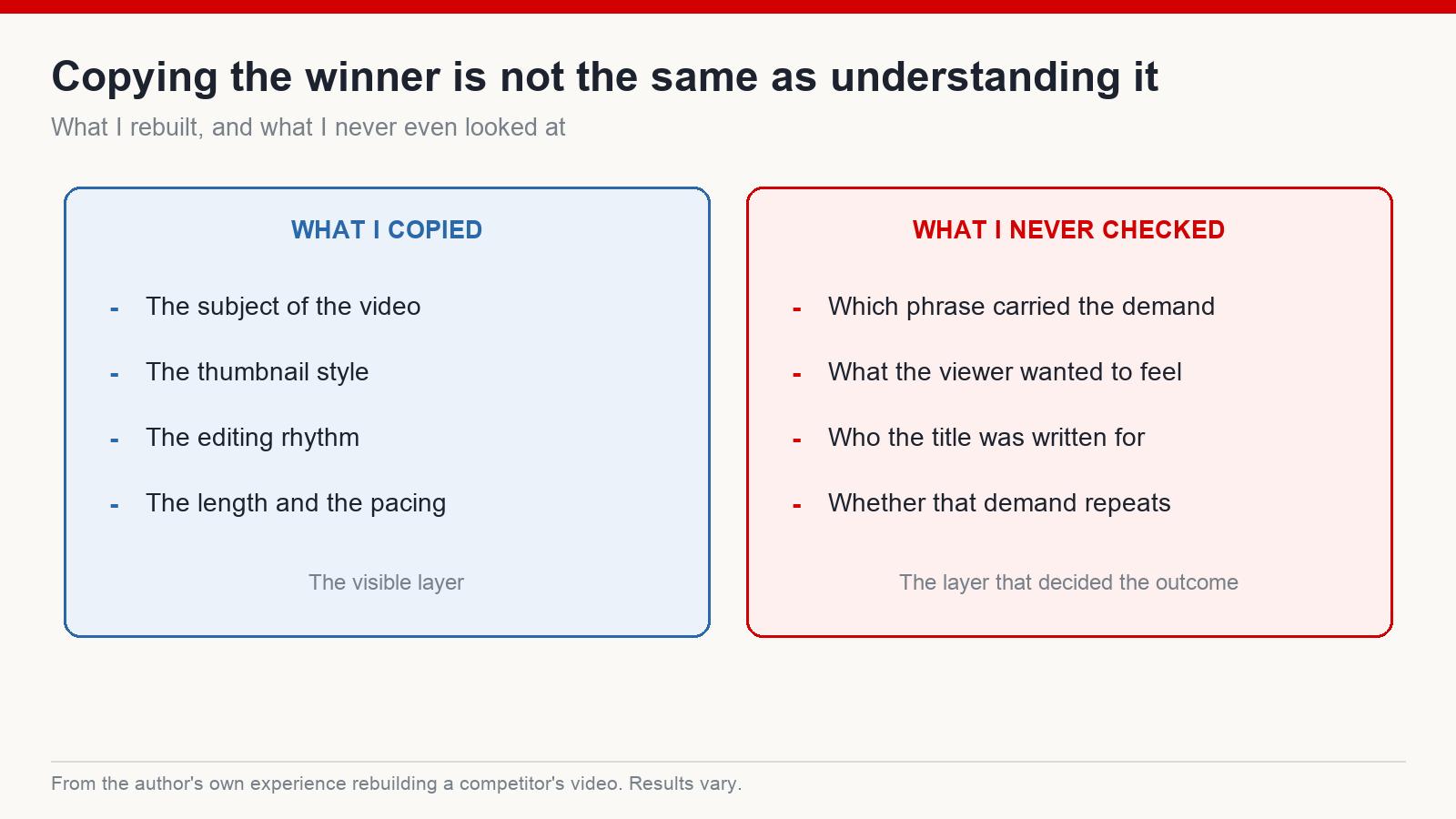
Set the two lists side by side and the gap is embarrassing.
What I reproduced: the subject of the video, the thumbnail style, the editing rhythm, the length and the pacing. Everything you can see by watching.
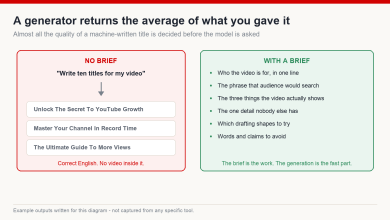
What I never asked: which phrase in that title was carrying the demand, what the viewer wanted to feel when they clicked, who the title was written for, and whether that demand repeats or was a one-week spike.
All four of those questions are about the audience. None of them are answered by watching the video. That is why YouTube audience research done by watching competitors tends to produce confident imitations that go nowhere.
The Cat Is Not the Product
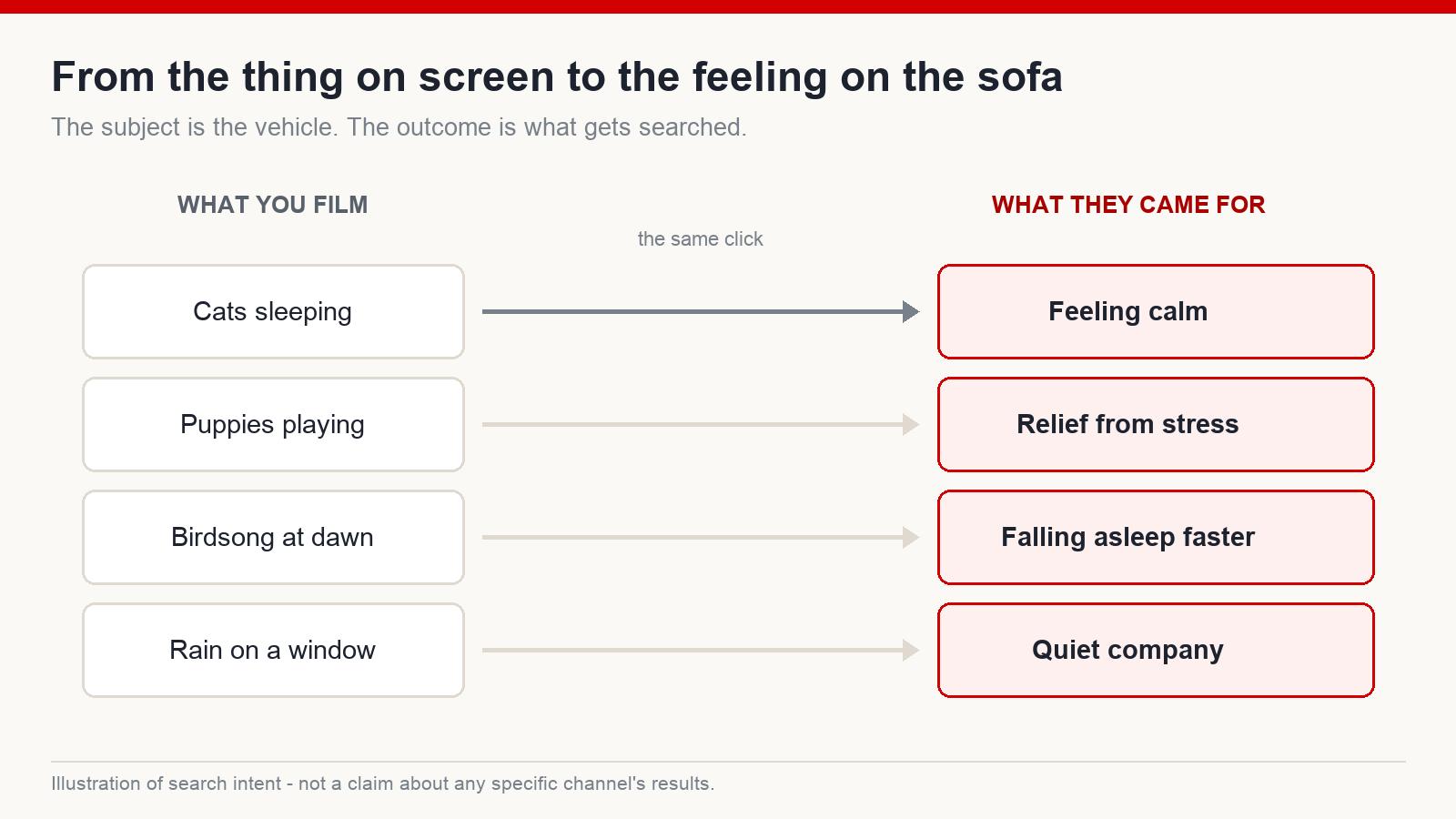
Here is the pattern that made it click for me.
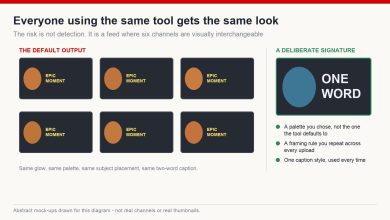
A channel is posting sleeping cats, puppies playing, birds at dawn. Obvious conclusion: it is an animal channel. So you go and make animal videos.
Then you break its titles apart and look at which phrases are actually carrying weight, and the strongest ones are not animal words at all. They are relaxing, calm, peaceful, stress relief, healing, sleep better.
The audience is not searching for a cat. They are searching for a way to feel calm at eleven at night. The cat is the vehicle. The feeling is the product.
Once you see it, the same structure shows up everywhere. Rain on a window is not weather content, it is company for someone who does not want silence. A landscape film is not travel, it is escape. The thing on screen is what you film. The thing on the sofa is what got searched.
Why This Mistake Is So Easy to Make
Because the visible layer is genuinely informative, just incomplete. Studying a competitor’s edit teaches you real things about production. It teaches you nothing about demand.
And there is a quieter reason. Subjects are concrete and easy to copy. Feelings are abstract and take work to identify. Given a choice between a task you can finish this afternoon and one that requires sitting with a keyword tool asking uncomfortable questions, most people finish the afternoon task and call it research.
What Changes When You Get the Audience Right
The practical payoff is that you stop being trapped by your subject.
If your viewers came for animals, your only growth path is more animals. If they came for calm, the door opens considerably wider: nature, rain, landscapes, ambient sound, slow scenery. Same audience, same need, a much larger content space to work in.
This is why some channels appear to change direction and keep growing. They did not change audience. They changed vehicle. Often the footage barely changes at all — what changes is the title, the thumbnail words and the angle, and the video walks through a different door to reach different people.
One honest caveat, because this gets oversold: repositioning toward a different audience can change how a video performs, and different topics carry different advertiser demand. It does not follow that repositioning will raise your revenue. Treat any change in RPM or watch time as something to measure on your own channel over months, not something to expect because someone said it worked for them. Results vary, and YouTube’s systems change on their own timetable.
What a Keyword Tool Will Not Tell You
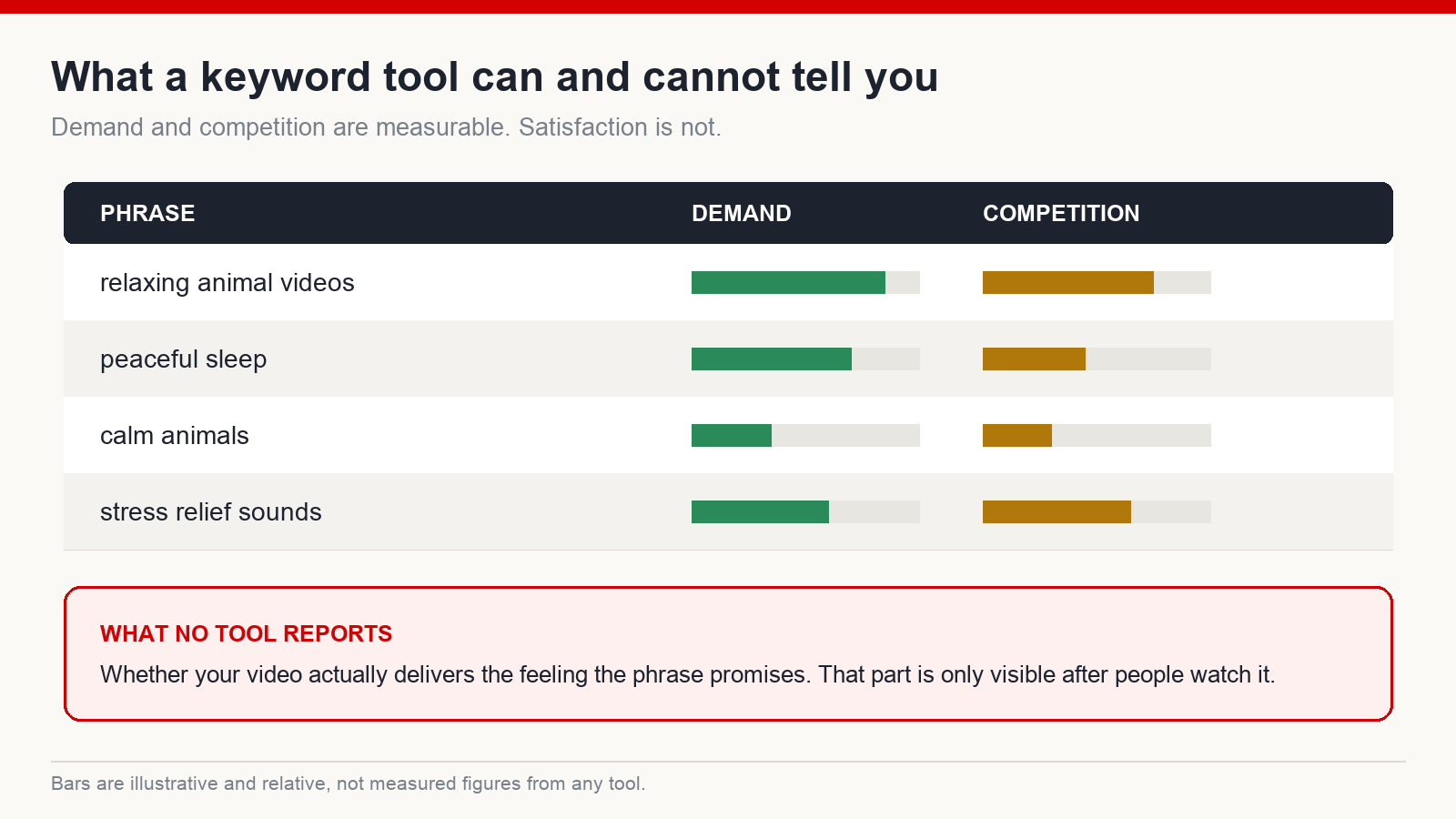
Tools are good at two things. They will tell you roughly how much demand a phrase has, and roughly how contested it is. Both are useful and both are estimates — different tools will hand you different numbers for the same phrase on the same day.
What no tool reports is whether your video actually delivers the feeling the phrase promises. That is only visible after people watch it, and it is the variable that decides whether the click was worth having.
So the sequence matters. Use the tool to find out what is being asked for. Use your own judgement to decide whether you can answer it. A phrase you cannot deliver on is not an opportunity, it is a retention problem with a delay on it.
The Words That Pull Harder Than the Keyword
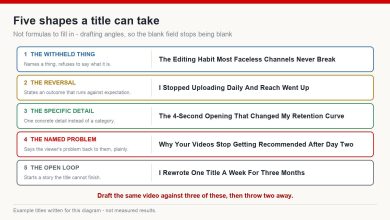
When you tear apart titles that are working, the emotional register shows up as clearly as the subject does. A handful of pulls do most of the work in English-language niches:
- Peace — calm, quiet, gentle, still
- Curiosity — hidden, rare, unseen, nobody talks about
- Urgency — before, too late, right now
- Hope — better, finally, it is not over
- Change — what happened when, the day everything shifted
These are frequently stronger click drivers than the subject keyword sitting next to them. They are also the fastest way to lose an audience if you reach for one the video cannot pay off. A charged word attached to a video that does not deliver buys you a click and costs you a viewer, and you will not get a notification when it happens.
How to Test This Without Gambling the Channel
Two low-risk exercises, both doable this week.
Audit ten titles. Take the ten strongest videos in your niche, pull every phrase out of their titles, and sort the phrases into two columns: things being filmed, and states being sought. If the second column is longer or stronger than the first, you have just found what your niche is really selling.
Retitle one existing video. Not five. Take one upload that underperformed relative to your own recent median, rewrite the title and thumbnail words around the feeling rather than the subject, and leave it alone for a few weeks. Compare it against your own channel’s baseline rather than against anyone else’s numbers, which you cannot see the context for anyway.
The Question Worth Asking
The reason a title teardown is worth the twenty minutes is not the keywords it produces. It is that it forces one question you cannot answer by watching a video:
Is this audience looking for this content, or for the feeling this content gives them?
Very often you will find that what you have been making is not what your viewers care most about. What they care about is the state they are in while they watch it. Understanding that will not guarantee you anything — nothing on this platform does — but it changes what you make next, and it is the single most useful thing I have taken out of studying other people’s videos.
Does this work in every niche?
The method transfers well, because it is about how people search rather than what they watch. How strong the emotional layer is varies — it is very pronounced in relaxation, health and motivation, and more subject-led in technical or educational niches.
Which tools should I use to check demand?
vidIQ, TubeBuddy, Ahrefs, Google Keyword Planner and similar tools all work. Use more than one, expect them to disagree, and treat their figures as directional rather than exact.
Should I use AI for this?
It is genuinely helpful for the mechanical part — splitting titles into phrases, grouping them by intent, spotting emotional patterns across a batch. The judgement about what your channel should actually make is not something to hand over.
Will repositioning increase my RPM?
Possibly, indirectly, and there is no guarantee. Advertiser demand does differ by topic, but RPM moves with season, country, format and audience in ways you do not control. Measure it on your own channel over time instead of treating it as a promised outcome.
If you want the full workflow around this — finding a niche, validating the demand behind it and packaging a faceless channel for an English-speaking audience — that is what I work through at mmoyoutube.com.