How to Write a YouTube Script With AI Without Copying Anyone
A lot of new creators sit down with a blank document and try to invent something. Hours pass, they produce three ideas, and none of them work.
Meanwhile most of the videos doing well in any given niche did not start with invention. They started with somebody studying what had already worked and then building something better on top of that understanding. That is not a shortcut — it is the ordinary way every craft learns.
This is how I write a YouTube script with AI without producing a duplicate of someone else’s video: what you are allowed to study, what has to be yours, and the exact prompts I use. I have been making YouTube videos since 2017, mostly faceless channels aimed at English-speaking audiences.
Why brainstorming from zero keeps failing
I spent a long stretch generating ideas every morning. Plenty of ideas, very little watch time. Videos that never got picked up, retention that fell early, click rates that bounced around with no pattern I could read.
The realisation that changed it: the platform does not reward effort. It rewards videos that match what an audience is already looking for. The fastest way to find out what that is, is to look at what they are already watching.
The research loop
Five steps, and only the last one is writing.
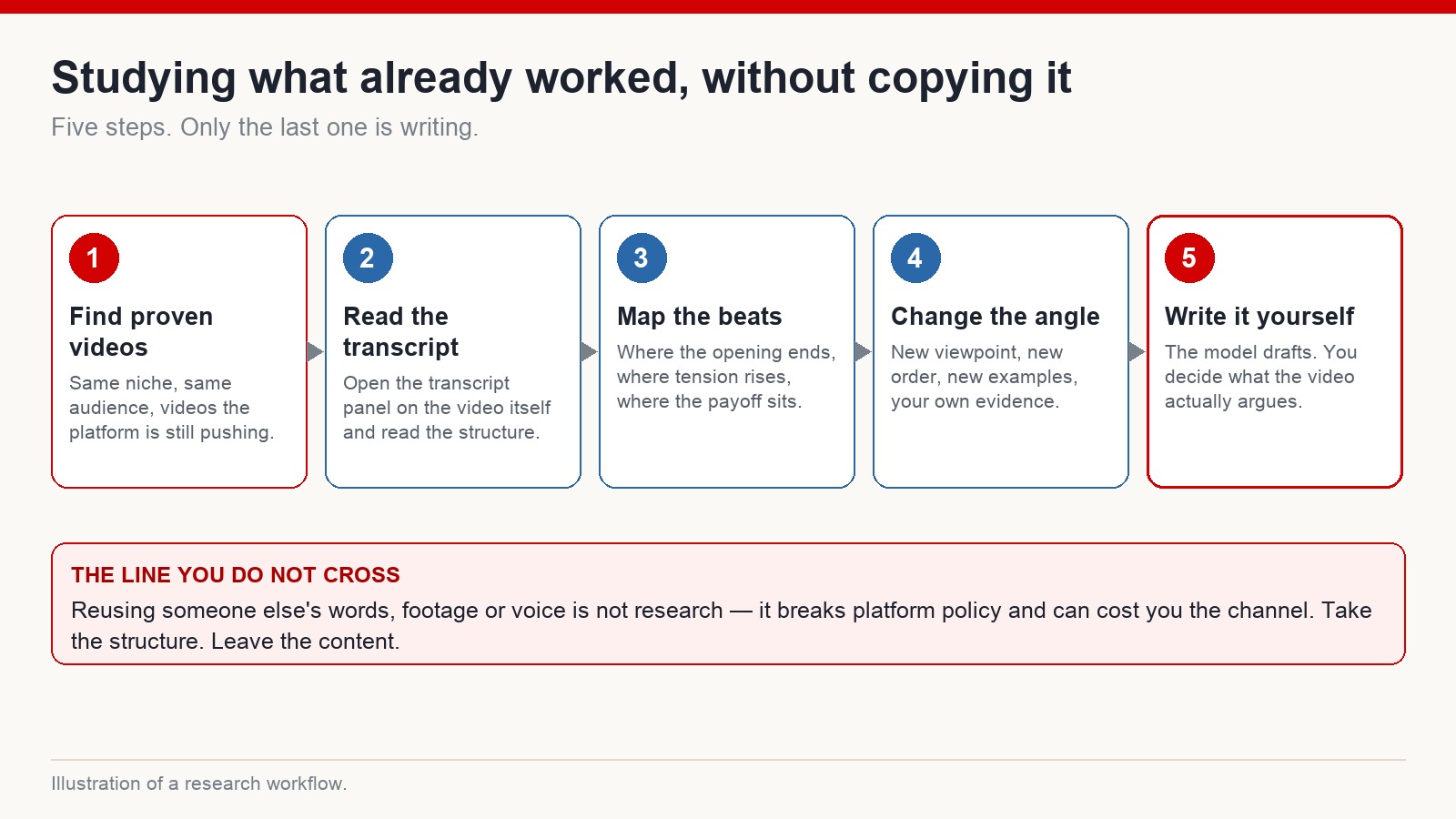
1. Find videos that already worked. Same niche, same audience, and recent enough that the platform is still pushing them. Three is plenty.
2. Read the transcript. YouTube shows one on the video page — open the transcript panel and read it as text rather than watching. Structure is much easier to see when you are not being entertained.
3. Map the beats. Where does the opening end? Where does tension first rise? What question is being held back, and for how long? Where does the payoff land relative to the runtime?
4. Change the angle. This is the step people skip and the reason their channel never gets anywhere. New viewpoint, new order, your own examples, your own evidence.
5. Write it yourself. The model can draft. You decide what the video actually argues.
The line you do not cross
There is a real difference between studying a video and republishing it, and the difference is not subtle.
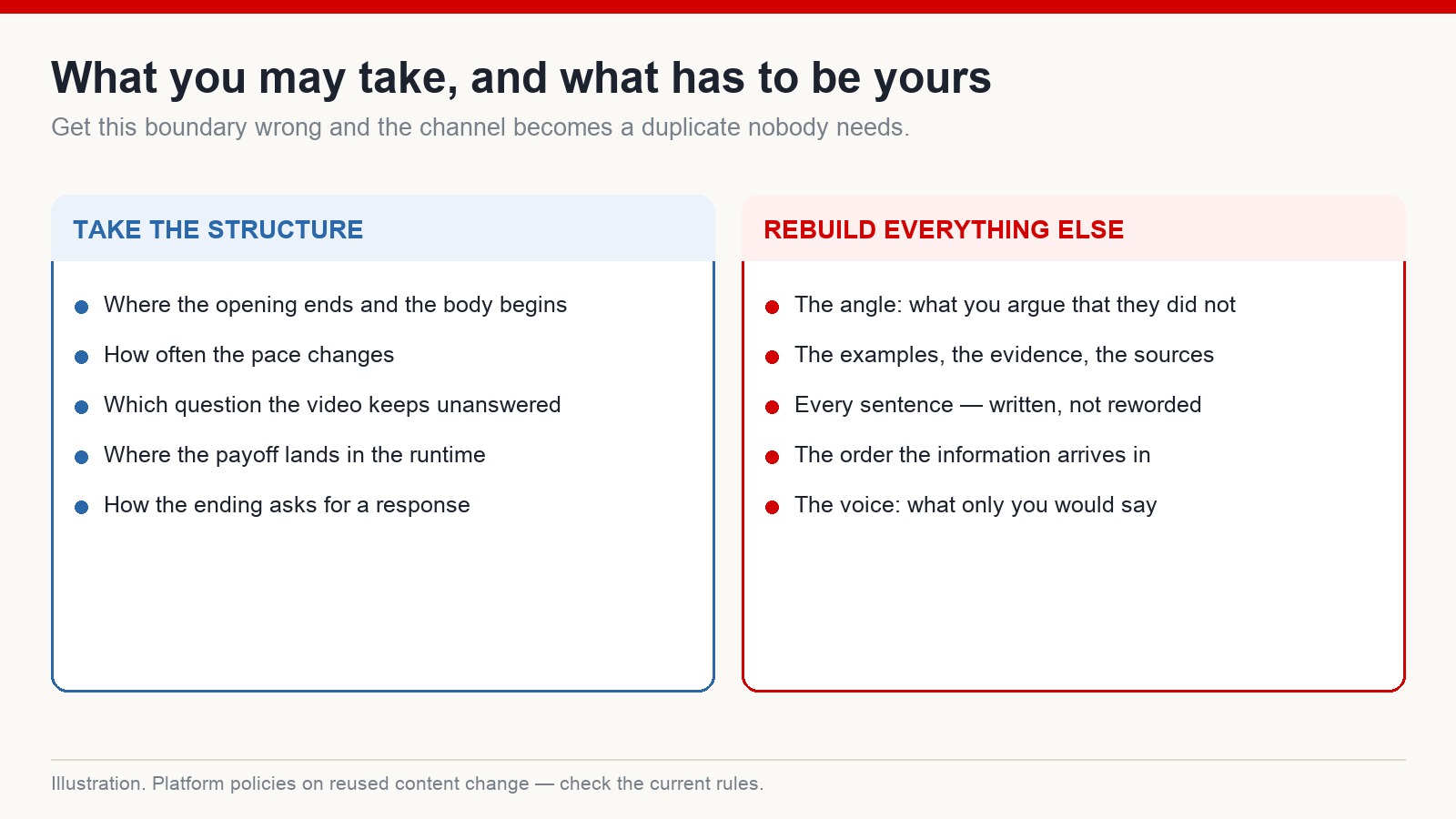
Pasting someone’s transcript into a model and asking for a rewrite produces a slightly worse copy of a video that already exists. It has no point of view, gives nobody a reason to subscribe, and can be treated as reused content — which is a policy problem, not a taste problem, and the policies change, so check the current rules rather than trusting an article.
Take the structure. Leave the content.
The prompts
Point the model at analysis first, and writing second. These are the three I use, close to word for word.
“Here is the transcript of a video that performed well in my niche. Do not rewrite it. Map its structure: where the opening ends, where tension rises, what question it holds back and for how long, and where the payoff lands as a percentage of the runtime.”
“Given that structure, propose three angles on the same broad subject that argue something the original does not. For each one, tell me what evidence I would need to gather.”
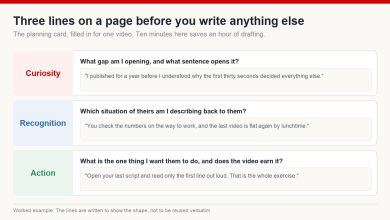
“Turn angle two into a narration script. Run the feeling in this order: curiosity, then dread, then tension, then relief — escalating with each paragraph. Short sentences. Documentary voice. Open on a single image, not a definition. Reorder the information so it does not follow the source. End on one question a viewer can answer.”
Then you edit it, hard, and put in the things a model cannot supply: what you have actually seen, what you got wrong once, the comparison you ran yourself.
Picking the topic before you write
Scripts do not fail in isolation. Most of the time the topic was wrong before the first line was written.
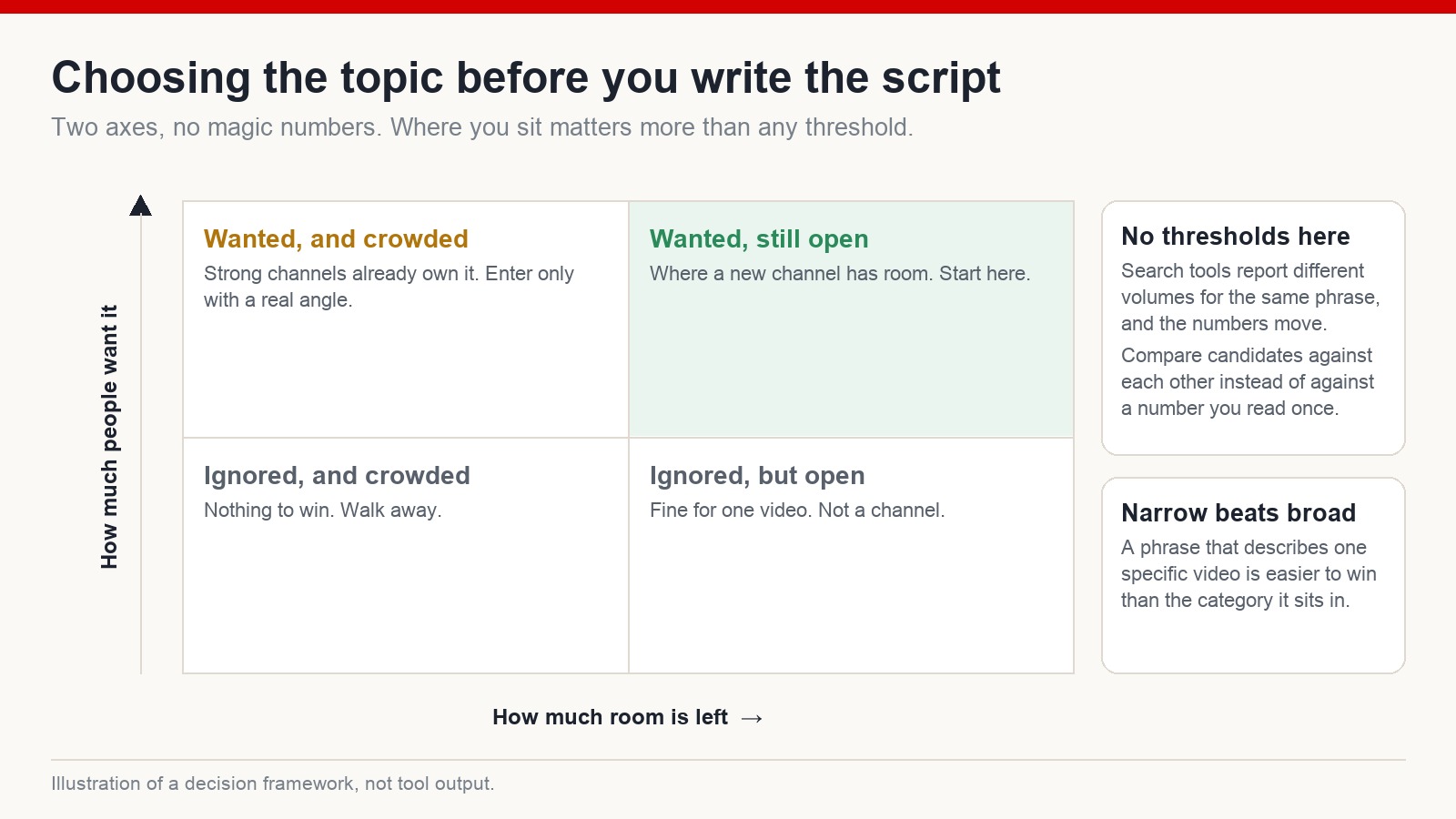
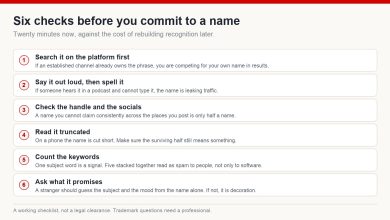
Two questions, in this order. Do people want this? And is there room left for another video about it?
Research tools — vidIQ, TubeBuddy, and the others — are useful for the first question and rough on the second. One caution worth more than the tools themselves: do not chase a search-volume threshold. Different tools report different numbers for the same phrase, and those numbers move. Compare your candidate topics against each other rather than against a figure you read once.
The rule that has held up for me: a narrow phrase describing one specific video is easier to win than the broad category it sits inside.
Ask for a response, not a reflex
“Like and subscribe” is ignored because it costs the viewer something and gives them nothing.
The tempting alternative is a reflex prompt — “comment the number one if you made it this far”. It does generate comments. It is also engagement bait, which platform guidelines explicitly discourage, and it trains an audience that responding to you is meaningless.
Ask something real while the feeling is still there instead:
- “Which of these three would actually make you turn back?”
- “If you have seen this happen to a channel you follow, tell me which one.”
- “What would you have done at that point?”
Pace the edit to the script
A strong script edited slowly still loses people. My working rule is that something should change roughly every few seconds — a cut, a push-in, a caption, a graphic, a shift in the picture. Not effects for their own sake; just never letting the frame sit still while narration runs over it.
Write it into the script rather than discovering it in the edit. If a scene card has no visual note, that scene will end up as a static frame.
A worked example
Subject: the three most dangerous fish in the ocean. Roughly the first forty-five seconds, written the way I would record it.
“You think the shark is the thing to worry about. It is not.
There is a fish in shallow water that you will never see. You do not get bitten by it. You step on it — and the pain has been described by people who survived it as having a drill run through the bone.
It is called the stonefish, and it looks like a rock. That is the entire defence. It does not hide; it simply is not visible.
But it is not the worst one on this list. The worst one is smaller than your hand, and people swim past it on purpose because it is beautiful.
Before that — if you have swum anywhere these live, I would genuinely like to know whether anyone warned you.”
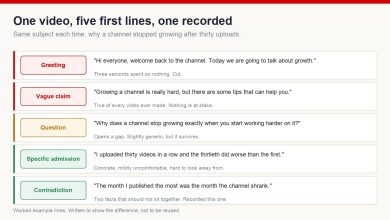
Curiosity in the first line, dread in the second, a reveal, then a fresh gap opened before the payoff of the first one is even collected. The closing line asks for a real answer rather than a number.
An exercise worth more than a month of theory
Pick one narrow subject. Find three videos in it that clearly worked. Read the transcripts, map the beats, write down what each opening promised. Then write one script of your own that argues something none of the three argued, and record it.
You will learn more about scripting from that afternoon than from a month of watching people explain scripting, this article included.
Frequently asked questions
Is it acceptable to study a video that already performed well?
Studying structure is normal practice in every creative field. Reusing the words, footage or narration is not, and it breaks platform policy.
Can a model write a full script?
It can produce a full draft. It will be generic unless you give it a structure to work against, a specific angle, and evidence it did not have. The editing pass is where the video becomes yours.
What niche should a beginner choose?
Something narrow, something you can produce consistently, and something with enough existing videos to learn from. Narrow beats broad more often than not.
Do faceless channels still work?
Plenty are still growing. What has changed is the floor: generic assembled content is much easier to produce now, so it is also much easier to ignore. Results vary and platform rules change — the differentiator is the thinking, not the tooling.
If you want the full process for building a faceless channel for English-speaking audiences, that is what I teach at mmoyoutube.com.