Why Licensed Compilations Are Legal and Your Re-Upload Is Not
The morning the yellow icon appears
There is a specific sound a morning makes when you open the analytics page and a video that was fine yesterday is not fine any more. A yellow icon beside it. A line saying the video is not eligible to earn. Somewhere in it there is a clip you dropped in to liven things up, and that clip has now taken the whole upload down with it.
Days of editing, gone in a notification. I have had that morning. Most people who have been at this a while have.
And then you look sideways at the compilation channels – the ones that are made almost entirely of other people’s footage, people falling off things, ruining weddings, discovering gravity – and they have been running for well over a decade without ever apparently having that morning. The most famous of them, FailArmy, is essentially a wall of borrowed clips, and it has been publishing them for years without being taken apart.
You add one clip and lose the video overnight. That comparison is infuriating, and it is also the most useful thing on the platform to understand properly, because the difference between those two outcomes is not skill, and it is not luck.
It is a document. This article is about that document, about the two very different ways the platform enforces it, and about the route that exists for somebody who does not have a legal department.
One thing first, plainly: I am a creator describing how this works in practice, not a lawyer. Copyright law differs by country and by situation. For anything that matters, ask somebody qualified.
The secret is not the editing. It is the word “bought”
Open one of those compilations. Clip after clip, music that carries, a title pitched exactly right, someone going over a handlebar in the first four seconds. The conclusion arrives on its own: they are good at collecting and cutting. So I will collect funny clips and cut them well.
That conclusion has killed more channels than any other single idea in this business, and I have watched it happen more than once.
The editing is not the secret. The editing is the visible part. The part underneath – the root the whole machine grows out of – is that the clips were bought.
FailArmy does not gather clips off the internet. Behind it sits a media company, Jukin Media, now operating as Trusted Media Brands. Note the difference in category: one is a channel, the other is a licensing business. What it does for a living is acquire and license viral user-generated footage – the clips ordinary people happen to capture on a phone and put online.
Which means that behind every fall you laughed at in one of those videos there is a licence. Money changed hands. A signature exists. There is a legal right being held.
So the boundary, and I would like this one carved somewhere permanent: the same action – publishing a compilation of other people’s footage – is lawful when they do it and theft when you re-upload. The difference is not in the cutting. It is in a piece of paper.
One clip, many revenue lines: post versus asset
Once you see the licence, the rest of the machine makes sense, and it is bigger than a channel.
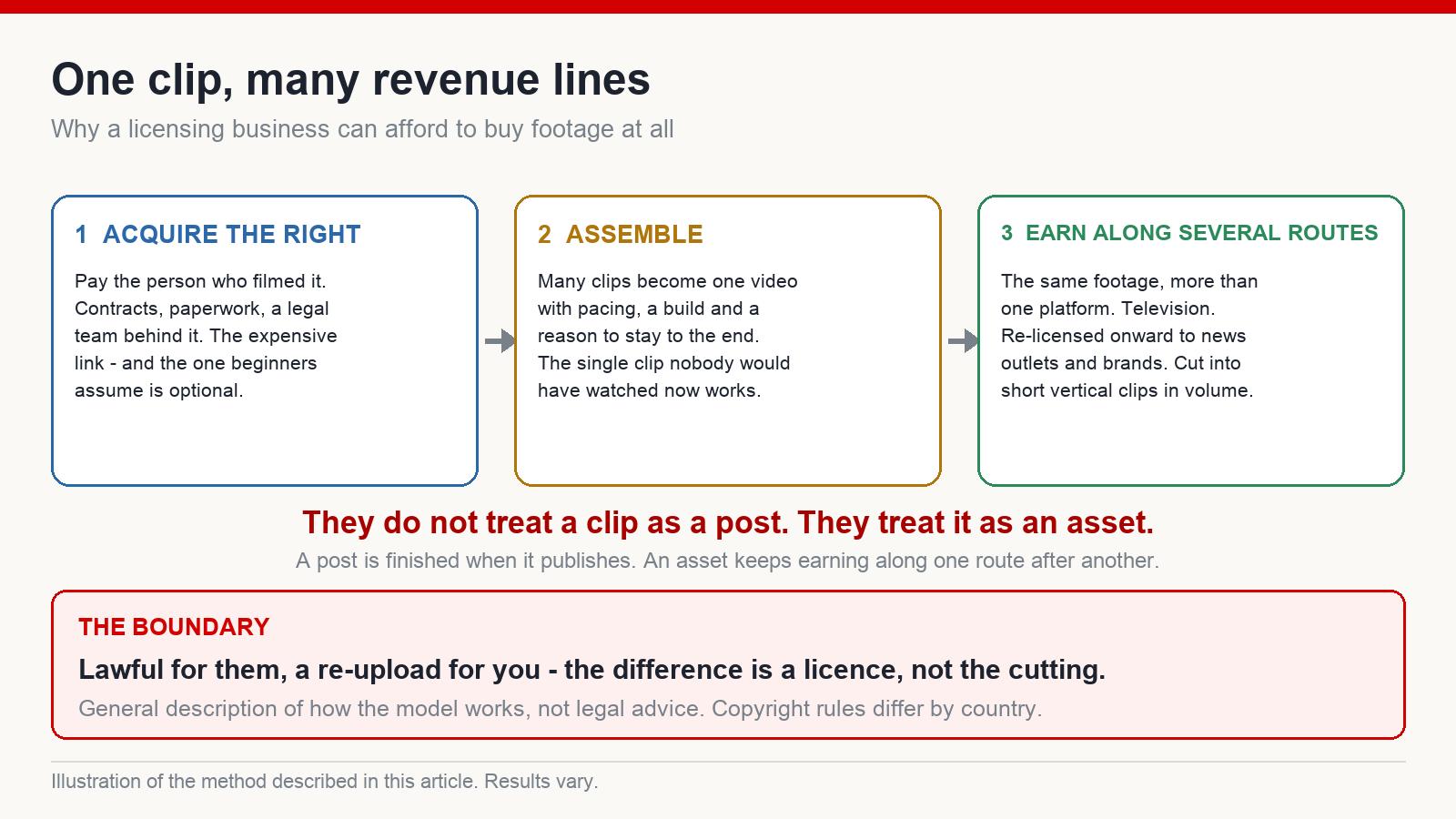
Link one: they buy. Somebody films a fall down a staircase on a phone; the company pays for the right to use it. Contracts, paperwork, a legal team behind it. This is the costly link, and it is precisely the link a beginner assumes is optional. Hold on to that, because it decides what you are permitted to do later.
Link two: they assemble. Ten falls and twenty mishaps become one video with pacing, a build and a reason to stay to the end. The single clip nobody would have watched now sits inside something that works as a whole.
Link three, and this is the one to sit with: they earn from the same clip along several routes at once. The same footage goes to more than one platform. It goes to television. It gets re-licensed – sold onward to news outlets, broadcasters, brands making advertisements. And it gets cut into short vertical clips and published in volume.
One purchase, several income lines. That is the only reason the margins are thick enough to keep funding the buying, and that is what makes the wheel turn.
Here is the sentence I want you to leave with, and it has nothing to do with copyright: they do not treat a clip as a post. They treat it as an asset. A post is finished the moment it goes out. An asset sits there and earns along one route after another, for years. Making content while thinking “I need something up today” and making content while thinking “I am building a library that will pay out” are two entirely different working lives.
Two mechanisms, and only one of them announces itself
Before you get excited about the library idea, know how the enforcement actually works, because there are two systems and people usually only fear the loud one.
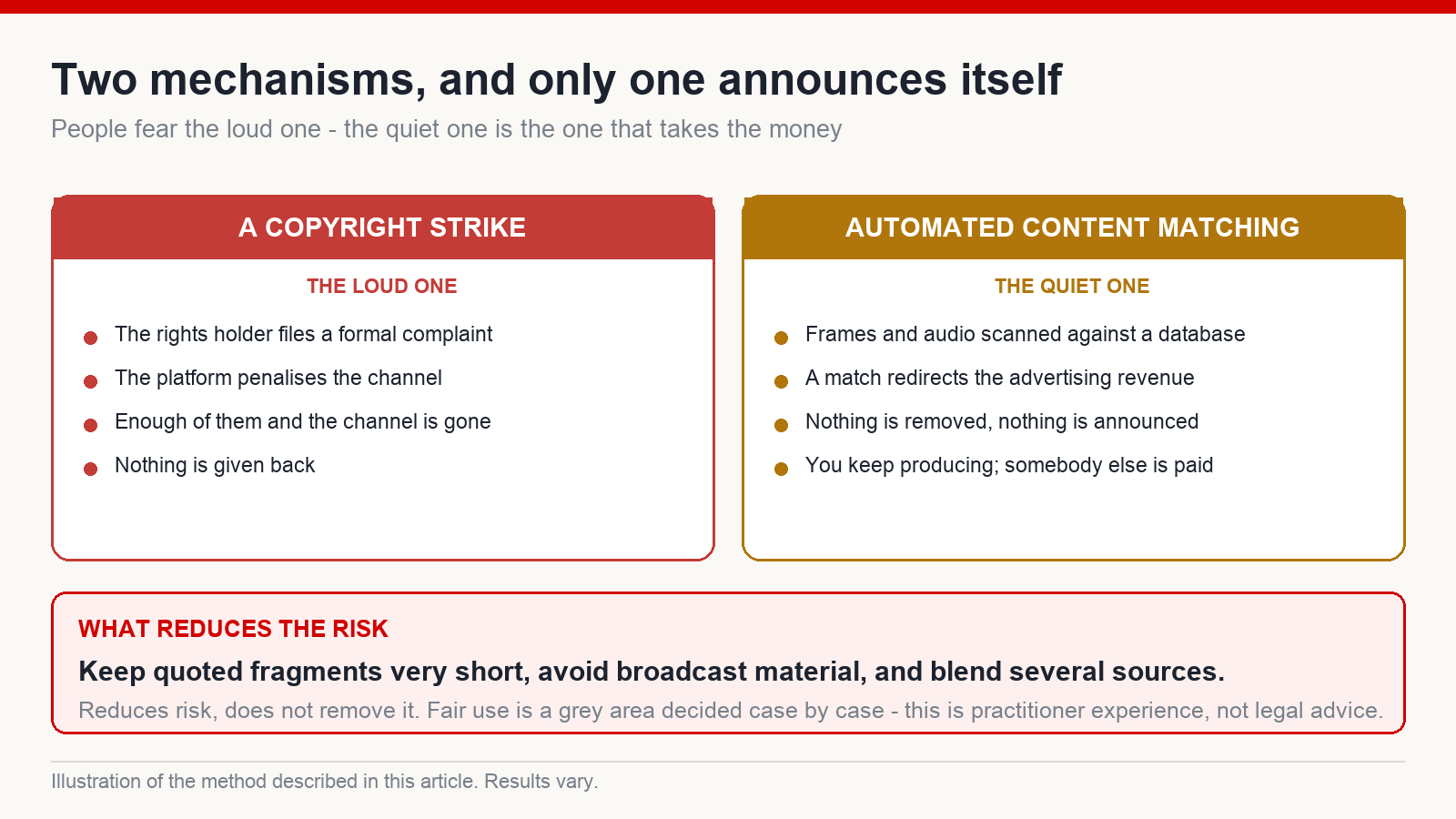
A copyright strike is the loud one. The rights holder files a formal complaint and the platform penalises the channel. Accumulate enough and the channel is gone – everything, and nobody gives it back. This is the one that keeps beginners awake, and reasonably so.
Automated content matching – the system usually called Content ID – is the quiet one, and it goes straight for your income rather than your channel. It scans frames and audio against a database of registered material. Where it finds a match, the advertising revenue on your video is redirected to the rights holder. Nothing is removed. Nothing is announced dramatically. You simply keep producing and somebody else gets paid.
I have been on the receiving end of the quiet one. A clip dropped into a video to add some life, and the next morning a line saying the video no longer qualified to earn. Several evenings of work evaporated over a few seconds of footage. Unpleasant, and educational.
So let me say the thing that actually matters here: you are not worse at this than they are. You are standing at a different starting line. The people with the budget to buy rights run their race; you run yours, by a different route, and yours still finishes.
What to learn, and what not to copy
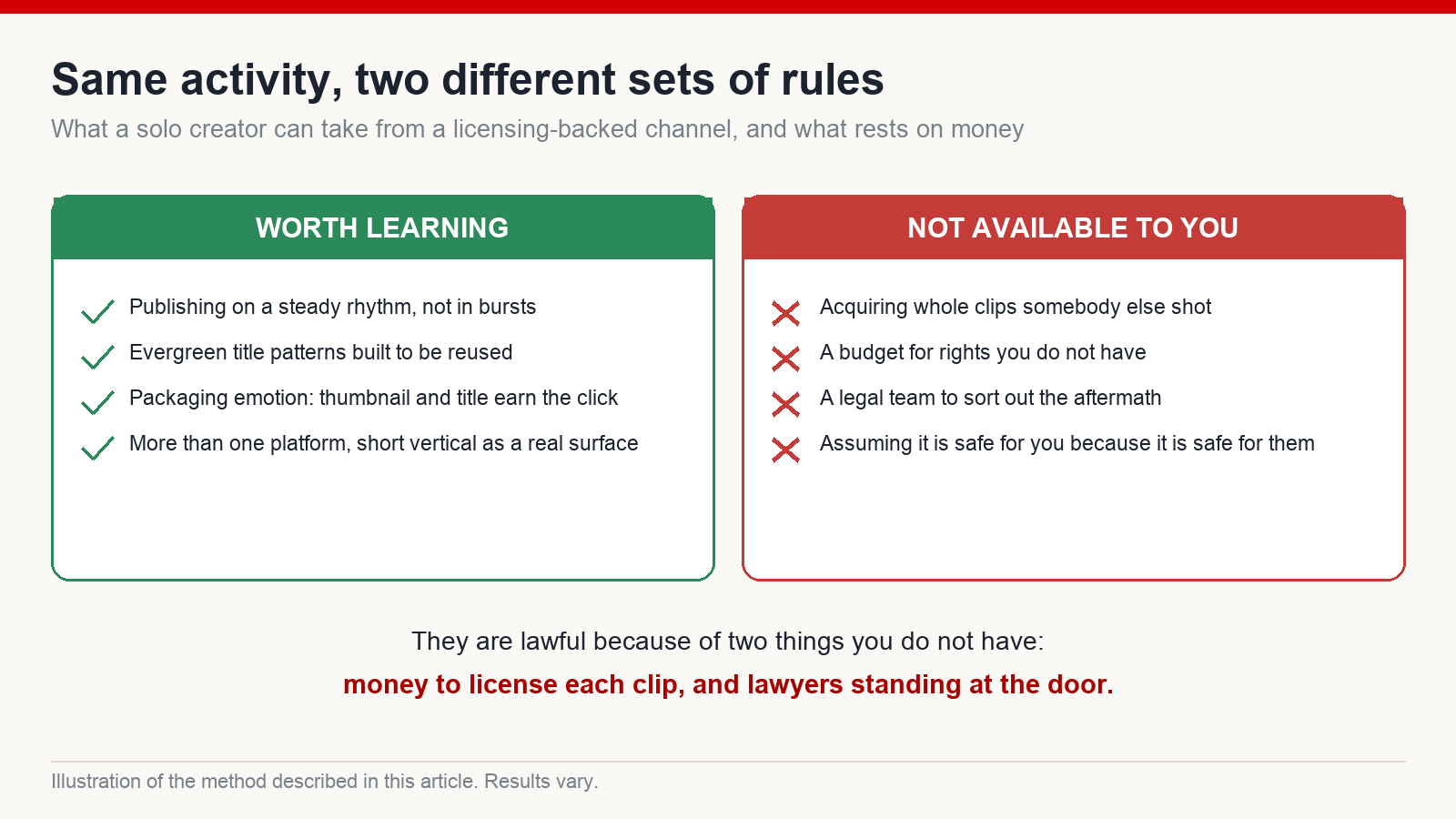
Worth learning: publishing on a steady rhythm rather than in bursts. Evergreen title patterns designed to be reused season after season. Packaging emotion deliberately – the title and the thumbnail doing the job of getting the click. Covering more than one platform, and using short vertical formats as a second surface rather than an afterthought.
Not available to you: acquiring whole clips somebody else shot. Leaning on a budget for rights you do not have. Relying on a legal team to sort out the aftermath. And, above all, assuming the format is safe for you because it is safe for them.
They are lawful because of two things you do not currently have: money to license each clip, and lawyers standing at the door. You are opening the studio page with empty hands. Same action, no shield. That is the whole of it.
The route without a legal department: the five-source blend
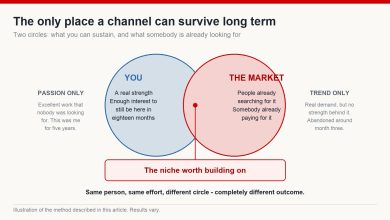
You cannot walk through the licensing company’s door. That door costs money and legal cover. There is a narrower one, which I have used and taught for years, and it comes down to one instruction: blend, never run pure.
Never build a video from a single source. And never lift whole clips the way a licensing company can – they bought the right, you did not. Mix. The more sources feeding into a video, the more it becomes genuinely yours, and the harder it is for any single claim to reach it.
A word about fair use, because it gets treated as a talisman and it is not one. Fair use is a doctrine that can permit limited use of somebody’s work for a new and transformative purpose without permission. It is a grey area, decided case by case, and the rights holder is entitled to disagree with your reading of it. Careful practice reduces risk; it does not remove it. Three habits that help:
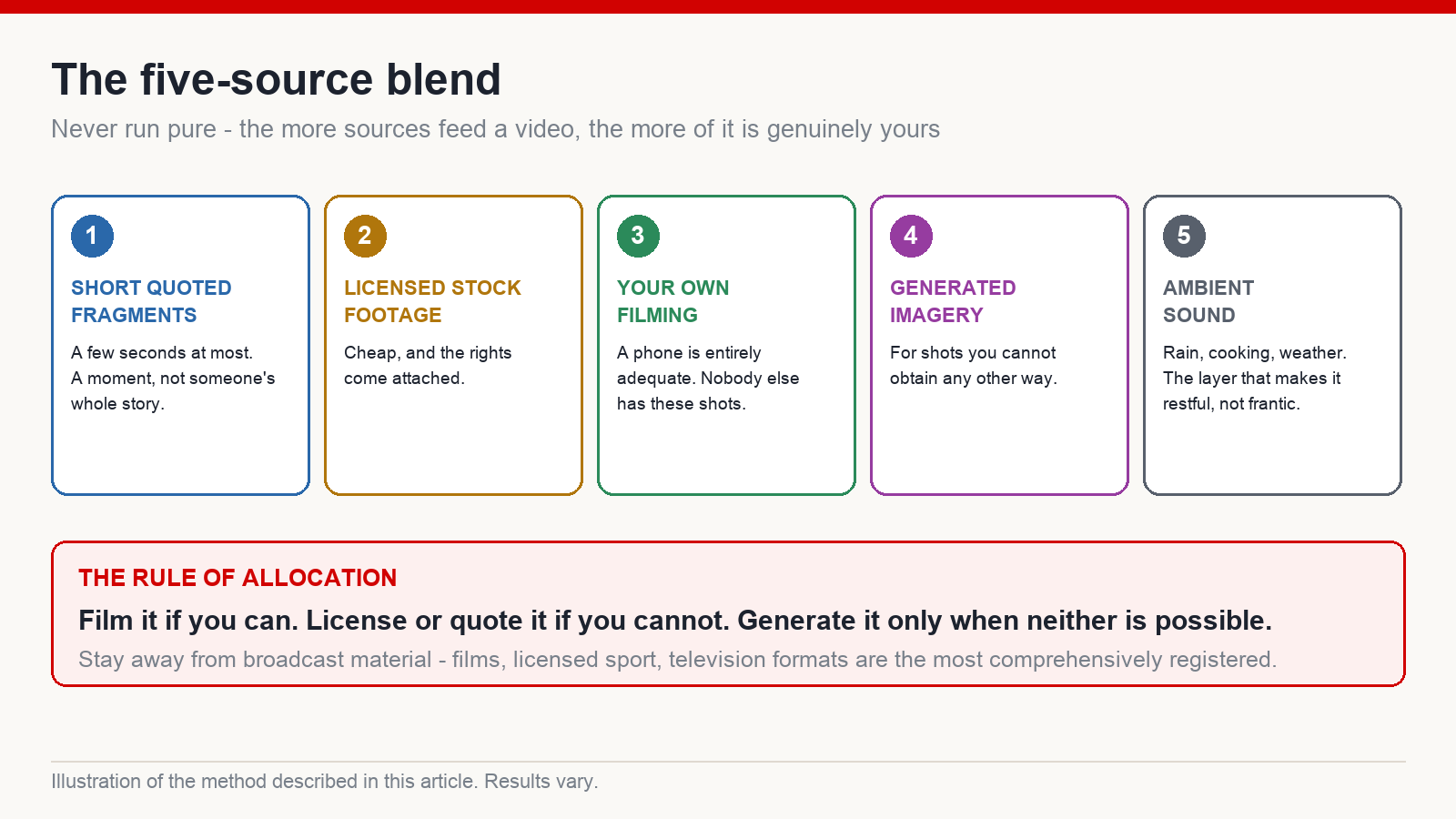
- Keep any borrowed fragment very short – a few seconds at most. Take a moment, not somebody’s whole story.
- Stay away from broadcast material – films, licensed sport, television formats. That catalogue is the most comprehensively registered material on the internet and the automated matching finds it immediately.
- Blend sources, so no video of yours lives or dies on one borrowed fragment.
Short quoted fragments are only one of the five sources I teach. The other four: licensed stock footage, which is cheap and comes with the rights attached; your own filming, which a phone is entirely adequate for; generated imagery, for shots you cannot obtain any other way; and ambient sound – rain, cooking, weather, the quiet layer that makes a compilation restful rather than frantic. Five sources blended give you something durable, hard to claim against, and still carrying the compulsive rhythm of the format.
The rule of allocation is simple: film it if you can, license or quote it if you cannot, and generate it only when neither is possible.
Where to start this week
Go back to the yellow icon at the top of this article. You know now why the big compilation channels publish borrowed footage for a decade without trouble – not because they are cleverer at avoiding it, but because they paid for the rights and keep lawyers on hand. You do not have either, and neither did I. So your route is not to imitate their budget. It is to blend, keep every quoted fragment short, and build something nobody can pull out from under you.
Three things you can do now.
Pick an evergreen subject – something people will still be searching for in five years. Look at how the big compilation channels name things: a repeated keyword, a period marker, one strong adjective. That shape survives many seasons because the frame can be refilled each time.
Get the order right: packaging first, content second. Thumbnail, then title, then the video. People click because of the picture and the words, and they stay because of what is inside. Building it the other way round is the most common waste of a good video I see.
Publish on a rhythm. The thing I genuinely admire about the large compilation operations is not their scale, it is their regularity. You do not need to match their volume. You need a checklist and a cadence you can hold. Steady beats explosive, every time.
Copyright is not a wall built to keep you out. It is the set of rules that lets you go a long way without losing everything one morning. Learn them and keep going – slowly, safely, and for longer than the people who did not.
If you want a structured English-language programme built around this way of sourcing and publishing, that is what I run at mmoyoutube.com. No promises about views or income – this work is unpredictable, and most people who learn the method never actually publish.
How does a licensing-backed compilation channel actually make money?
Not only from advertising on one platform. The operating company earns from a single acquired clip along several routes: publishing across multiple platforms and television, then re-licensing that footage onward to news outlets, broadcasters and brands. Buy once, earn along several lines – which is what makes buying viable in the first place.
Why can they publish other people’s footage for years without penalty?
Because each clip was licensed properly and there is a legal team behind the operation. The right lives in the paperwork, not in the editing. That is exactly why an individual with no budget cannot replicate the model by copying its surface.
What happens if a beginner re-uploads viral clips into a compilation?
Two mechanisms are waiting. A formal copyright strike penalises the channel, and enough of them end it permanently. Automated content matching does not remove anything – it simply redirects the advertising revenue to the rights holder, so you produce and somebody else is paid. Without licences or lawyers, you are on the exposed side of both.
Is keeping quoted fragments under five seconds actually safe?
Nothing here is absolutely safe. Fair use is a grey area decided case by case, and a rights holder can disagree with your interpretation. Short fragments, avoiding broadcast material and blending several sources reduce the risk substantially compared with lifting whole clips. That is practitioner experience, not legal advice for your situation.
What is the difference between treating a clip as a post and as an asset?
A post is finished when it publishes. An asset keeps earning along more than one route over time – re-cut, redistributed, reused in later videos. The licensing companies think in assets, which is why they will pay for footage at all. It is the one part of their thinking a solo creator can adopt immediately and for free.