Capability First: The Six-Layer Skill Stack Behind a Channel That Lasts
There was a stretch where I spent a lot of energy imagining the end state. Not needing an alarm. Working on things I chose. Answering to nobody. The version of the story where the difficult middle has already happened.
What eventually became obvious — after enough failures, and nine years of building channels since 2017 — is unglamorous. Most of us are picturing the finished building while the ground has not been dug. Options do not arrive first. They are what capability produces later.
Choice is an output, not a starting position
People want the same short list: better income, work they enjoy, more control over their week, more room to rest.
All of those are downstream of one thing: being worth choosing. Whatever the arrangement — employed, freelance, running a channel — somebody has to prefer what you do to the alternatives. Skip that step and there is nothing for the rest to sit on.
Which makes the useful question much narrower than "how do I get free?". It is: what am I getting measurably better at, and how would I know?
The stack a channel runs on
"Get better at YouTube" is not actionable. Six distinct competences are, and they sit on top of each other.
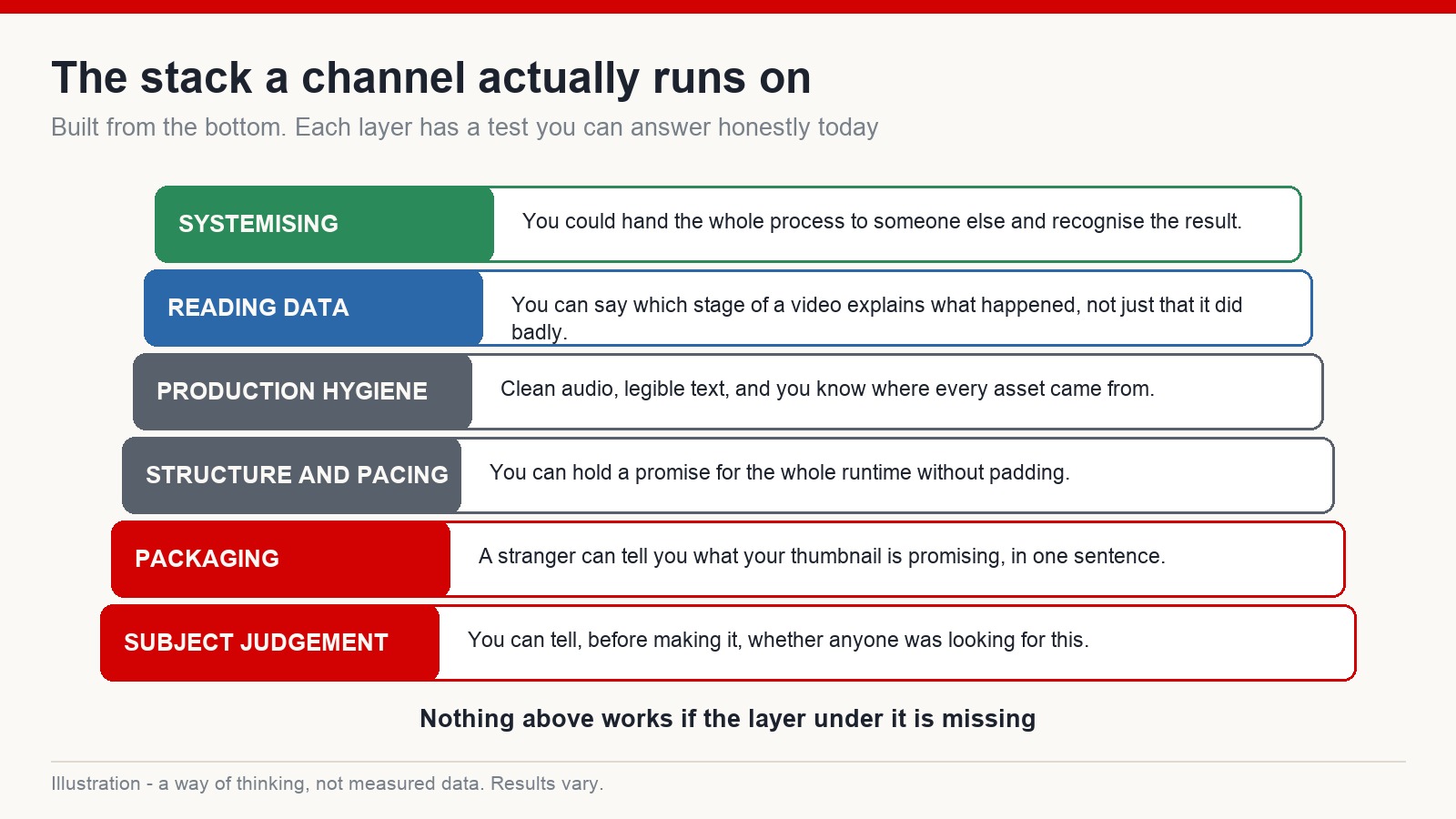
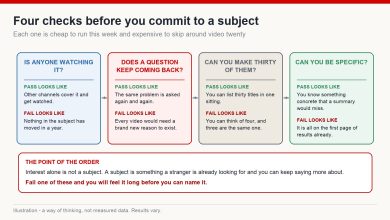
Subject judgement. Can you tell, before making something, whether anyone was looking for it? This is the foundation, and it is the one most people skip, because it is the least fun.
Packaging. Show a stranger your thumbnail and title and ask what they think they would be getting. If they cannot answer in one sentence, that skill is not there yet, regardless of how good the video is.
Structure and pacing. Can you keep the promise for the whole runtime without padding? Most videos lose people in a stretch where nothing new arrives.
Production hygiene. Clean audio, legible text, and knowing where every asset came from. Not craft, exactly — more like not tripping over your own feet.
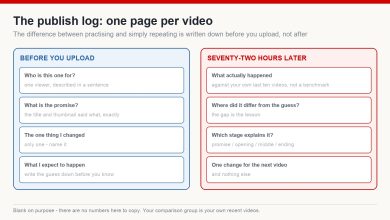
Reading data. After publishing, can you say which stage explains the result? "It did badly" is a feeling. "Almost nobody clicked" is a diagnosis.
Systemising. Could you hand the process to somebody else and recognise the output? This is the layer that turns a hobby into something that survives a bad month.
Pick the lowest layer you would fail on and work on that one. Nothing above it will hold otherwise.
Breadth early, depth after
In the first stretch of any build, breadth is cheap and correct. You do not yet know what you are good at or what you can tolerate, and the only way to find out is to try several things badly.
The cost of breadth changes later. Once you have a couple of years of real evidence about what works for you, continuing to sample is no longer research — it is avoidance, and it is expensive because your time is worth more than it was.
The people I have watched do well are almost never the ones doing the most things. They are the ones who went unreasonably deep on one narrow thing until they were genuinely hard to replace in it.
What actually transfers when you switch
This is where the stack earns its keep, because it tells you what a change of subject really costs.
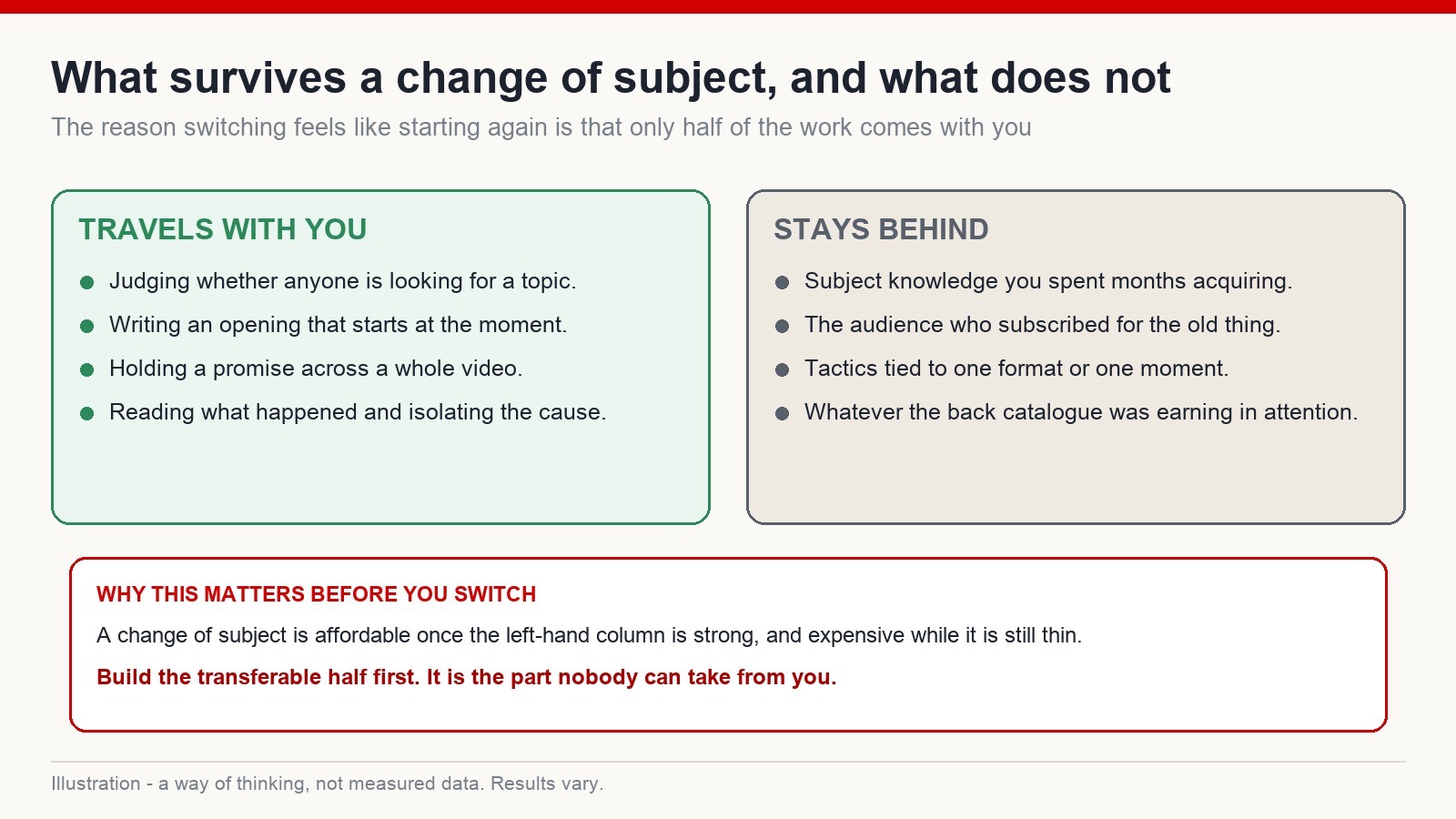
The four judgement layers travel with you. Knowing how to test whether demand exists, how to open, how to hold attention, how to read a result — none of that is tied to a topic.
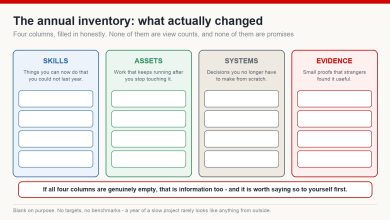
What stays behind is the subject knowledge you accumulated, the audience who subscribed for the old thing, tactics tied to a format, and whatever attention the back catalogue was earning.
So switching is affordable when the transferable half is strong and brutal when it is thin. Someone changing direction every few months is not sampling widely. They are repeatedly paying the second column and never accumulating the first.
The quiet stretch, and its honest limit
Nobody sees the part where you are getting better. That is not poetic, just structural: capability is invisible until it produces something.
But I want to resist the version of this argument that treats solitude as proof of virtue. You can absolutely dig for two years in the wrong place. Persistence is only an asset when it is attached to feedback.
The test is not how much you sacrificed. It is whether you are getting better at things somebody outside your own head would value — and the only way to check is to keep putting work in front of strangers while you build. Publish while the foundation goes in. Otherwise you are not building capability, you are rehearsing.
Start before you feel ready
The last piece is a tension worth naming. Everything above says build capability first, and it is easy to read that as permission to prepare indefinitely.
It is not. You do not read your way to any of those six layers. You get them by publishing, being wrong in a specific way, and fixing one thing. Another course watched before starting is usually just fear with a productive costume on.
So the order is: start now, badly, on purpose — and use the stack to decide what to improve next, rather than changing everything each time something disappoints you.
Years later the thing worth being proud of is rarely the result. It is that you can now do, reliably, something you could not do at all — which is the only part nobody can take back.
Which skill should a new creator work on first?
Subject judgement, then packaging. Deciding what is worth making and whether a stranger understands the promise sit under everything else. Editing and gear improve videos that people already click on.
Is it wrong to try several different things?
Not early on, when you are still finding out what you can sustain. It becomes expensive once you have real evidence and keep restarting anyway, because the transferable half of the work never gets deep enough to help.
How do I know if I am actually improving?
Name something you can do now that you could not do six months ago, and check it against your own recent work rather than anyone else’s numbers. If nothing comes to mind, the issue is usually a missing feedback loop, not a lack of effort.
If you want a structured path through those layers for an English-language channel, that is what I put together at mmoyoutube.com.