The Lonely Phase of Building a YouTube Channel, and How to Work Through It
There is a stretch of building a channel that nobody puts in the thumbnail. It is two in the morning, the desk lamp is the only thing on, and the questions arriving are all the same shape: is anyone going to watch this, is this going anywhere, am I lying to myself?
It is not the loneliness of having no one around. It is the loneliness of working on something that nobody near you believes is real yet.
I have been making YouTube channels for English-speaking audiences since 2017, mostly faceless, and this phase is the one I get asked about least and see break people most. So this is a piece about the quiet months: why they happen mechanically, what to do inside them, and what is worth believing about them and what is not.
The gap between effort and evidence
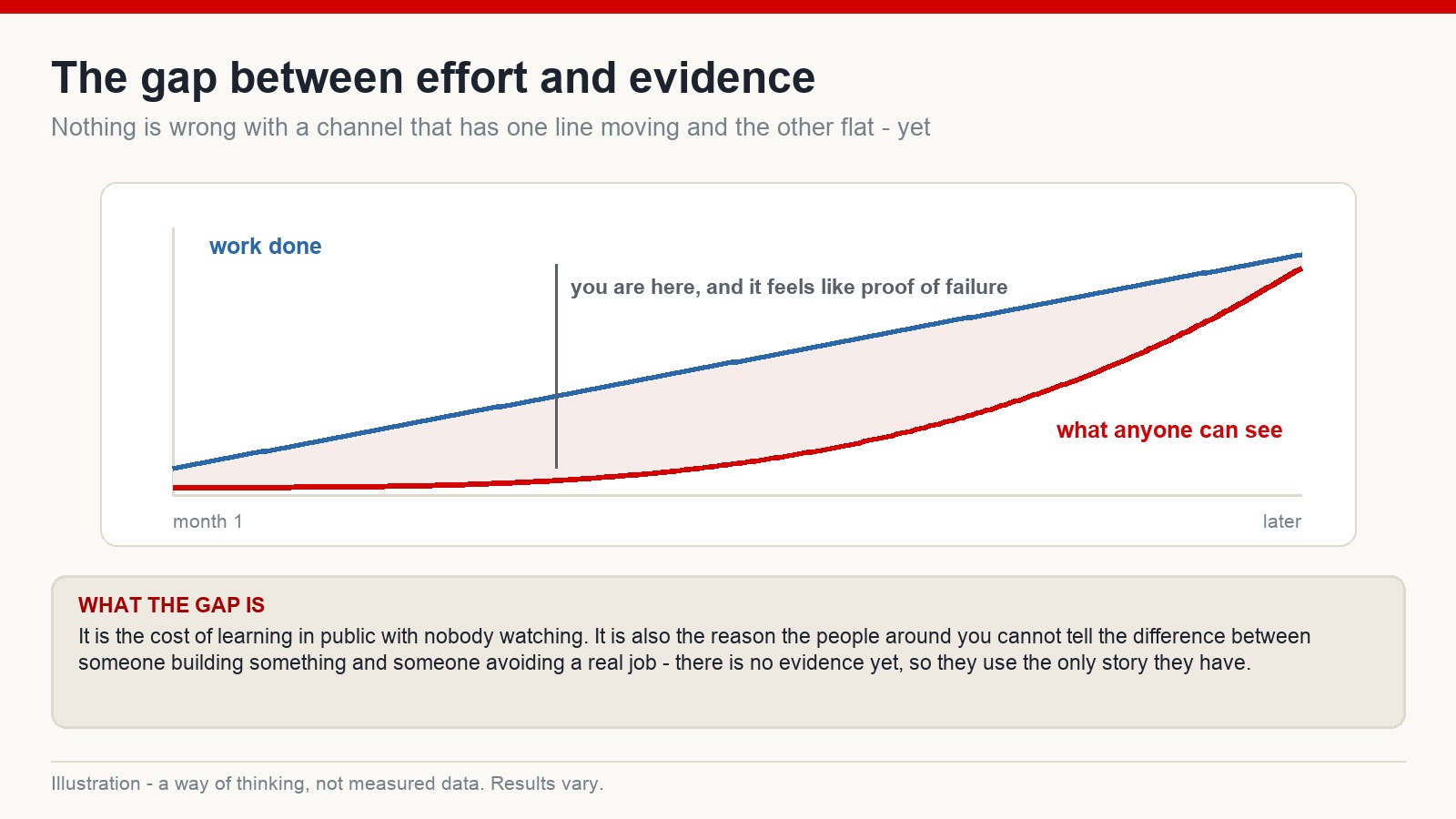
Two things move at different speeds when you start. The work you put in rises in a fairly straight line from week one. What anyone can see stays close to flat for a while, then bends upward much later, if it bends at all.
The space between those two lines is the whole problem. It is not a sign the channel is broken. It is the cost of learning in public while nobody is looking, and every creator who eventually gets somewhere has spent time inside it.
It also explains the social part, which people take far too personally. Your friends and family are not being unkind when they ask whether you are between jobs. They have no evidence, so they use the only story that fits what they can observe: a person spending evenings on a computer for no visible return. You are holding a private conviction and they are holding public facts, and the two do not meet for months.
What the quiet months are actually doing
It helps to know that the platform is not ignoring you out of spite. It is short of information.
A new channel gives a recommendation system almost nothing to work with: no history of who watched to the end, no pattern of which topics belong to which audience, no comparison between your uploads because there are barely any uploads. The early phase is data collection, and thin data produces cautious distribution.
Which means the useful question in month two is not “why am I not growing”. It is “am I generating enough clean signal for anyone — the platform or myself — to learn something from”. Those are different problems with different fixes.
Refreshing is not reviewing
Here is the habit that made those months worse for me than they needed to be, and it is nearly universal.
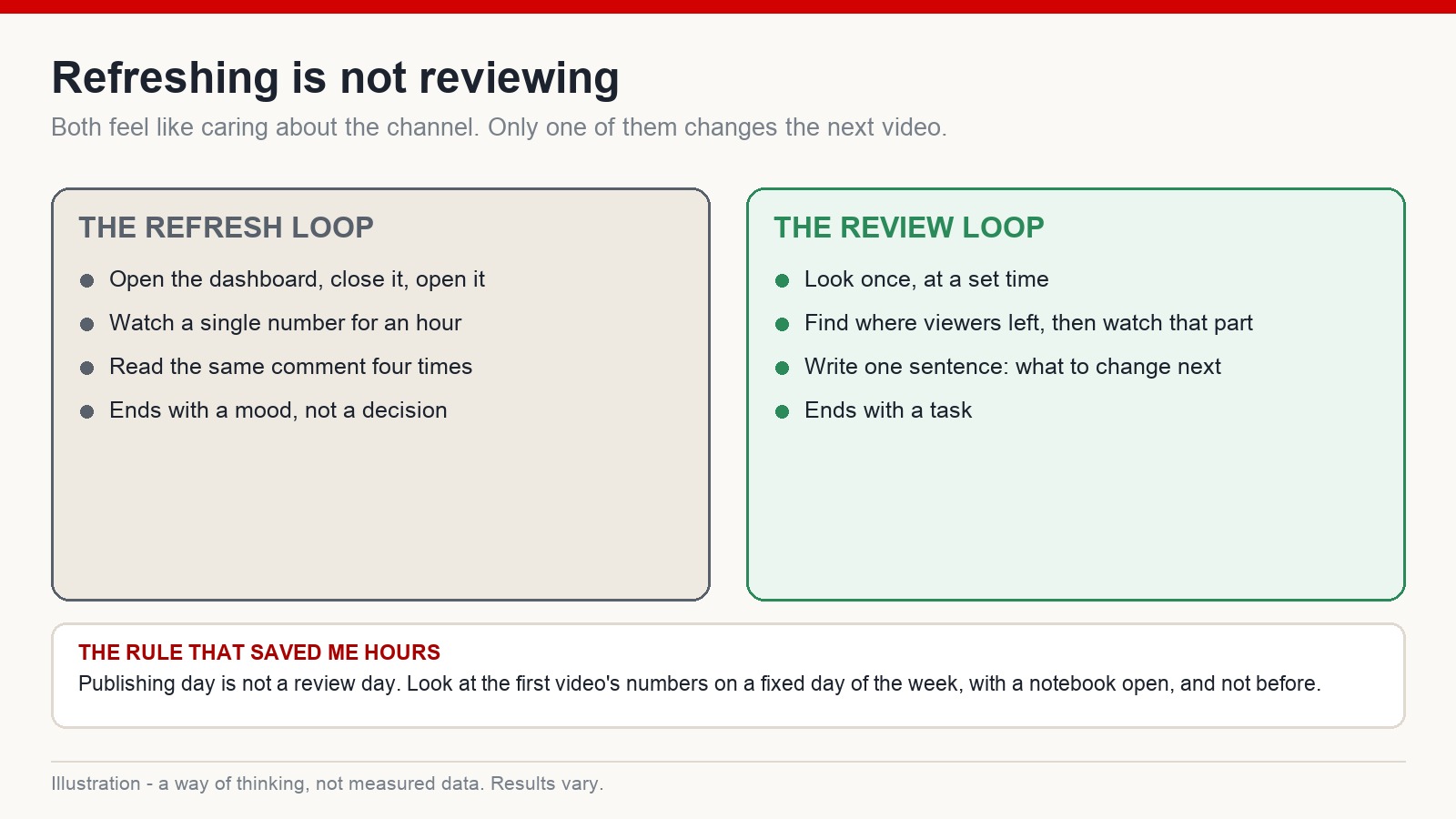
You publish, then you open the dashboard. Close it. Open it again twenty minutes later. Watch one number that has not moved. Read the same comment four times. An hour disappears and it feels like you were working on the channel.
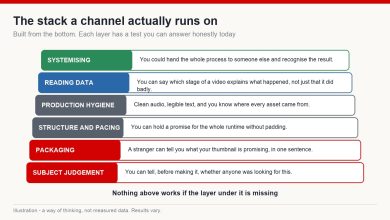
Reviewing looks different. You look once, at a set time. You find the point on the retention curve where people leave, then you watch those fifteen seconds of your own video and usually wince, because the answer is obvious. You write one sentence about what to change next. It ends with a task instead of a mood.
One rule fixed most of this for me: publishing day is not a review day. Look at a video’s numbers on a fixed day of the week, with a notebook open, and not before. The numbers on day one are noise anyway, and staring at noise while feeling fragile is a bad combination.
Evidence you can collect before the views arrive
The reason the quiet stretch feels like failure is that subscriber count is a terrible instrument at low volumes, and it is usually the only one people look at. There are better ones, and they move earlier.
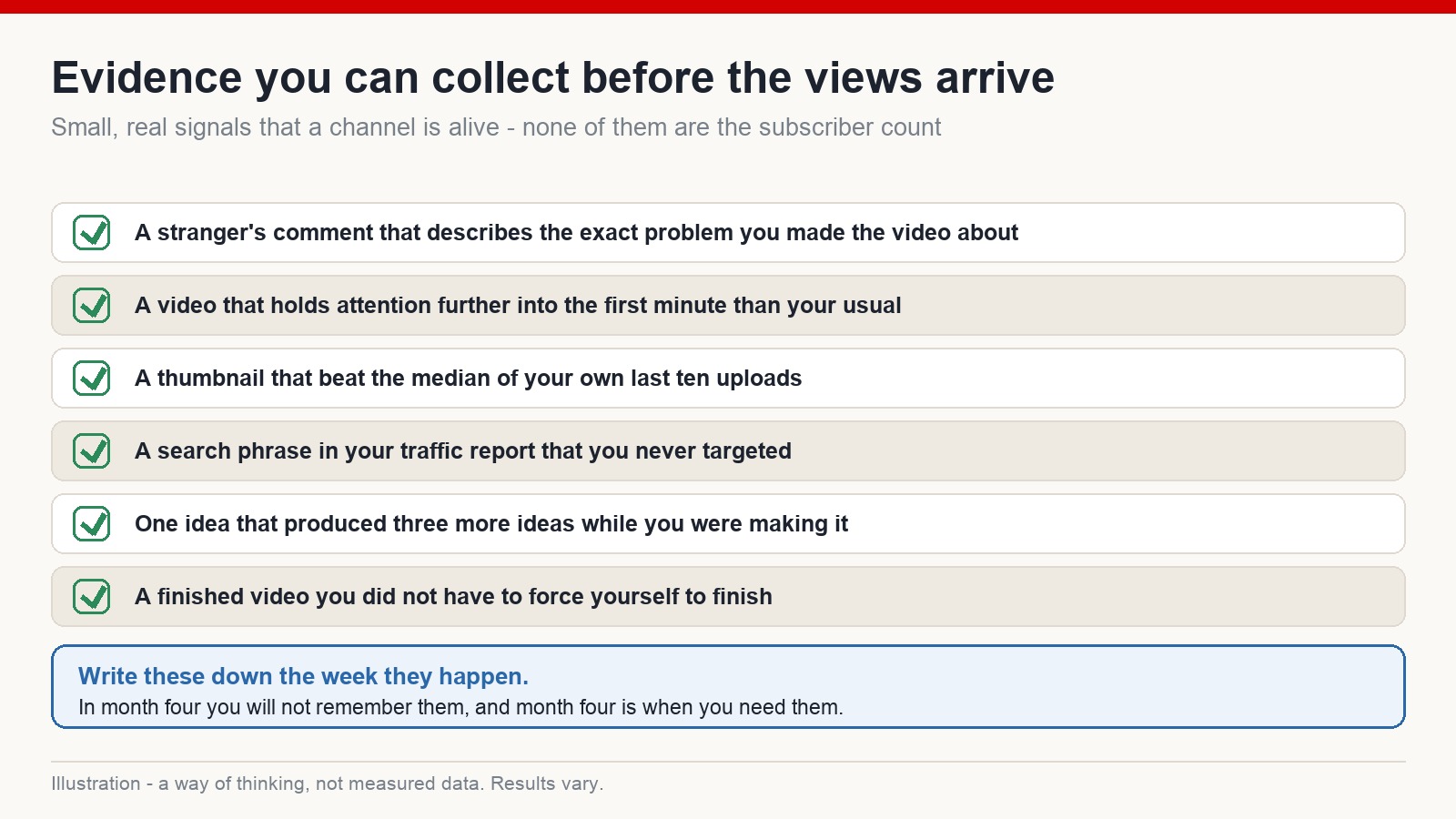
- A stranger’s comment describing the exact problem you made the video about. One is meaningful; it means the video found the person it was written for.
- A video that holds attention further into the first minute than your usual.
- A thumbnail that beat the median of your own last ten uploads.
- A search phrase in your traffic report that you never deliberately targeted.
- One idea that produced three more ideas while you were making it — that is a format working, not just a video.
- A video you finished without having to force yourself, which means the workflow finally fits your life.
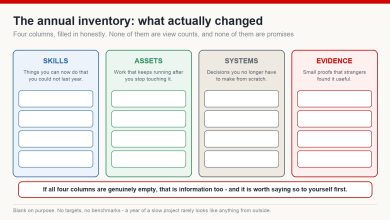
Write these down in the week they happen. In month four you will not remember them, and month four is exactly when you need the record.
What a small circle of the right people is for
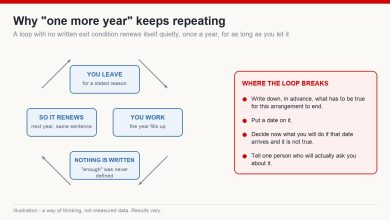
Going it alone is fine for a while. Going it alone indefinitely is how people end up polishing the wrong thing for a year.
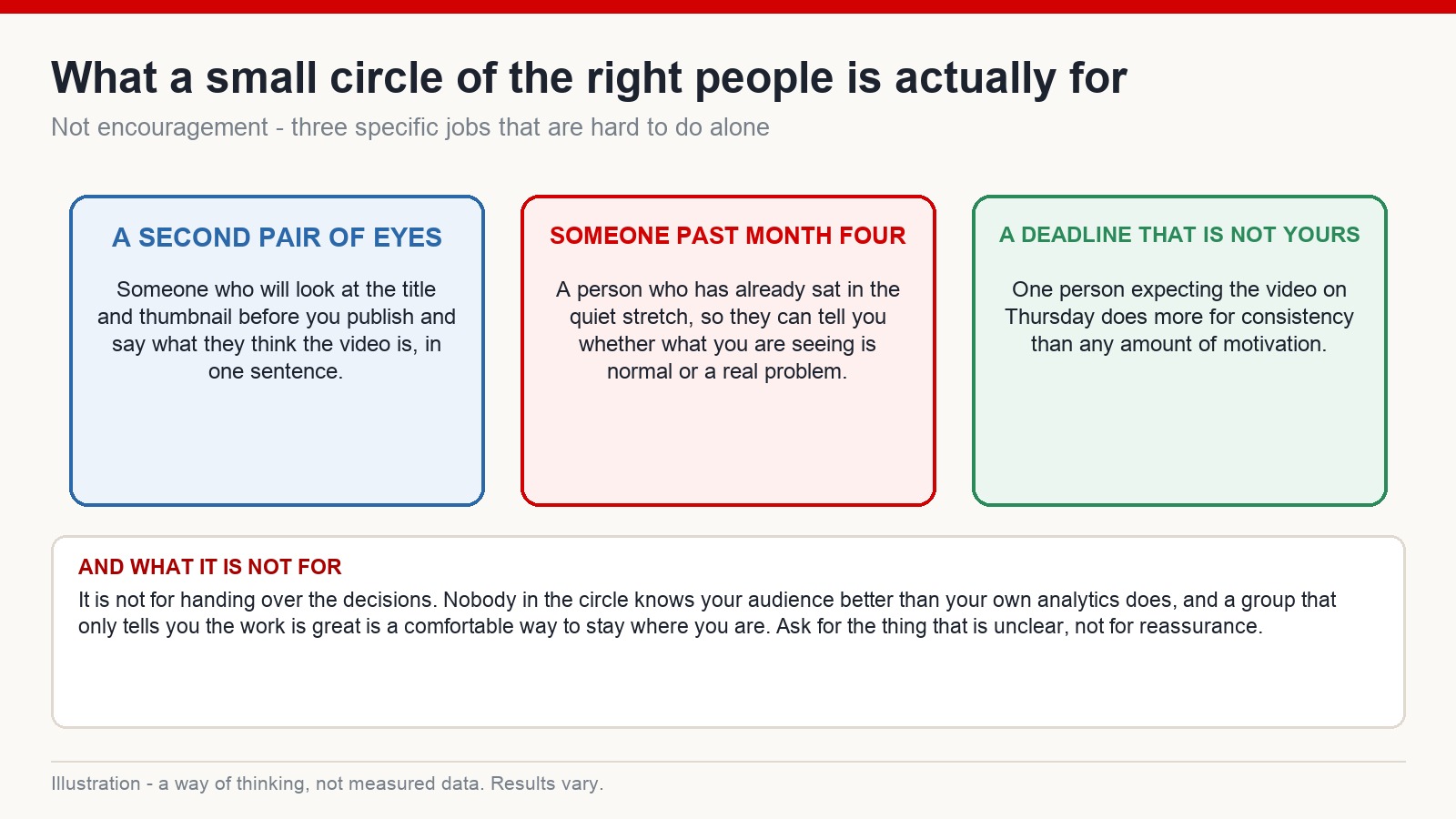
What a small circle is genuinely useful for is narrow and practical:
- A second pair of eyes. Someone who looks at your title and thumbnail before you publish and tells you, in one sentence, what they think the video is. You cannot do this for yourself; you already know the answer.
- Someone past month four. A person who has already sat in the quiet stretch and can tell you whether what you are seeing is normal or an actual problem. That single distinction saves months.
- A deadline that is not yours. One person expecting the video on Thursday does more for consistency than any amount of motivation.
What it is not for is handing over the decisions. Nobody in the group knows your audience better than your own analytics does, and a circle that only tells you the work is great is a comfortable way to stay exactly where you are. Ask them for the thing that is unclear, not for reassurance.
Loneliness is not proof that you are right
This is where a lot of writing on this subject goes wrong, and I want to be careful, because the comforting version of this idea is also a trap.
Feeling isolated does not mean you are ahead of everyone. It only means there is no evidence yet. The same feeling shows up in people who are three months from something working and in people who are repeating the same mistake for the fortieth time, and from the inside the two are indistinguishable.
So do not use “they just do not understand yet” as an answer to every doubt. Use it only after you have checked the boring things: does a stranger understand the promise in the title, does the thumbnail say one thing, does the first thirty seconds start at a moment rather than a greeting, is there any demand for the subject at all.
And the phrase I would retire completely is success always comes to those who never quit. It does not. Some people work carefully for years and stay small; the honest version is that persistence is necessary and not sufficient, and that outcomes vary enormously between creators doing very similar work. What consistency buys is not a result. It is enough attempts, and enough data, to keep making better decisions — which is the only part of this any of us controls.
The message that changes the week
At some point, if you keep going, someone you have never met will tell you that a video helped them. Not a big number, not a milestone. One person saying the thing you made arrived at a useful time.
I have watched that single moment carry creators through several more months, and I think the reason is simple. In the quiet stretch you are working on a theory that a stranger somewhere has your problem. That message converts the theory into a fact, and facts are much easier to work from than hope.
Until then, the job is unglamorous and completely doable: publish at a pace you can hold in a bad week, review once on a fixed day, change one thing, write down the small signals, and keep the number of people whose doubt you carry around as low as you reasonably can.
The quiet is not a verdict. It is just the part of the work that nobody films.
Frequently asked questions
Is it normal to feel lonely making YouTube videos?
Yes, and mostly for a structural reason rather than an emotional one: for the first months there is no visible result to share, so the people around you have nothing to react to. It usually eases once there is evidence, not once you feel more confident.
How do I stop obsessively checking my analytics?
Give yourself a fixed review day and treat publishing day as off limits. Early numbers are noise, and checking them repeatedly produces a mood rather than a decision. Reviewing with a notebook, once a week, is both more useful and much less painful.
What should I do when friends or family say YouTube is a waste of time?
Stop trying to win the argument, because you cannot win it without evidence you do not have yet. Weigh feedback by whether the person has ever published something and been ignored, and take your actual direction from your analytics rather than from anyone’s opinion.
How do I know whether the silence means I should keep going or change something?
Separate persistence from stubbornness by checking the mechanical things first: title clarity, one idea in the thumbnail, an opening that starts at a moment, and whether anyone is looking for the subject at all. If those are sound and you have published a real number of videos at a steady pace, the silence is more likely the phase than the verdict.
Should I join a creator community?
A small one can be genuinely useful for three things: honest feedback on packaging before you publish, someone further along who can tell you what is normal, and an external deadline. Be wary of groups whose main product is encouragement — that feels good and changes nothing.
If you would rather not do the quiet stretch entirely on your own, a structured approach to building a channel for an English-speaking audience is what I teach at mmoyoutube.com.