Short Clips or Long Videos First on a New Faceless Channel?
Almost everyone who starts a faceless channel for an English-speaking audience asks me the same question within the first fortnight: should I post short vertical clips first, to get some views going?
It is a completely reasonable question. Short clips are easier to get seen, easier to go wide with, and easier to gain subscribers from than a long video is. If your first goal is to see a number move, they are obviously the faster route.
And yet most of the creators I know who build channels for international audiences do the opposite. They largely ignore short-form at the start and put everything into longer videos. The reason is worth understanding, because it is not stubbornness and it is not snobbery.
Views are the visible number, not the result
When a short clip picks up a large view count, the instinctive reading is that it must have been valuable. It is the number on the screen, it is public, and it feels like the scoreboard.
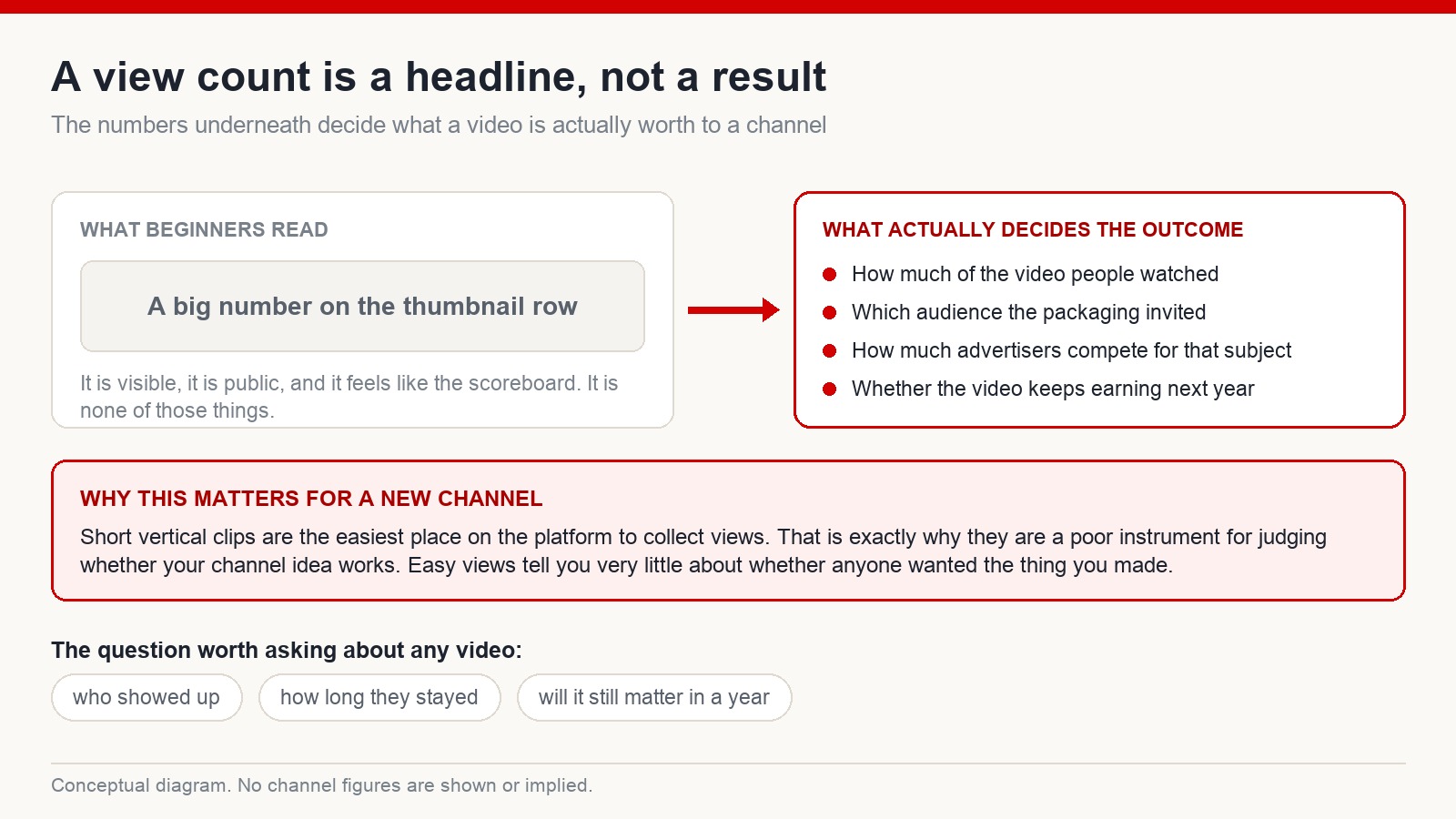
What sits underneath it decides considerably more: how much of the video people actually watched, which audience the packaging invited in, how hard advertisers compete for that subject, and whether the video is still doing anything a year from now.
That is why two videos with similar view counts can be worth very different amounts to a channel. It is also why easy views are a poor instrument for judging whether your channel idea works. Short vertical clips are the cheapest place on the platform to collect attention, which is precisely what makes them a weak test of whether anyone wanted the thing you made.
The goal is not the largest number
This sounds contrarian until you say it out loud: if you are building a channel as a long-term asset, the objective is not the most views or the most subscribers.
It is the most value produced per hour of your own labour.
Once you frame it that way, a lot of decisions get simpler. It explains why experienced creators favour longer content, evergreen subjects and formats with a long shelf life, rather than chasing whatever is spiking this week. They are not optimising for the number that is easiest to grow. They are optimising for the work that keeps paying attention forward.
Why longer videos tend to carry more weight
Three reasons, none of them mysterious.
They generate watch time. A longer video that holds attention produces far more watched minutes per viewer, and sustained attention is what the recommendation system is fundamentally built to reward.
They carry more advertising opportunity. A longer runtime simply has room for more ad placement than a clip of a few seconds does. That is arithmetic, not strategy.
They live longer. A well-made tutorial, documentary or piece of storytelling can keep being found through search and recommendation for years. That is the entire basis of treating a channel as an asset rather than a treadmill: work you did once continuing to matter.
Two formats, two different jobs
Most arguments about short versus long collapse the moment you stop treating them as competitors and name what each one is actually for.
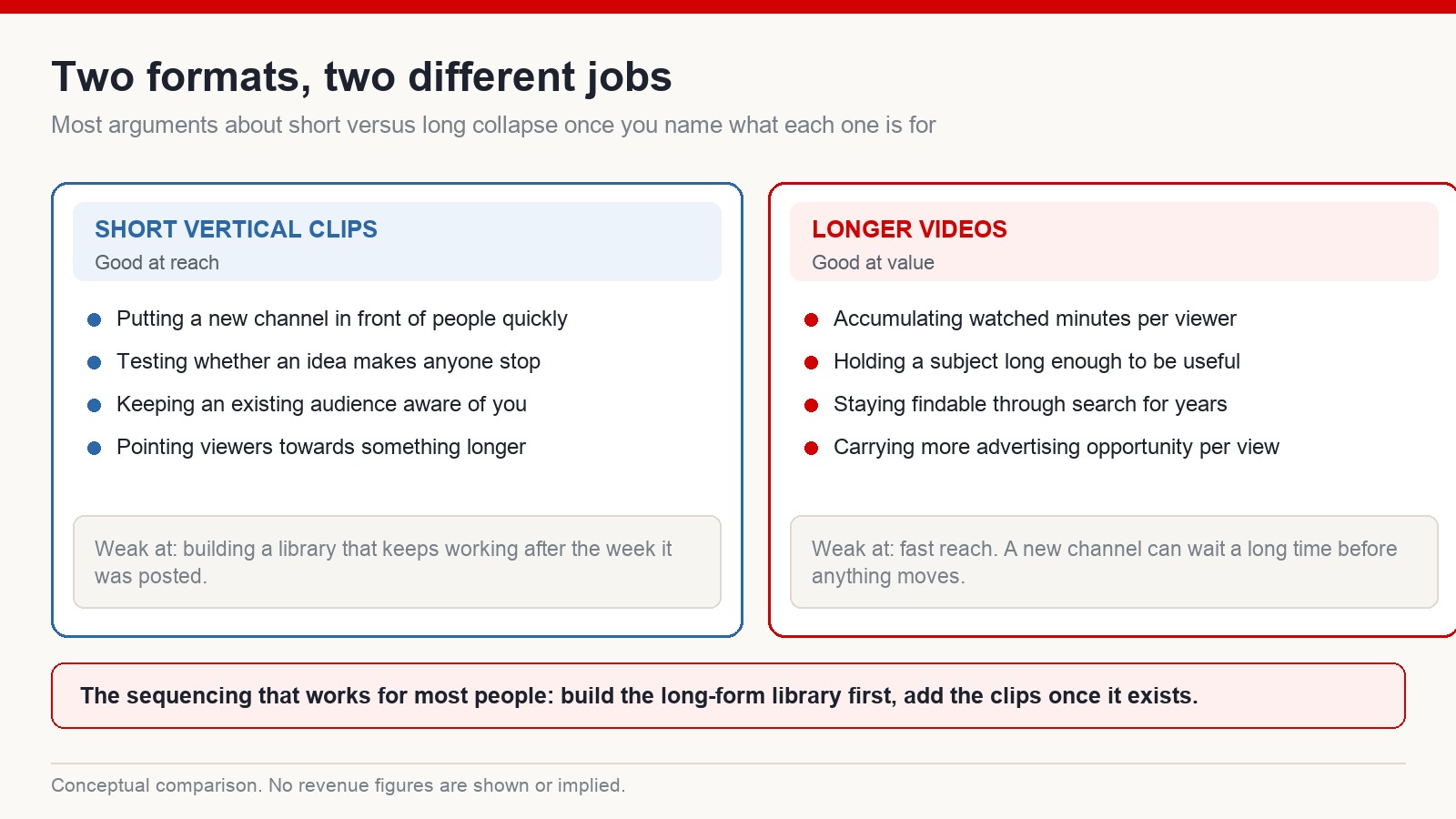
Short clips are good at reach. They put a new channel in front of people quickly, they test whether an idea makes anyone stop scrolling, they keep an existing audience aware you exist, and they can point people towards something longer. What they are weak at is building a library that keeps working after the week it was posted.
Longer videos are good at value. They accumulate watched minutes, they hold a subject long enough to actually be useful, they stay findable through search for years and they carry more advertising opportunity per view. What they are weak at is fast reach – a new channel can wait a long and demoralising time before anything moves.
Neither list makes one format better. They answer different questions, and the question that matters is which one you need right now.
The pattern I keep watching
There is a sequence I have seen play out many times, and it is worth recognising early because it costs people months.
Someone publishes a handful of long videos. Nothing happens – which is normal, and which nobody warned them about. Discouraged, they switch to short clips and immediately start getting views. It feels like proof that they had been doing it wrong.
Then a few months pass. The view counts look healthy and nothing else has changed. The channel has an audience that arrived for something incidental, no library worth searching, and no clear identity. Eventually they go back to long-form, having spent a season learning something they could have been told for free: a view is not automatically worth anything.
I am not describing this to be discouraging. I am describing it because the discouraging bit – the silence after your first few long videos – is the normal experience, not evidence of failure.
When short clips genuinely make sense
None of this makes short-form bad. It is a strong instrument used for the right job.
They work well for building a personal brand, because appearing frequently is most of that battle. They work well when you have something to sell alongside the channel, because frequency of contact matters more there than depth. And they work well as a feeder, moving people from a clip towards a longer piece of content or an ecosystem you have built elsewhere.
What they are not, in my experience, is a good foundation. If the plan is to build something durable around advertising and search, the long-form library is the foundation and the clips go on top of it.
A sequence that works
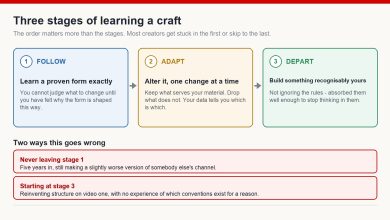
The pattern I would suggest for most people starting out is three phases, in order.
First, build the library. Longer videos, evergreen subjects, and enough attention to search wording that the content can be found by someone looking for it rather than only by someone being shown it.
Second, add the clips. Once there is something worth pointing people towards, short-form becomes a distribution channel rather than a substitute for having content.
Third, connect it all. Clips, long videos, a site, an email list, whatever social presence makes sense – so that attention arriving anywhere can move to everywhere else.
Most people try to do the second phase first. It is the more enjoyable phase, which is exactly why it is tempting.
The honest caveats
Two things I would want said back to me if I were reading this.
First, this is a general pattern, not a rule. Some channels genuinely work short-first, particularly where the subject suits it or the creator is building a personal brand. If that describes you, ignore me.
Second, platform behaviour changes. How short-form is distributed and monetised has been revised repeatedly and will be revised again. Treat any strategy article, including this one, as a description of the terrain at the time of writing rather than a permanent map.
Frequently asked questions
Do short clips earn nothing?
No. They can generate revenue, but through a different mechanism from longer videos, and the two are not directly comparable per view.
Should a brand new channel post short-form at all?
It depends what you are building. For brand awareness or reach, they are useful. For a searchable library and sustained watch time, most creators prioritise longer content first.
How long should a long video be?
There is no correct number. Long enough to cover the subject properly, and no longer. Padding to hit a runtime damages the retention you were trying to build.
Can I do both at once?
Plenty of people do, once a long-form foundation exists. Doing both from day one usually means doing both badly, because they demand different skills and different production rhythms.
How long before a long-form channel shows signs of life?
Longer than you want, and it varies enormously between niches and creators. Anyone giving you a specific timeline is guessing.
Ask the longer question
Beginners ask: short clips or long videos? The more useful question is what you want to be holding in two or three years.
If the answer is a library of content that keeps being found, that keeps accumulating watch time, and that does not need you to feed it daily to survive, then longer videos are the foundation and short-form is the accelerator.
Speed helps you move. Foundations decide how far you get. Neither substitutes for the other, and the order matters more than most people realise.
If you want the full process – choosing a subject, researching the audience, and building the long-form library before you worry about formats – that is what I teach at mmoyoutube.com.