How to Measure Demand Before You Make a Single Video
There is one mistake I see in almost every new channel, and it is not a technical one.
People choose what to make like this: I like this. This seems interesting. This feels like it could go viral. All three are statements about the creator. None of them is a statement about whether anyone wants the video.
YouTube does not pay for enthusiasm. It distributes what an audience already wants, and the size of that want is something you can measure before you spend a week on production. That is the whole difference between a channel that publishes fifty videos into silence and one that gets traction in its first handful.
I have been making videos since 2017, mostly faceless channels built for viewers in the US, the UK, Germany and Japan. This is the demand check I run before committing to a topic.
Why a good idea is not the same thing as an audience
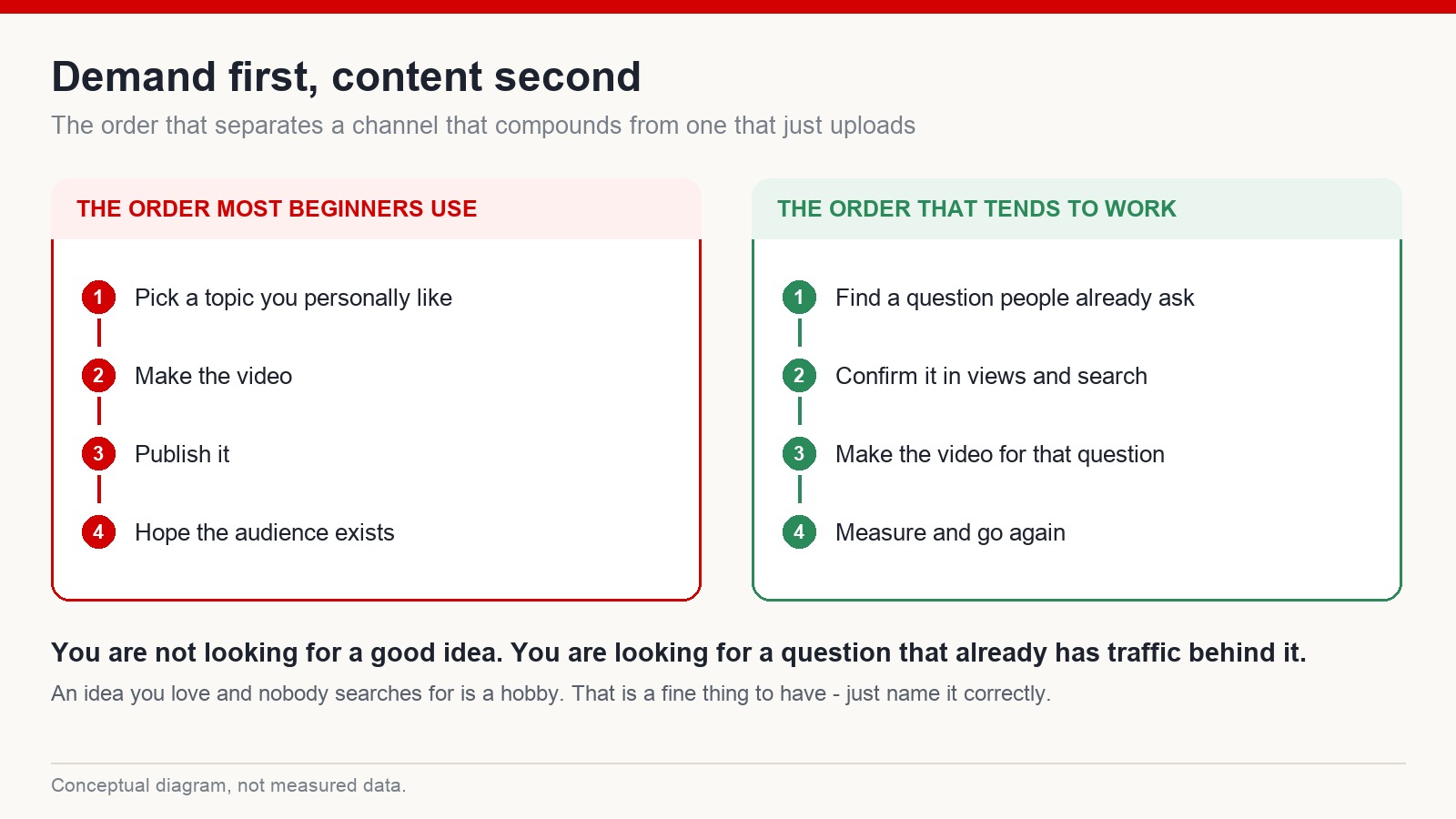
A good idea does not imply a viewer. A question people are already asking almost always has traffic behind it.
That is the whole shift: demand first, content second. Find where the want already exists, then build for it. It sounds obvious written down, and almost nobody does it, because starting from your own interests is far more comfortable than starting from evidence.
To be fair to the alternative: making things you personally love is a completely legitimate reason to run a channel. It is just a different project with a different success condition. The problem is not choosing it – the problem is choosing it while expecting the outcomes of the other one.
Signal one: what the view counts are already telling you
The simplest evidence is sitting in public.
When a video reaches a genuinely large audience, that is no longer chance. Something in it connected with a broad, repeatable feeling – curiosity, fear, a secret, survival, health, money, a thing people cannot look away from.
Compare two videos in the same broad space. “The most dangerous snakes on earth” reliably finds an audience because it hits curiosity and a very old survival instinct at once. “I went for a walk in the park” does not, no matter how well it is shot. Same effort, same equipment, completely different demand behind them.
The point is not to make snake videos. It is that the emotional pull of a subject is visible in advance if you look at what has already travelled.
The twelve-most-watched test
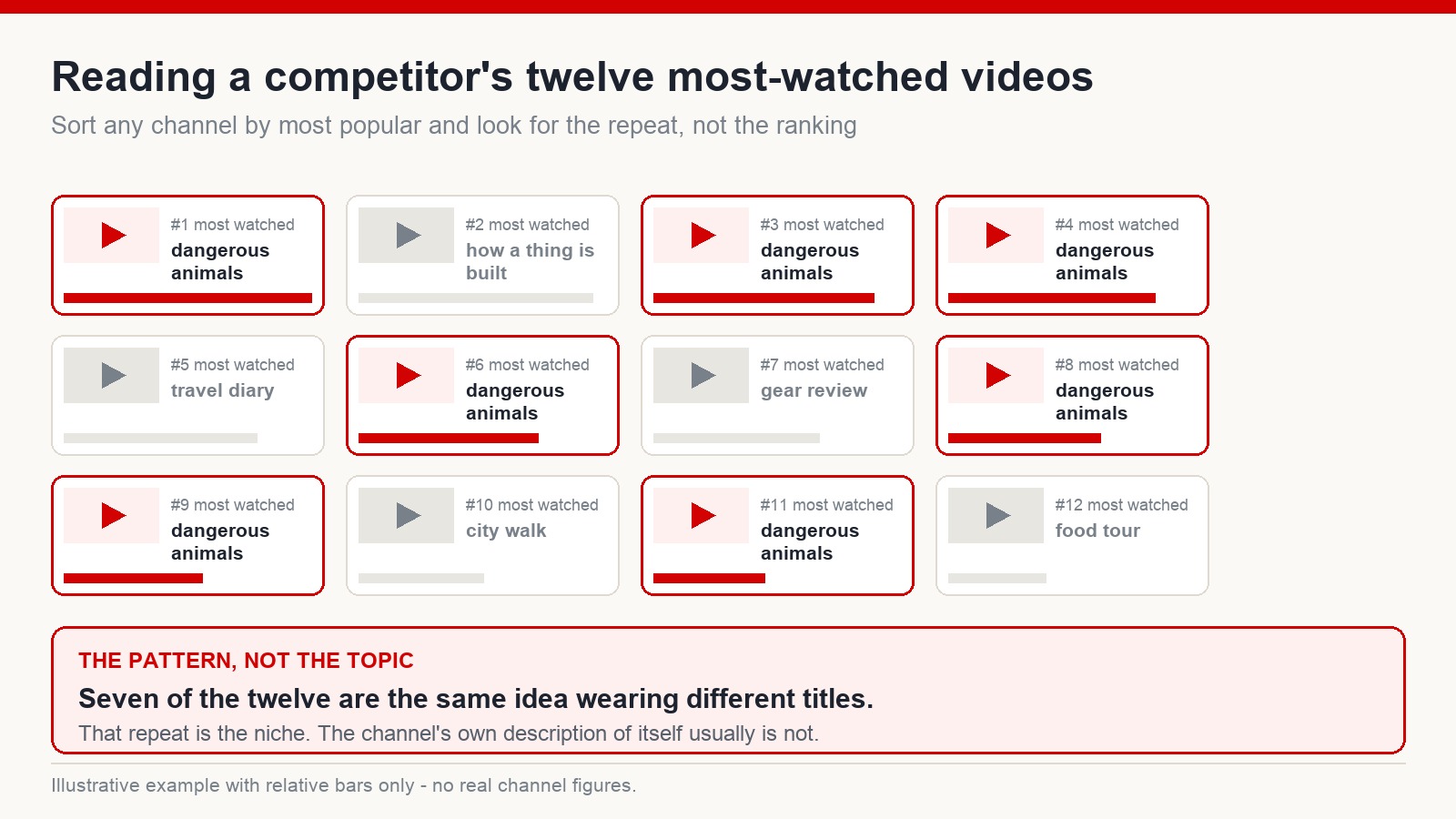
Here is the fastest version of that check, and it takes about ten minutes.
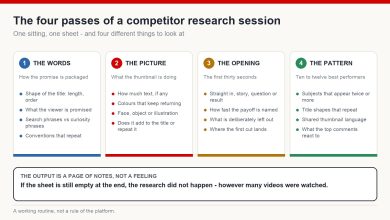
Open a large channel in the space you are considering. Sort its videos by most popular. Look at the top twelve – and do not read them as a ranking. Read them looking for a repeat.
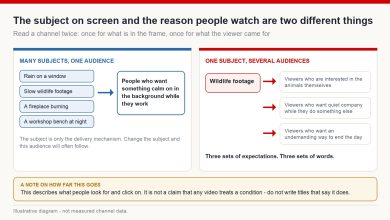
A channel might describe itself as “world exploration”. But if seven of its twelve biggest videos are about dangerous animals – snakes, sharks, deep-sea creatures – then the audience is not turning up for exploration. They are turning up for dangerous animals. Exploration is what the channel calls itself; dangerous animals is what it actually sells.
That gap is where the niche inside the niche lives. Run it across four or five channels in the same space and the pattern usually becomes hard to miss.
Signal two: what people are actively searching for
View counts tell you what got recommended. Search data tells you what people went looking for on purpose, which is a different and often more durable signal.
Any of the standard research extensions will show you estimated search volume alongside a competition indicator. Two things are worth knowing about those numbers: they are estimates rather than measurements, and they move. Use them to compare terms against each other, not as a target to hit.
The useful move is to ignore the largest terms entirely. “Make money online”, “AI”, “crypto” – these have enormous volume and no opening whatsoever for a new channel. A far more specific phrase, the kind that reads like an actual question somebody typed, has less volume and vastly better odds, and it usually tells you what the video should be as a bonus.
A modest search term with strong intent, good packaging and real retention can end up far beyond its search volume, because search is only the entry point and the recommendation system does the rest. Strong intent beats big numbers.
Signal three: breaking a broad topic into small, repeating needs
This is where a language model genuinely helps – not to write the video, but to break a subject apart.
Take a broad category like “news”. Ask a model to list the specific, recurring questions people search inside it and you get things like today’s fuel prices, exchange rates, mortgage rates, commodity prices. Each one sounds far too small to build on.
But look at what they have in common: steady rather than spiky traffic, an audience that returns on a schedule, and a need that regenerates daily. That is a different business from chasing a viral hit, and often a more durable one. Content like this does not need to explode. It needs to be there every time somebody asks.
Two cautions. Models will invent plausible-sounding topics and confident-sounding figures, so treat every suggestion as a hypothesis to check against real search and real view counts. And a topic that regenerates daily also demands daily work – be honest about whether you want that commitment.
Signal four: does the idea survive the three-layer test?
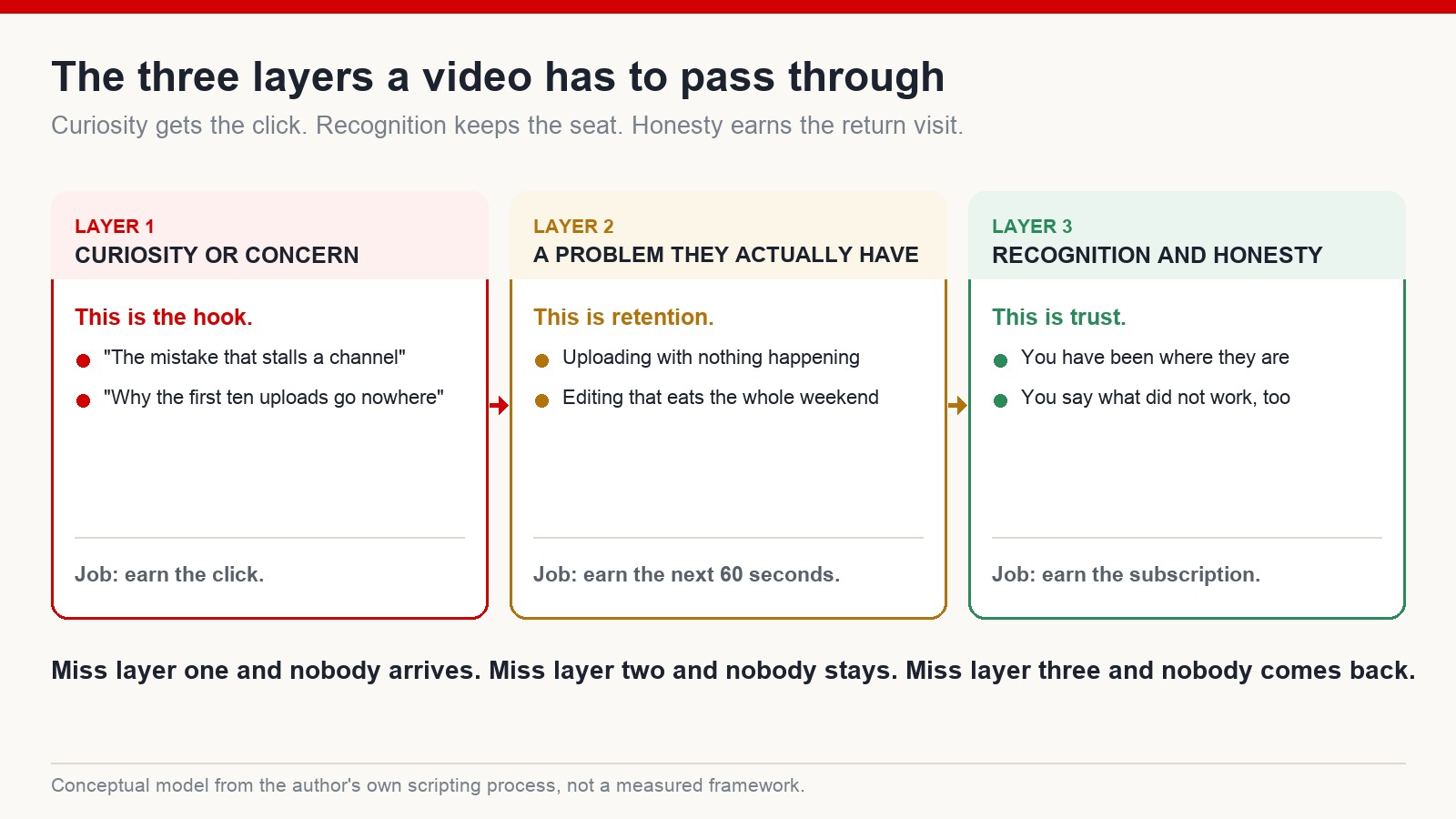
Once a topic has passed the demand checks, there is a last one that happens inside the video itself. Strong content generally moves through three layers, in order.
Curiosity or concern. This is the hook, and its only job is to earn the click. “The mistake that stalls a channel.” “Why the first ten uploads go nowhere.” Something has to open a loop.
A problem they actually have. This is retention. Uploading into silence, retention that will not move, no idea which niche to pick, editing that eats an entire weekend. The viewer has to think: that is my exact situation. Miss this layer and the click was wasted.
Recognition and honesty. This is trust, and it is what makes someone subscribe rather than just watch. You are not only explaining – you are showing that you have been where they are, including the parts that did not work. This is the layer most people skip, and it is the one that turns a view into an audience.
Miss the first and nobody arrives. Miss the second and nobody stays. Miss the third and nobody comes back.
The whole check, in order
- Find four or five established channels in the space.
- Read each one’s twelve most-watched videos and write down the repeat.
- Note the pattern properly: subject, thumbnail, hook, title, and which emotion is doing the work.
- Check the specific phrases in a keyword tool, comparing terms rather than chasing a number.
- Use a model to break the subject into smaller recurring needs, then verify each one.
- Build videos around the pain, the curiosity and the outcome the viewer wants.
An afternoon of this is worth more than a month of publishing on instinct.
What it comes down to
YouTube has never been short of people willing to work hard. It is short of people who check whether the work is aimed at anything.
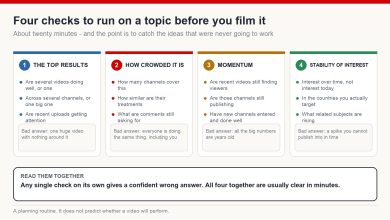
When you can read demand from view patterns, search behaviour and emotional structure, you stop publishing hopefully. You start building on a want that demonstrably already exists – which does not guarantee anything, because plenty of well-researched channels still fail, but it removes the single most common reason they fail.
If you want a structured path for building a faceless channel aimed at an English-speaking audience, that is what I teach at mmoyoutube.com.
Frequently asked questions
How do I know a niche has real demand?
Three checks that agree with each other: the top videos in the space pull genuinely large audiences, the specific phrases show meaningful search interest, and the same subject repeats across several unrelated channels. One signal on its own can mislead. Three pointing the same way rarely do.
Should a beginner target big keywords or small ones?
Small ones, almost always. A specific phrase has clearer intent, far less competition, and usually tells you what the video should contain. Widen the range once the channel has some authority in a subject.
Can AI find a niche for me?
It can break a broad subject into candidate sub-niches and spot patterns across titles quickly, which saves real time. It cannot confirm that any of them have an audience, and it will produce confident-sounding suggestions that are simply wrong. Treat the output as a list to verify, never as an answer.
Can I make content about something I personally love?
Yes – if it also has demand behind it. The overlap between what you find interesting and what people already search for is the best place a channel can sit. Where there is no overlap, you are choosing a hobby, which is a fine thing to choose as long as you name it accurately.
How much research is enough before I start?
Enough to name the specific question your first ten videos answer, and to point at evidence that people are asking it. Beyond that, publishing produces better data than research does. The research is there to stop you spending a year on a subject nobody wanted.