Same Views, Different Revenue: What Actually Decides RPM
It took me an embarrassingly long time to accept a fact that now seems obvious: more views does not reliably mean more money.
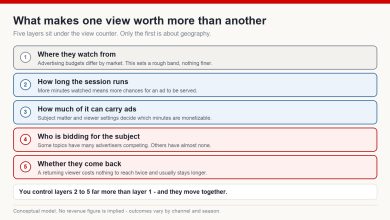
When I started building channels for audiences outside my own language, I treated the view counter as the scoreboard. Get the number up, and everything else would presumably follow. It does not follow. The number that actually decides what a channel earns is a different one, and I ignored it for years.
The morning the view counter stopped being interesting
For a long stretch, the first thing I did every morning was open the analytics tab to see how many views had accumulated overnight. It was a genuinely satisfying ritual and it taught me almost nothing.
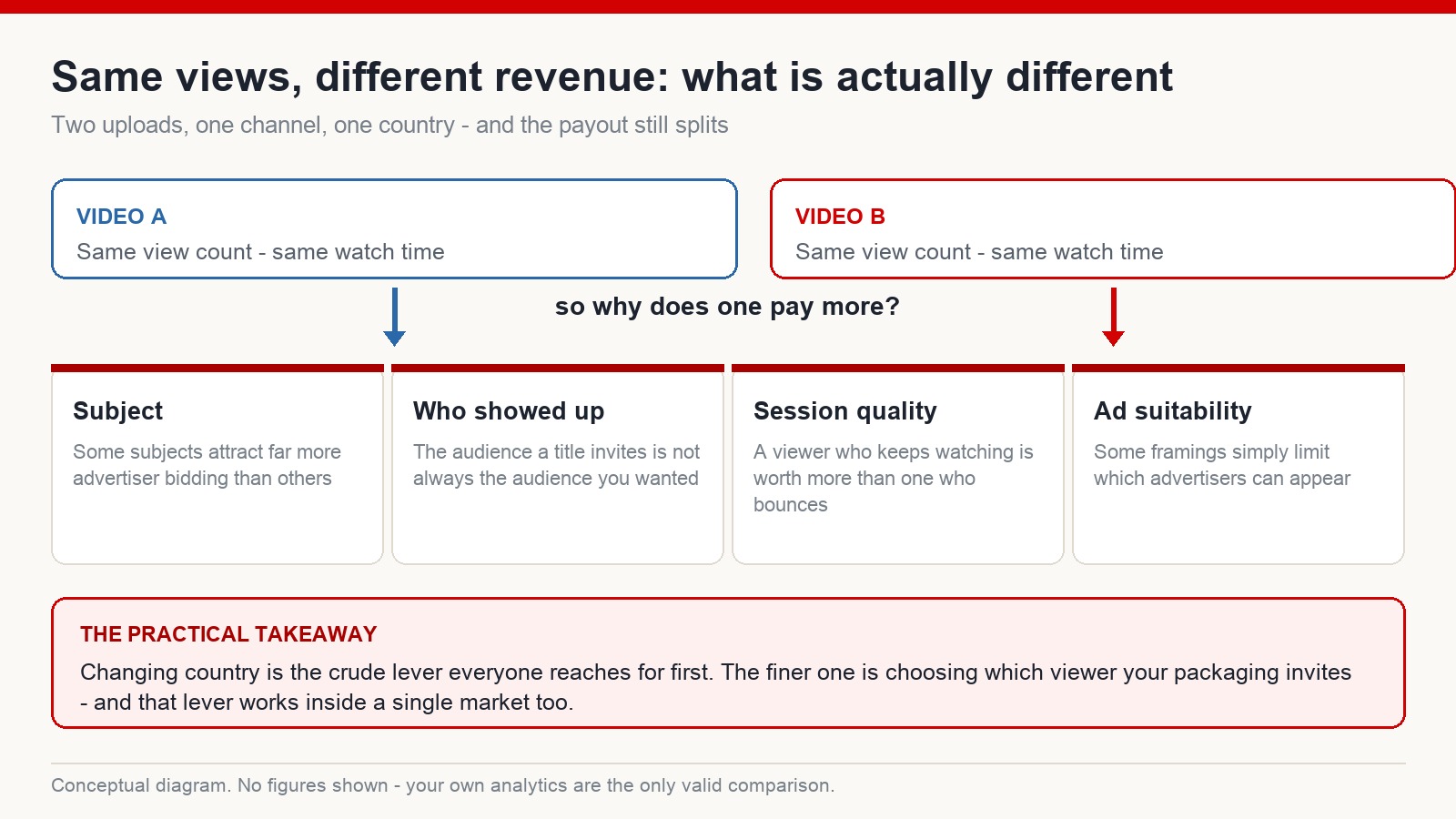
What broke the habit was noticing two videos on the same channel with roughly the same view count and roughly the same watch time, returning noticeably different revenue. Not by a rounding error. Enough that I sat there trying to work out what I had missed.
That was the day RPM stopped being an acronym I skimmed past and started being the thing I design around.
What RPM actually measures
RPM stands for revenue per mille – the average revenue you keep per thousand monetised views. It is not a rate card and it is not something you set. It is a summary of what happened.
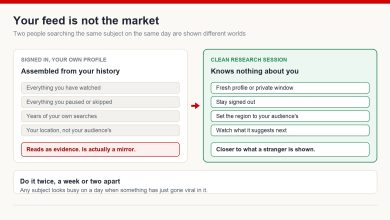
The important part is what it summarises. A view counter tells you how many people arrived. RPM tells you something about who arrived and what that audience was worth to the advertisers competing for their attention.
Optimise for views and you are optimising quantity. Optimise for RPM and you are optimising value. They are genuinely different games, and they lead to different content decisions on the same channel.
Working an international audience is a wider market, not a switch
The reason so many creators point their channels at English-speaking markets is not complicated. Those markets are larger, the audience segments are more varied, and there are more subjects where advertisers compete hard for attention.
That gives you room. It does not give you a result. I want to be careful here because this is exactly where expectations get set badly: publishing in English does not automatically raise anything. It widens the field you are playing on. What you do on that field still decides the outcome.
Country is the crude lever. Audience is the fine one.
Plenty of people assume that once the language is right, the revenue takes care of itself. Then they find two videos aimed at the same country with very different RPM, and the assumption falls over.
The differences usually come from four places:
- The subject. Some topics attract far more advertiser bidding than others, and the gap between categories is larger than most creators expect.
- Who actually showed up. The audience your packaging invites is not always the audience you had in mind.
- Session quality. A viewer who stays, and keeps watching afterwards, is worth more than one who bounces in ten seconds.
- Ad suitability. Some framings simply limit which advertisers are allowed to appear, regardless of how good the video is.
Which is why the goal was never “attract the most people”. It is “attract the right people”. Choosing the subject is where that decision is actually made – long before the title, and long before the edit.
Shifting who arrives, without reshooting anything
Here is the version of this I find most useful in practice. Suppose you have footage of nature or animals. You can package it as spectacle, in which case you draw viewers who came for the highlight and leave immediately after it. Or you can package it as calm – peaceful, relaxing, gentle, serene – and draw people who put it on to unwind, often leave it running, and come back for another one.
The footage did not change. The audience did, along with how long they stay and what a thousand of them are worth. Whether that trade works on your specific channel is a question only your own analytics can answer, but the lever is real and it costs nothing to test.
AI removed the language barrier, not the research
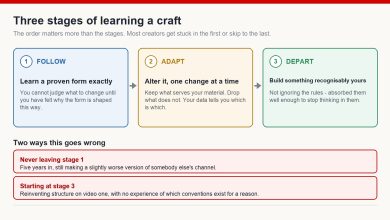
Not long ago, building for an international market realistically required speaking the language. That is no longer true, and I think it is the single biggest change in this work over the past few years.
A process that works:
- Write the idea in the language you think in.
- Finish the script properly before translating anything.
- Move it into the target language with an AI tool.
- Check the phrasing and the cultural context by hand.
AI compresses production time enormously. It does not tell you which audience is worth building for, and it has no view on whether the subject you picked has any advertiser demand behind it. Those remain your decisions.
Two approaches, and the one that ages better
I have run both of these seriously, so this is not theory.
Chasing the hook
Shock-led titles and topical spikes can generate a large volume of views quickly. That is a real advantage and I would not dismiss it. The problem is that it is rented traffic. When the trend moves on, the views go with it, and you are back at the start with a library nobody is searching for.
Building on demand
Evergreen subjects – the ones people look for regardless of what happened this week – accumulate instead. They serve a search need that does not expire, and they tend to attract a more consistent audience.
This route is slower and considerably less exciting for the first several months. For anyone starting out, I still lean towards it, because a library that keeps working while you sleep is a different asset from a channel that has to keep winning the news cycle.
RPM is what a system produces
A lot of creators try to move RPM by rewriting a few words in a title. I understand the impulse – it is the only lever that seems to be within reach – but it treats an outcome as if it were a control.
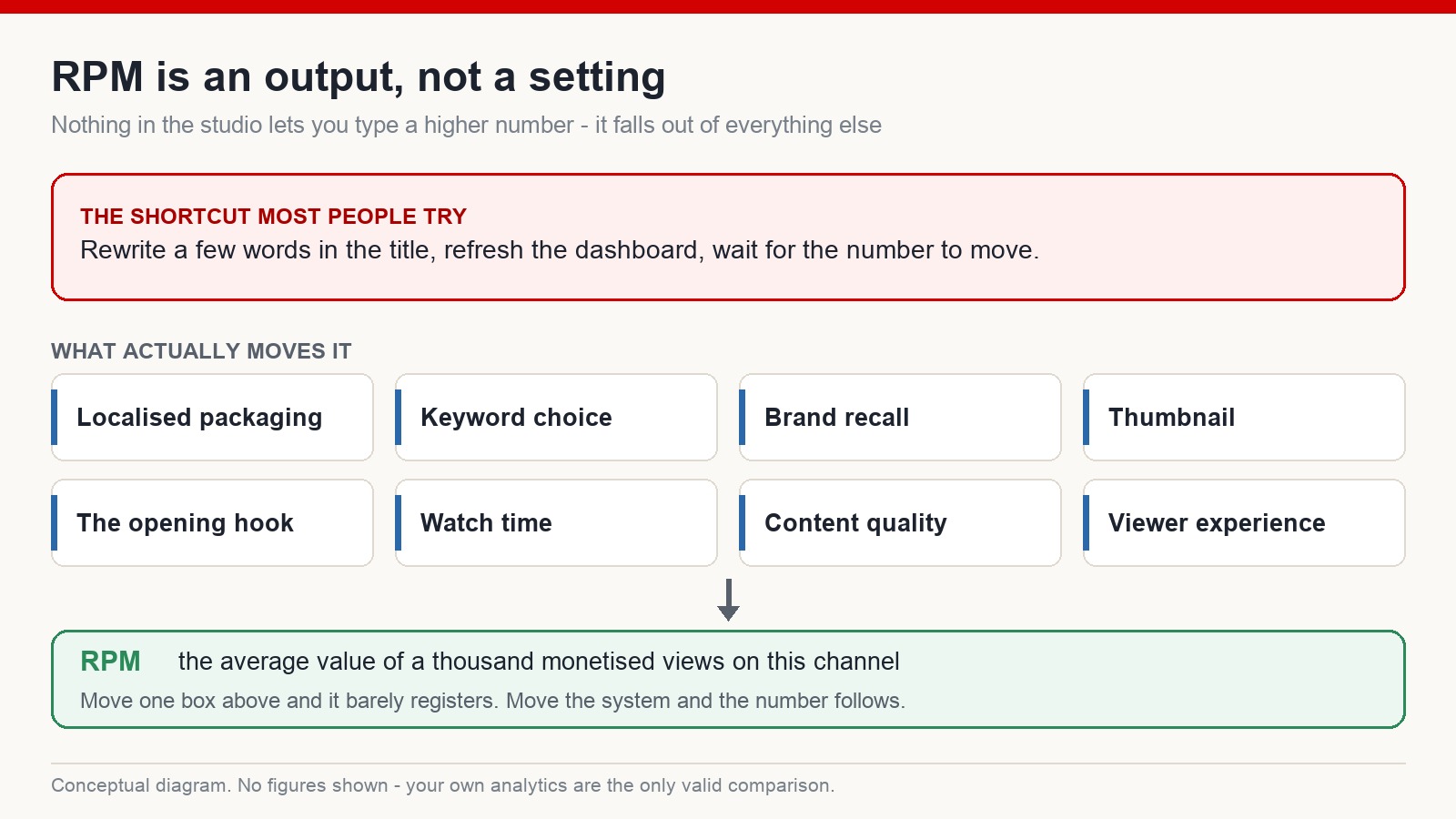
What actually moves it is everything at once: how the content is localised, which keywords you chose, whether the brand is recognisable enough to bring people back, the thumbnail, the opening seconds, the watch time, the quality of the content itself and the experience of sitting through it.
Move one of those and you will barely see it. Move the system and the number follows, because the number was only ever a report on the system.
Stop thinking about one video
New creators tend to ask: how do I make this video go viral?
People building something durable ask a different question: how do I make sure the next five hundred videos reach the right audience?
That second question produces completely different behaviour. You start caring about repeatable formats, about a niche deep enough to sustain hundreds of uploads, about what your own data says worked last month. It removes the dependency on luck, which is the only part of this business nobody can teach.
What AI will not do for you
AI will translate a title, generate ideas, draft a description and speed up research. That is a lot, and I use it daily.
What it will not do is supply a point of view, decide a strategy, understand why a specific audience behaves the way it does, or build something people recognise and return to. The advantage in the next few years will not belong to whoever uses the most AI. It will belong to whoever pairs it with an actual understanding of the audience they are building for.
Frequently asked questions
Is RPM the only thing that decides YouTube income?
No. Income also depends on how many of your views are monetisable, where your audience lives, your subject, the advertising season and several other factors. RPM is a summary figure, not the whole picture.
Does an international audience always mean a higher RPM?
No. It varies substantially by country, by subject and by the quality of the audience a video attracts. Two channels in the same market can sit a long way apart.
Can AI build an international channel for me?
It removes the language barrier and speeds up production considerably. The localisation judgment and the audience research still have to be done by a person, and those are the parts that decide the outcome.
Where should I start if I want to improve RPM?
With the audience. Work out who you actually want watching, build content that serves a real need for them, package it in their language, and compare the result against your own channel’s previous videos rather than against a benchmark from someone else’s.
How much can RPM realistically vary?
Enough that quoting figures would mislead you. It moves by country, by subject, by season and by channel. The only comparison worth making is against your own history.
Optimise value, not the counter
If you want a channel that can still be earning in several years, stop chasing short-term view totals and start improving what each view is worth. Understand the audience, build for a real need, and grow something recognisable. RPM then becomes the result of a system you designed rather than a number you hope for.
The usual honesty applies: this is a long project, results vary enormously between channels, and nothing about the platform is guaranteed to stay the same. But if you begin from the right subject and the right audience on your very first video, you will save yourself the detour I took. That research process – market first, subject second, video third – is what I teach at mmoyoutube.com.