Read the Retention Graph, Then Fix the Script
Beautiful footage, a clean voice track, smooth transitions, and the audience is gone by twenty seconds. It is one of the most demoralising things that can happen to a creator, mostly because the obvious fixes have all been applied already.
The reason is usually not the picture. People do not stay for production quality; they stay because something has been left unresolved. Audience retention is a scriptwriting outcome, and the useful thing about the graph is that it points at the exact sentence responsible.
This is how I read a retention graph and turn it into script edits, on faceless channels, without guessing.
What the graph is actually telling you
A retention graph is not a verdict on the video. It is a map of where your writing stopped giving people a reason to continue. Every steep drop has a timestamp, and every timestamp has twenty seconds of script around it.
That is the whole method, and it is more effective than any general advice: find the drop, open the script at that moment, read it out loud. In my experience the culprit is almost always a sentence, not an effect.
The four shapes worth recognising
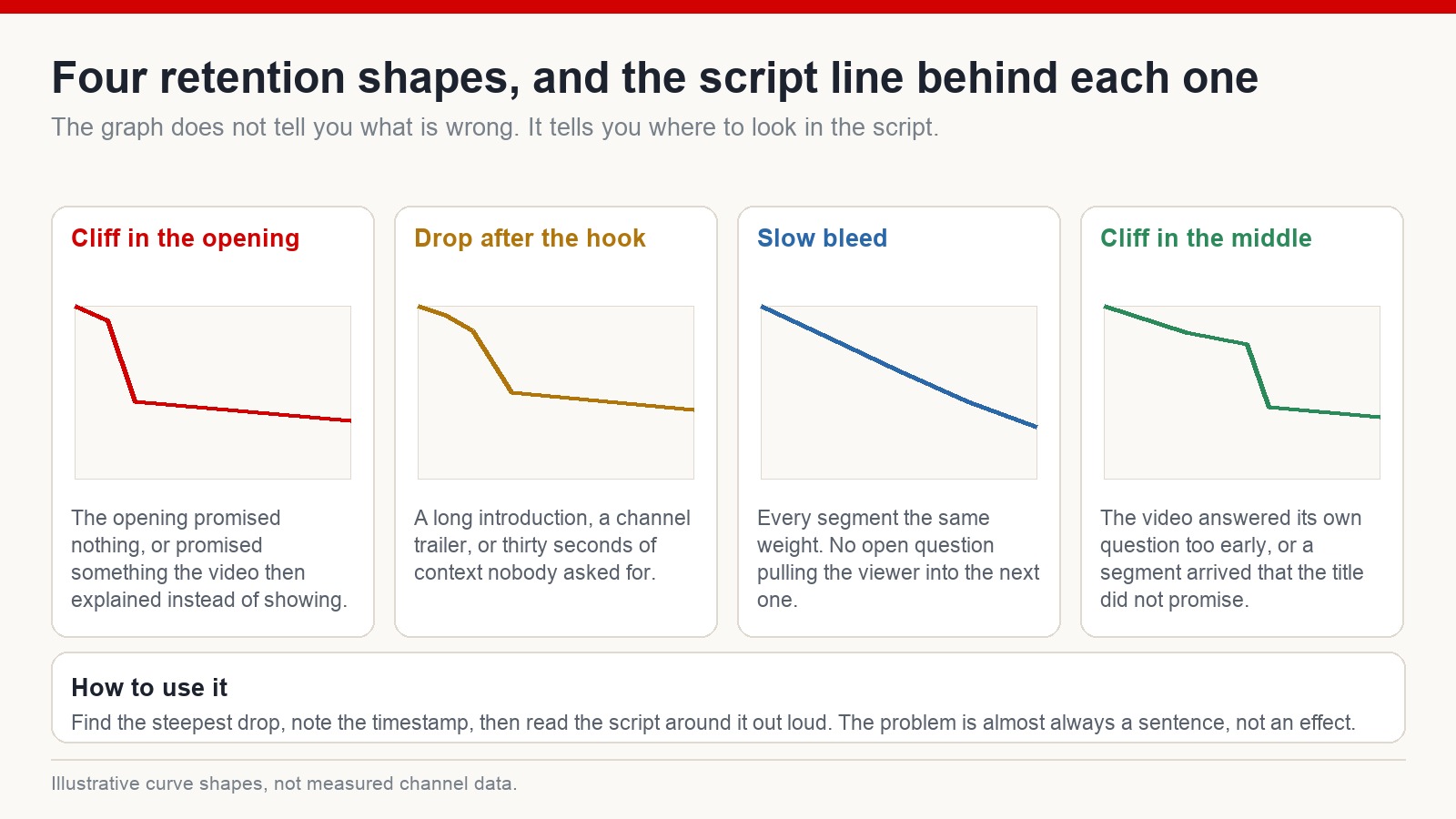
A cliff in the opening. The first line did not open anything. Either it announced what the video would cover instead of showing why it matters, or it explained the interesting thing rather than dangling it.
A drop just after the hook. The opening worked and then you made them wait. A channel introduction, a long preamble, thirty seconds of context nobody requested. The promise was made and then not kept quickly enough.
A slow, even bleed. No single catastrophe, just a steady leak. Every segment carries the same weight and nothing is pulling the viewer forward. This is the hardest one to see and the most common in scripted, narrated formats.
A cliff in the middle. Usually one of two things: the video answered its own central question too early, so the rest is optional, or a segment arrived that the title never promised and viewers concluded they were in the wrong place.
Fix one: make the opening do three jobs
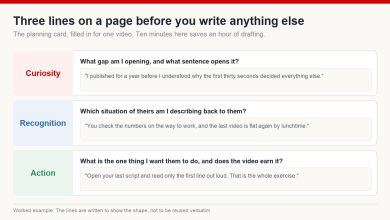
An opening that holds people generally does three things quickly. It states the problem in the viewer’s own terms. It touches the thing that actually bothers them about it. And it promises something specific rather than something vague.
Problem: “There is one change I made to how I write that I wish I had made a year earlier.”
Pain: “If most of your viewers leave in the first minute, the reason is probably in the first three sentences, not in the edit.”
Promise: “By the end of this you will be able to open your own graph and point at the line that caused the drop.”
Note what the promise is not. It is not a claim about results, money or growth. It is a claim about what this specific video will hand over, which is the only kind of promise you can reliably keep.
Fix two: connect the segments instead of stacking them
A lot of scripts are lists pretending to be videos. Point one, point two, point three, each self-contained, no thread between them. That structure produces the slow bleed almost every time.
The repair is small and mechanical. Give each segment a line that closes what was open and opens the next thing before it ends. First, then, which raises, and that leads to. The audience should never arrive at a boundary with nothing waiting on the other side.
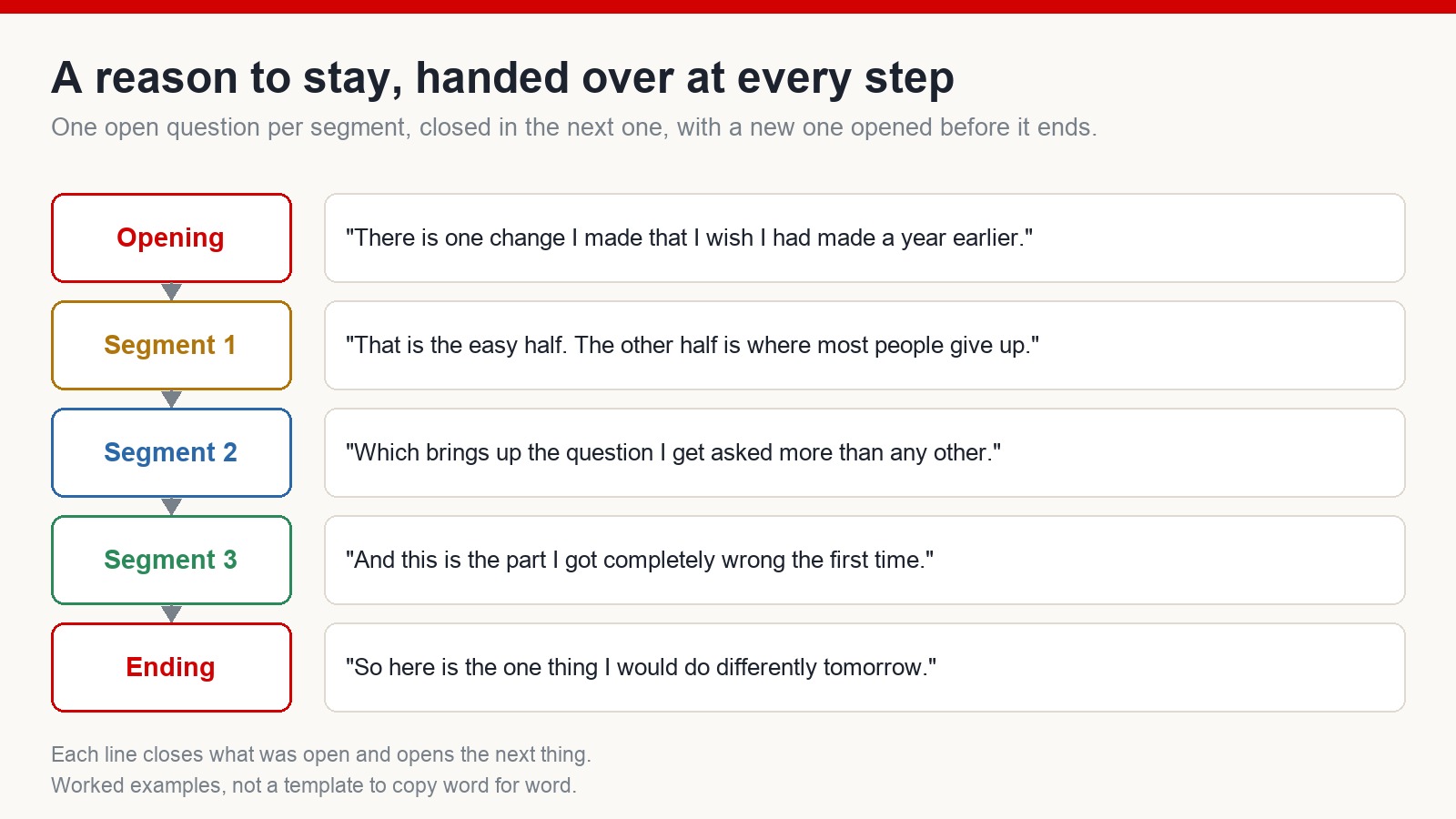
The one rule that keeps this honest: never open a loop you do not close in the same video. A question that gets forgotten is worse than one never asked, and viewers only fall for it once.
Fix three: put yourself in the script
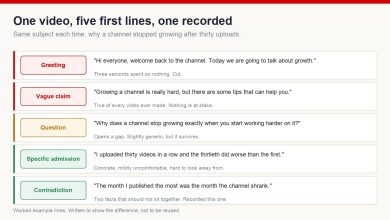
The lines people remember are almost never the well-phrased general ones. They are the specific, slightly awkward, first-person ones.
“I was convinced this would work, and it did not.”
“It took me about thirty videos to notice what was actually happening.”
“That is the point where I usually get this wrong.”
A model will not produce these, because it has not done anything. It is the one part of the script that is not commodity, and on a faceless channel, where there is no presenter to build attachment to, it is doing a lot of work.
Fix four: change something on a regular cadence
Watch a video that holds attention with the sound off and you will see how often something changes: shot, framing, graphic, on-screen text. Then watch it with the picture off and you will hear the same thing in the audio: music entering, music dropping out, a beat of silence before something important.
Silence is the most underused of these. A short pause before a key line does more than any transition effect. Write those moments into the script rather than hoping to find them in the edit.
Measure against yourself, not against benchmarks
There is a lot of circulating advice about what retention percentage is good. Most of it is meaningless, because the number depends on video length, format, topic, traffic source and audience country. A ten-minute tutorial and a ninety-second story video are not comparable, and neither is your channel to somebody else’s.
Compare a new video to the median of your own last ten. That is the only benchmark that controls for everything you cannot control for otherwise, and it is the one that tells you whether a change helped.
A note on generated visuals
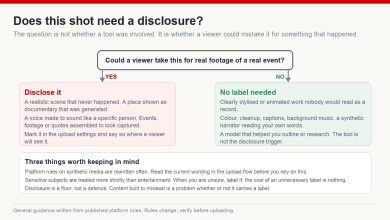
If you use generated images or footage in a way that could reasonably be taken for real, say so. Platform expectations around disclosure have been tightening, audiences are increasingly good at spotting it, and a channel that is straightforward about how it makes things keeps its credibility. Being open about it costs nothing; being caught quietly passing it off costs the trust you were building.
Where to start tomorrow
Open the retention graph of your last video. Find the steepest drop. Note the timestamp. Open the script at that point and read the twenty seconds around it aloud.
You will usually hear it immediately: a sentence that goes nowhere, a promise that arrived late, an answer given too early, a segment nobody was waiting for. Fix that one thing in the next script, publish, and look again. Results vary widely by niche and nothing here guarantees an outcome, but this loop is how a channel actually improves, one identified sentence at a time.
Frequently asked questions
What causes a drop in the first thirty seconds?
Nearly always the opening. Either nothing was opened, or the thing promised in the title was explained straight away instead of being held.
How long should the opening be?
Short. The unresolved thing should arrive within the first few seconds, and the whole opening well inside fifteen.
Is longer better for watch time?
Only if the length is earned. Padding a video does not add watch time, it adds places to leave.
Can AI improve retention?
It can help with structure, trimming and image direction. The judgement about what is interesting, and the personal specifics that make a script yours, still have to come from you.
If you want the full process for building a faceless channel aimed at English-speaking audiences, that is what I teach at mmoyoutube.com.