Free vs Paid AI Tools: The Swap Is Real, the Limit Is the Price
Seven paid AI tools, seven free replacements, and a total that looks like real money: HeyGen $39, Midjourney $60, Opus Clips $29, Higgsfield $49, Canva $17, CapCut $9, ElevenLabs $99 – all replaced by something that costs nothing.
The swaps are real. Every one of those free tools does the job well enough to matter. But the reel behind this article does something most swap lists never bother with: it prints the limit on each free card. Watermark. Daily cap. Personal use only. Limited credits.
That is the honest version, and it changes the question. Not “is there a free alternative” – there almost always is – but what does the free version charge me instead, and can I afford that?
Where the free version stops working
A free tier is not good or bad on its own. It depends entirely on where the work ends up.
| Draft → | Upload → | Monetised → | Client work |
|---|---|---|---|
| Nobody sees it Testing an idea, a rough cut, a placeholder voice |
Viewers see it It is on your channel, with your name on it |
It earns money Ads, memberships, a sponsor in the video |
Someone pays you They are buying the right to use it |
| Free is fine everywhere | Watermarks and 720p start to show | Personal-use licences become a real problem | Free tiers usually stop being an option |
Most creators sit in the middle two columns, which is exactly where the limits bite. A watermark nobody sees on a draft becomes a logo on your thumbnail. A licence for personal use only is invisible until the channel starts earning.
The seven swaps, with the limit attached
Here is the full set, with the free tool’s limit and the reason the paid one still exists.
| Job | Paid | Per month | Free pick | The free limit | Why people still pay |
|---|---|---|---|---|---|
| Avatars | HeyGen | $39 | Vidnoz | 3 min a day, 720p, watermark | Studio-grade avatars for client work |
| Images | Midjourney | $60 | Nano Banana | Daily limit in the Gemini app | Consistent style at scale |
| Clipping | Opus Clips | $29 | Vizard | Monthly minutes, watermark | Volume and brand templates |
| Video | Higgsfield | $49 | Hailuo | Watermark, personal use only | Longer, cleaner shots you can sell |
| Design | Canva | $17 | Lovart | Limited credits | Brand kit and team sharing |
| Editing | CapCut | $9 | Edits | Inside Instagram | Pro effects without the watermark |
| Voice | ElevenLabs | $99 | MiniMax | Limited characters | Commercial rights for monetised video |
Read the last two columns together and the pattern is clear. The paid tools are not selling better output so much as fewer restrictions: no watermark, no daily cap, rights you can sell, and a brand kit that keeps everything consistent. That is what your money buys.
The post this came from
Watch the reel
Seven cards, each with the free pick’s limit written on it. Posted on the BANI Academy page.
Four currencies, and only one with no workaround
Every free limit on those cards is one of four things. Knowing which one you are dealing with tells you whether it is an inconvenience or a wall.
| What you pay instead | What it actually costs | Workaround | When it becomes a dealbreaker |
|---|---|---|---|
| Watermark | A logo on work viewers see | Use it for drafts and tests only, or crop where the format allows | The moment it goes on your channel |
| Daily or monthly cap | Work stops on the busiest day | Batch the work early in the week; keep a second free tool as backup | When you publish on a fixed schedule |
| Personal use only | You may not use it in anything that earns | Nothing – this one has no workaround | The day the channel is monetised |
| Limited credits | It runs out mid-project | Draft cheaply, spend credits only on the final version | When one project eats a month of credits |
The third row deserves the most attention, because it is the one people discover last. “Personal use only” means exactly that: not in a monetised video, not in a sponsored segment, not in anything a client pays for. Nobody stops you at the point of export. The problem arrives later, and it is the same category of surprise as the paywalls we mapped in free until minute forty.
Check the licence on the tool’s own terms page, not on a list – including ours. Terms change, and a tool that allowed commercial use last year may not today.
A practical split for a channel
The most useful way to use a list like this is not to replace everything. It is to split your week by where the output goes.
Free for everything nobody sees. Rough voiceovers while writing, image experiments, test clips to check whether a hook works, draft designs. This is most of the week, and paying for it is money wasted.
Paid for the parts that ship. The voice in the final cut, the thumbnail, anything with a watermark risk, and anything going into a monetised or sponsored video. That is usually one or two subscriptions, not seven.
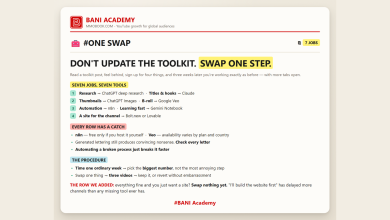
Done that way, most channels keep the two paid tools that touch every upload and drop the rest – the one-swap-at-a-time approach from one swap, not a new toolkit. If you are starting from nothing, the free-by-job list is in the free AI tool stack, and the longer swap list is in free is not always better.
The number that looks bigger than it is
Added together, the seven paid tools come to just over three hundred dollars a month, and that total is what makes a list like this spread. It is also slightly misleading, because almost nobody pays for all seven. Avatars, clipping, video generation and voice are four different ways of making the same thing, and most channels use one or two of them seriously.
So do the sum on your own subscriptions rather than on the chart. Open the list, write the monthly cost next to each one, and then write how many times you opened it last month. The tools that cost the most per use are the ones to test a free replacement for first – and if you find a subscription you have not opened at all, you have your answer without needing any of the swaps. The same audit logic, applied to hours rather than money, is in where do the hours actually go.
Two things to say out loud
Disclosure. Avatars and cloned voices make a person appear to say something they never said. On YouTube, realistic synthetic content has to be disclosed at upload, and the honest version is better for trust anyway – how to do it without sounding defensive is in disclosing generated visuals.
Prices go stale fast. The reel itself says it: these were the prices when the card was made, so check the current page before you buy. Free tiers tighten, paid plans get restructured, and a tool that was the obvious free pick last quarter may have added a cap since. That five-minute check is in we checked all eighty tools.
Frequently asked questions
Are these prices current?
They are the prices printed on the reel’s cards in September 2026. Tools change pricing and free tiers often, so open the official pricing page before you switch.
Can I use free AI voices in a monetised video?
Only if the licence allows commercial use. Some free tiers are personal use only, and that includes YouTube videos that earn money. Read the terms rather than assuming.
Do I need to tell viewers I used AI?
Where a video shows a realistic person or scene that did not happen, yes – and YouTube asks creators to disclose that when uploading.
Which swap should I make first?
The tool you use least. Cancelling something you touch every day to save a few dollars usually costs more time than it saves.
Before your next renewal
Open your subscriptions and, for each one, ask where its output ends up. If it is drafts and experiments, the free pick in the table above will almost certainly do. If it is the thing viewers see on a monetised video, keep paying – and know exactly which of the four currencies you would be paying instead.
Free is not the same as free of cost. It is a different bill, and the limit printed on the card is the invoice.
Learning a lot does not make anyone good. Doing a lot does.
If you want the structure that turns that into a habit, that is what our free challenge is built for: no barrier to entry, a genuine commitment to action, and a refundable commitment fee you get back when you finish. You are not paying for the knowledge. You are betting on yourself finishing, and we hold the stake.
Which swap are you making first? Comment “SWAP” on the original reel and we will send the full list.
For more on building channels for English-speaking audiences, that is what we work on at mmoyoutube.com.
5 Comments