Why Viewers Leave In The First Few Seconds
I once spent most of a day on a single video. Researched it properly, wrote a script, shot the whole thing, cut it, colour-graded it, mixed the audio, made a thumbnail I was pleased with. Then I opened with the sentence almost everybody opens with.
“Hi everyone, welcome back to the channel. In today’s video I’m going to share…”
The retention graph is a cruel document. It showed people leaving before I had finished introducing myself. Not leaving because the content was bad – leaving before any content had happened at all. I have been making YouTube videos since 2017, mostly faceless channels for viewers in the US, the UK, Germany and Japan, and rewriting how I open videos changed more than any other single edit I have made.
The opening is a door, not a summary
The instinct is to use the first thirty seconds to establish context. Who you are, what the channel does, what is coming up, why the topic matters. It feels courteous. It is the video equivalent of clearing your throat.
The person watching has not agreed to any of that yet. They arrived from a thumbnail, they are one flick away from something else, and what they are deciding is not “is this creator credible” but “is anything about to happen.” Nobody can tell whether your video is good if they left before it started. That is the whole mechanism, and it is less about attention spans than it is about the absence of a reason to stay.
What actually makes someone stay
You can collect hundreds of hook templates and still not know why any of them work. There are four things underneath all of them, and once you can name them you stop needing the templates.
Curiosity – a gap between what they know and what they are about to know. Contradiction – something that does not fit with what they already believe. Surprise – a fact or an image they were not expecting. A promise – a clear statement of what they walk away with. Most openings that work do at least two of these in the first couple of sentences. Most openings that fail do none of them and instead do a fifth thing, which is introducing.
Three moves that fit in one opening
After a lot of trial and error I keep returning to the same three-part shape. It is not clever, which is why it survives contact with a deadline.
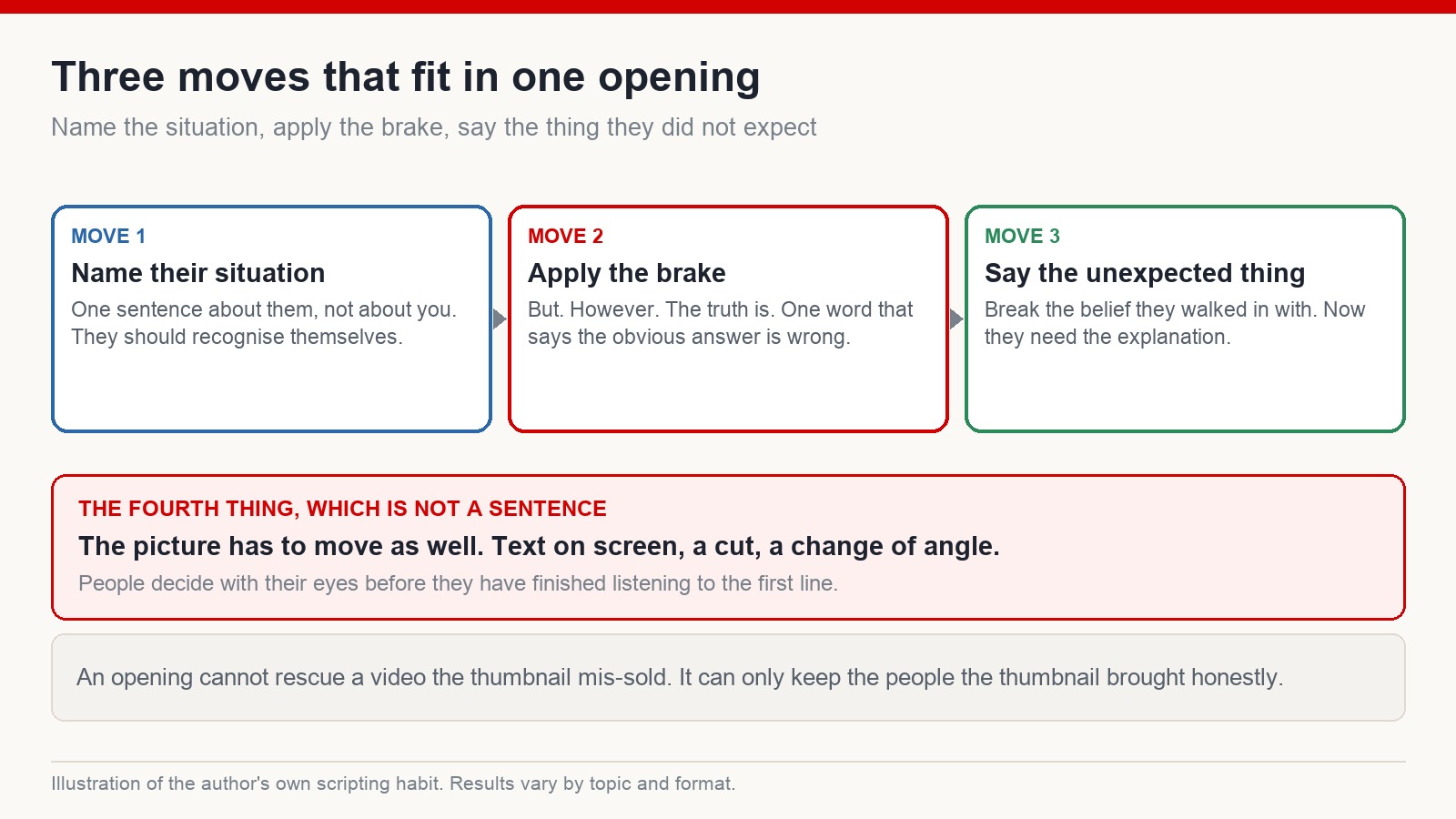
Move one: name their situation. One sentence about them, not about you. “You are uploading every week and the view count has not moved.” “You have three hours of footage and no idea where the video is inside it.” Short, plain, specific enough that the right person recognises themselves in it. If your first sentence contains the word “I”, you are probably in the wrong place.
Move two: apply the brake. One word that signals the obvious answer is wrong. But. However. The problem is. Except. This is the smallest possible intervention and it does an enormous amount of work, because it tells the listener that the sentence they just agreed with is about to be complicated.
Move three: say the unexpected thing. Break the belief they walked in holding. “You do not have an ideas problem. You have an opening problem.” “The video was not rejected. It was never opened.” Now there is a gap that only the rest of the video closes.
The picture has to move as well
For a long time I wrote openings and stopped there, which meant I had a good line delivered over a static frame of somebody sitting still. That does not work, because people decide with their eyes before they have finished listening.
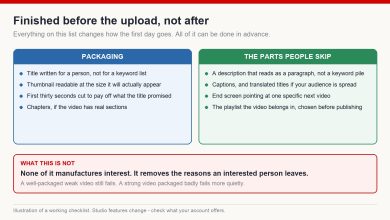
The opening needs something visual doing its own work: text on screen large enough to read on a phone, a cut inside the first few seconds, a change of angle or a hand gesture, and images that relate directly to what is being said rather than generic footage playing underneath. On a faceless channel this matters more, not less – there is no face carrying the delivery, so the cutting has to.
Talk about the outcome, not the feature
A microphone is not interesting because of its noise rejection. It is interesting because your voice stops sounding like a room. Editing software is not interesting because of its feature list. It is interesting because the edit stops eating your evenings.
The same swap applies to the opening of a video. Nobody wants the method; they want the state they will be in afterwards. Lead with the state. The method is what the rest of the video is for.
Give the win early instead of saving it
I used to hold the best part back, on the theory that people would stay for it. They did not stay for it. They left before it, and never found out it was there.
Hand over something useful inside the opening – one concrete idea, small enough to say in a sentence. “The fix is usually the first line, not the topic.” A viewer who receives something in the first minute has evidence that the rest is worth their time. A viewer who has received only a promise has to take it on faith, and faith is in short supply on a platform with an infinite next video.
Delete the words that ask for patience
One rule covers most of the rewriting: if a word can come out without changing the meaning, take it out.
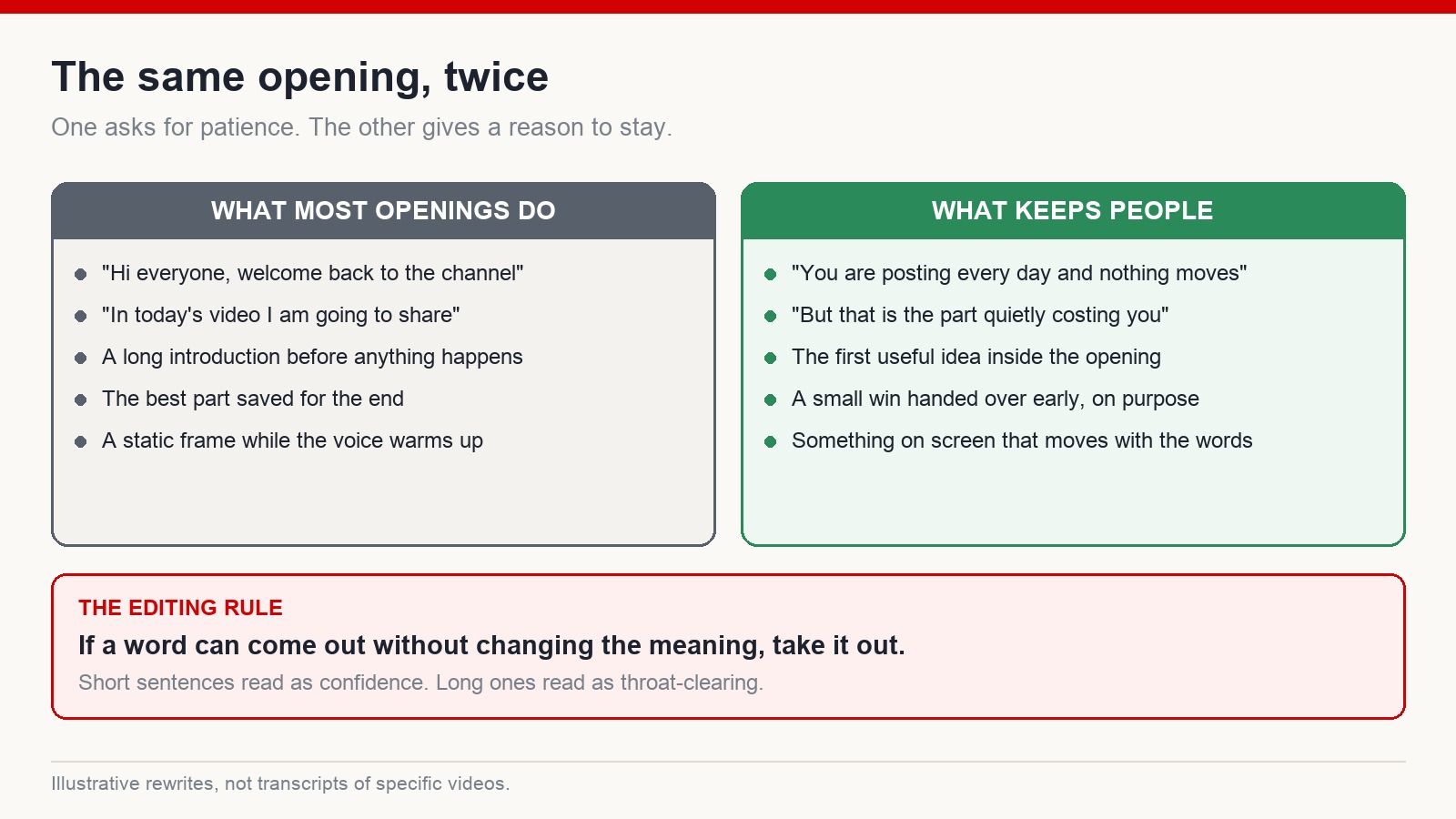
“In today’s video I’m going to share some experience I’ve had with…” becomes “You are doing this one thing wrong.” No greeting, no request for permission, no throat-clearing. Short sentences read as confidence. Long ones read as somebody warming up in public.
Read your opening out loud. The place where you naturally take a breath is usually the place where the sentence should have ended.
What an opening cannot do
This is the part that hook advice usually leaves out, and it matters.
An opening cannot rescue a video that the thumbnail mis-sold. If the packaging promised one thing and the video is about another, the strongest first line in the world only delays the exit by a few seconds, and you will see it as a click rate that looks healthy sitting on top of retention that collapses. The opening keeps the people the thumbnail brought honestly. It cannot convert people who were brought under false pretences.
It also cannot fix a video that has nothing in it. A brilliant door on an empty room is a worse experience than an ordinary door, because the disappointment is larger.
How to tell whether yours is working
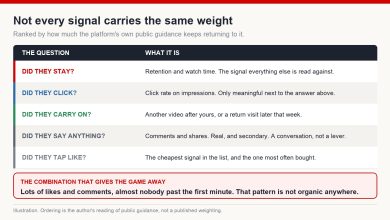
Open the retention graph and look only at the first thirty seconds. Compare that section against the median of your own last ten uploads – not against a percentage from an article, because the figure moves with topic, length and format, and somebody else’s number describes somebody else’s audience.
Then change one thing on the next video. Rewrite the first sentence, or add a cut in the first five seconds, or move the useful idea earlier. One thing, then look again. Changing everything at once tells you that something worked without telling you what.
How long should the opening be?
Long enough to do the three moves and no longer. That is usually one or two sentences. The specific number of seconds matters less than whether anything has happened yet.
Does the first line matter as much on long videos?
It matters differently. Someone settling in for a long video is willing to give you a little more room, but they are still deciding, and the decision still happens at the start rather than in the middle.
Should I put the hook before or after the intro animation?
Before, if you keep the animation at all. An animation is a delay with music over it, and it is the first thing I would cut from a channel that is losing people early.
Can I write hooks with an AI tool?
You can draft with one, and it is useful for generating variations quickly. Rewrite the result in your own words – the openings that land tend to be the ones that sound like a specific person talking, which is the one thing a generic draft cannot supply.
What if my topic genuinely needs context first?
Then give the context after the hook rather than instead of it. Say the surprising thing, then explain what it means. The order is the whole trick.
Try it on one video
Take your most recent upload, mute it, and read the first two sentences of the script back to yourself as though you had never seen the channel. If they describe the viewer’s situation and then complicate it, you are fine. If they describe you, rewrite them. It is thirty seconds of work on a video you have already made, which makes it the cheapest experiment on the channel.
If you want the rest of the process for building a faceless channel for an English-speaking audience, that is what we work through at mmoyoutube.com. Results vary by topic and format – test the ideas here on your own videos rather than taking them on trust.