Room, Not Revenue: The Question to Ask Before You Pick a Niche
Almost every beginner arrives with the same question: which niche pays the most?
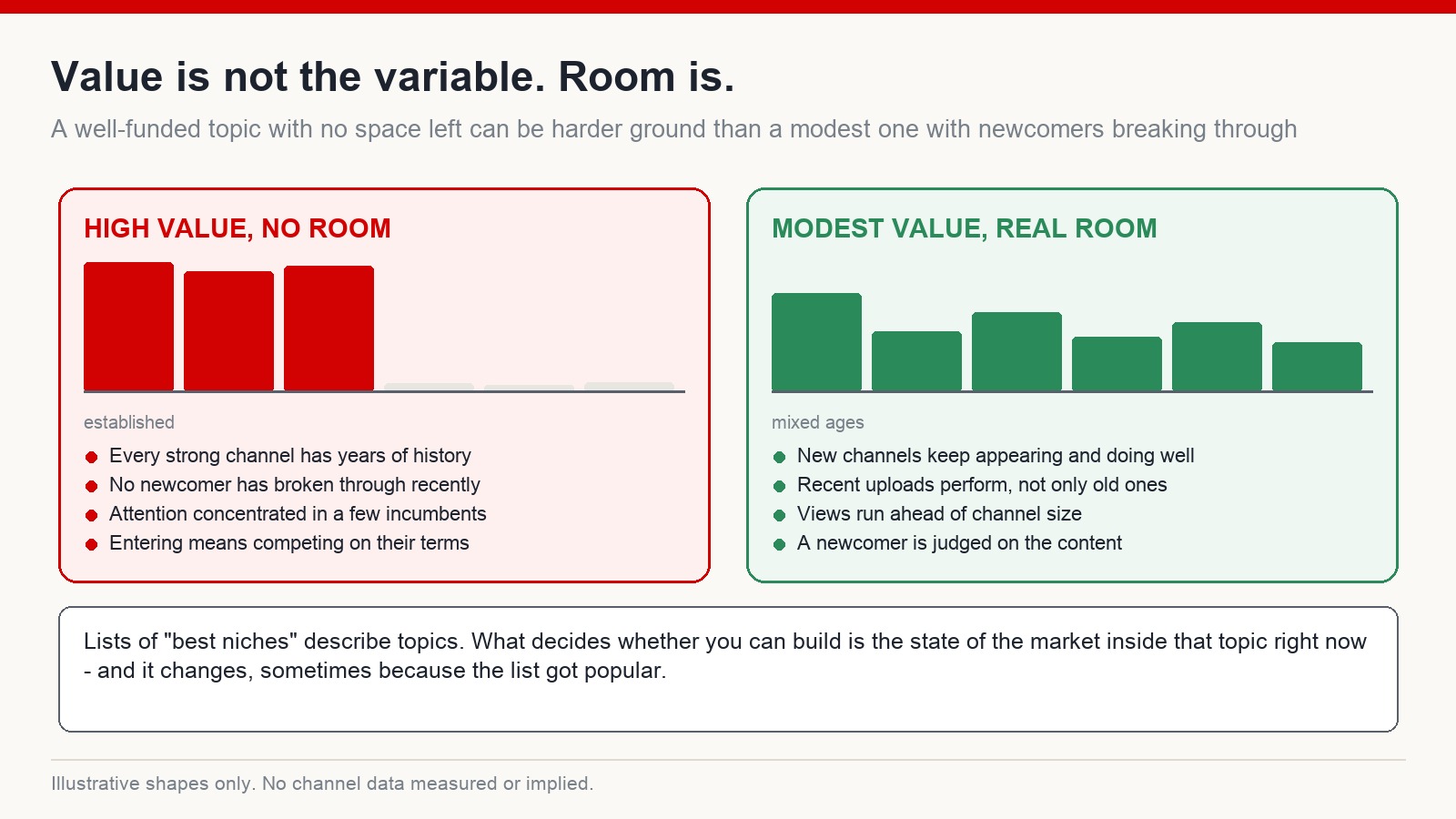
It is a reasonable question and a bad first one. A topic with strong advertiser interest but no space left in it can be far harder to build in than a moderately valued topic where new channels are still breaking through. The value of a market means nothing if you cannot get a foothold in it.
The better question is this: which niche still has room? Room is what a new channel is actually competing for, and unlike revenue potential, you can measure it before you produce anything.
Room is a property of the market, not of the topic
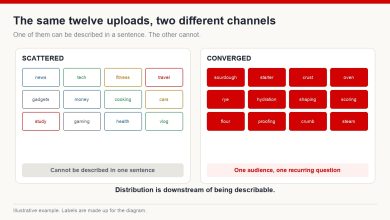
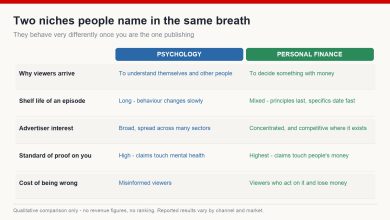
Two people can name the same niche and be describing completely different opportunities. One is looking at a corner where three entrenched channels absorb nearly all the attention and no newcomer has broken through in two years. The other is looking at a corner where new channels keep appearing and doing well.
Same topic label. Opposite prospects.
This is why lists of “best niches” are so unreliable. A list describes topics. What determines whether you can build is the state of the market inside that topic right now – and the state changes, often quickly, and sometimes because the list itself got popular.
Your own feed is a biased instrument
Before you measure anything, fix the measuring device.
Most people research a market while logged into the account they use every day. Everything they see has already been filtered by years of their own watching. You end up studying a reflection of yourself and calling it a market.
Use a separate account kept only for research, or at minimum a private browsing window for a quick look. Set the region to the market you actually want to serve, and go looking for content from several entry points rather than accepting whatever the home page offers. If you are building for viewers somewhere other than where you live, you have to see roughly what they see.
Six questions that measure room
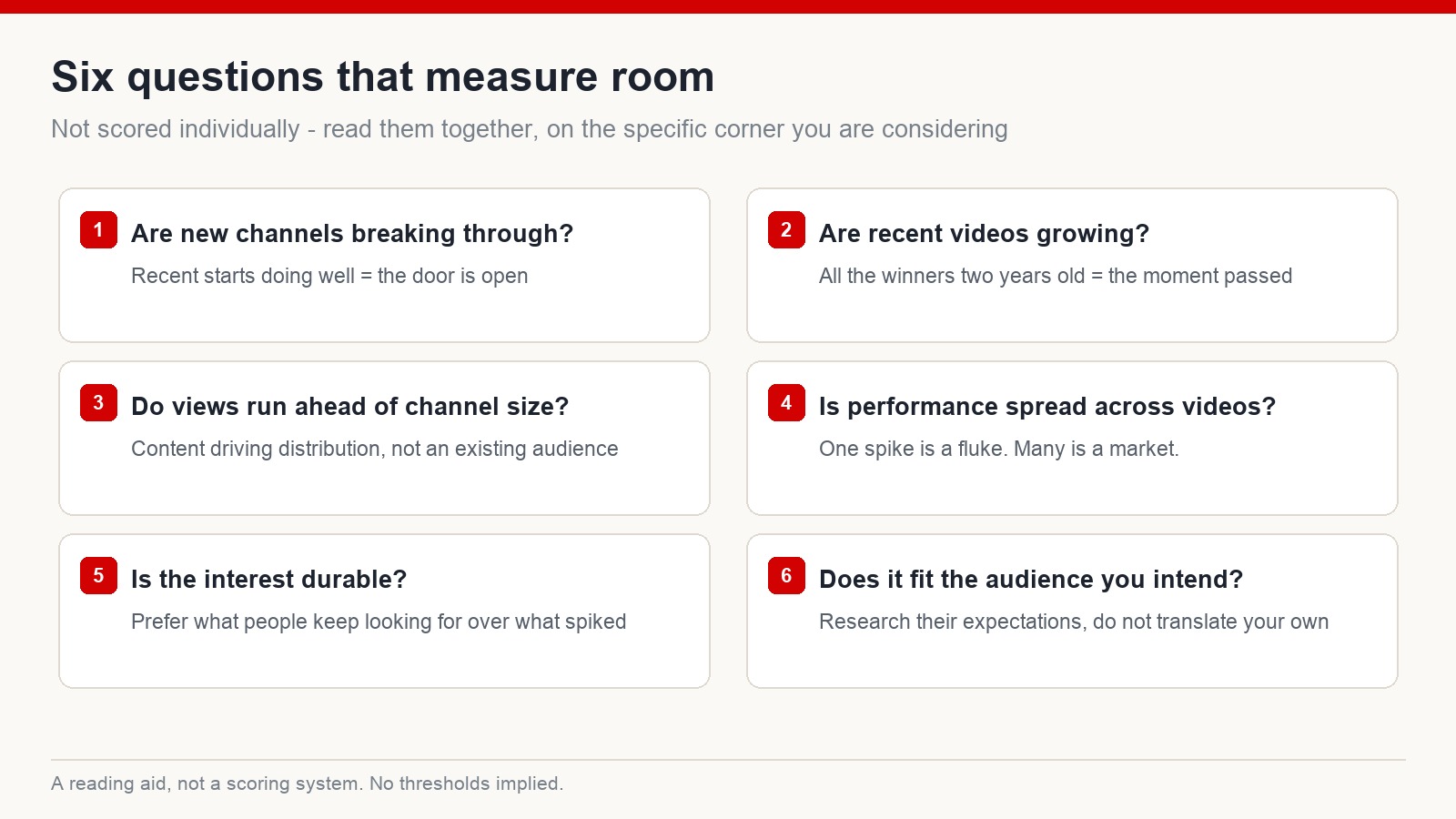
Once you can look at a topic cleanly, work through these. They are not scored – they are read together.
1. Are new channels breaking through? If every successful channel in the topic has years of history, the barrier is high. If channels that started recently are doing well, the door is open.
2. Are recent videos growing, or only old ones? A topic where all the strong performers are two years old is a topic whose moment has passed.
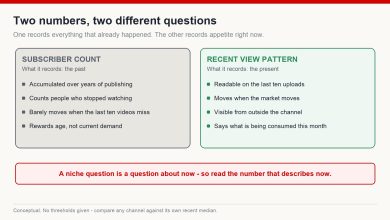
3. Do views run ahead of channel size? When a modest channel earns attention well beyond its subscriber count, distribution is being driven by the content rather than by the channel’s existing audience. That is the most encouraging signal a newcomer can find.
4. Is performance spread across many videos? One enormous video and a flat line behind it is a fluke. Many videos performing steadily is a market.
5. Is the interest durable? Prefer topics people keep looking for over topics that spiked. Durable interest is what lets a video keep earning views months after you publish it.
6. Does it fit the audience you intend to serve? Building for a particular audience means researching their expectations, references and pacing – not producing for your own market and hoping it travels.
Read competitors for craft, not for topics
When you find a topic worth pursuing, do not start producing on the same day. Spend the time reading how the winners are built.
Look at how titles are phrased. How thumbnails are composed. Typical video length. How the first thirty seconds are structured. The rhythm of the storytelling. Publishing cadence. And read the comments, which are the cheapest audience research available anywhere – people will tell you precisely what they wanted and did not get.
The aim is not to copy. It is to understand why the content holds attention, so that when you make your own version you are working from a mechanism rather than an imitation.
Topic families that hold their room longest
If your goal is a library that keeps working rather than a series of spikes, some families tend to age better than others: personal finance, education, technology, science, history, psychology, productivity, general wellbeing and world exploration.
What they have in common is not glamour. It is that the questions inside them do not expire. A well-made explanation of something people keep wanting explained can earn views for years, while a news-shaped video is worth very little a month after publication.
That does not make any of these families easy. Several are competitive precisely because they are durable. Run the six questions on the specific corner you are considering, not on the family name.
Use assistive tools to upgrade, not to duplicate
There is a large difference between asking a tool to rewrite a competitor’s video and asking it to help you understand one.
Useful: summarising a body of material, breaking down the structure of something that worked, finding the gap nobody has covered, proposing angles, building an outline, tightening a script.
Then you add the parts a tool cannot: your own experience, real examples, a point of view, the way you tell things. Without that layer you have produced another interchangeable video in a category that already has thousands.
Depth usually beats volume
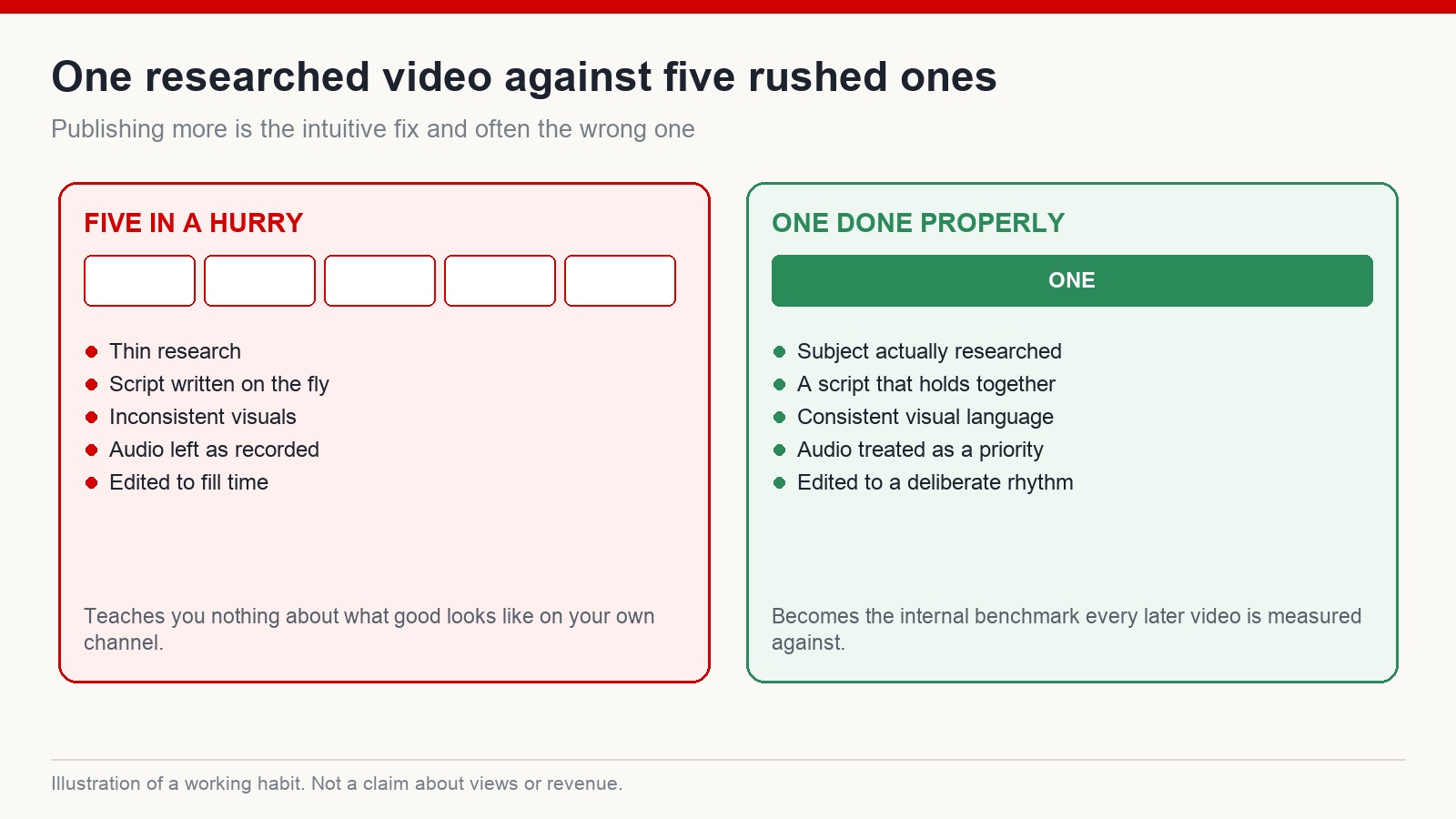
New creators tend to solve every problem by publishing more. It is the intuitive move and often the wrong one.
One video with genuine research behind it, a script that holds together, clean audio and a considered edit will frequently outperform five made in a hurry. And it does something the five cannot: it teaches you what “good” looks like on your own channel, which is the only benchmark that matters.
Prioritise researching the subject properly, writing a clear script, keeping visuals consistent, getting the audio right, editing to a sensible rhythm, and thinking about the viewer’s experience end to end. Speed comes later, and it comes from process rather than from cutting corners.
What no amount of research will do
Research will not tell you a niche will work. There is no magic niche and no process that removes the risk. Markets shift, competitors arrive, recommendation behaviour changes and platform policies change with it. Two channels entering the same validated topic in the same month can end up in very different places.
What research does is make the decision defensible. You will know why you chose the topic, what evidence supported it, and what would tell you the evidence has stopped being true. That is a far better position than choosing on instinct and having no idea what to adjust when nothing happens.
Where this leaves you
Stop asking which niche pays best. Ask which niche still has room, then ask whether you can produce there consistently for a year.
A sustainable channel does not begin with a camera or an editing suite. It begins with picking the right ground, understanding who is standing on it, and making something worth their attention.
Frequently asked questions
Should I choose a niche purely on revenue potential?
No. Advertiser interest is one factor among several. Audience demand, the level of competition and your ability to keep producing in the topic for a long time matter at least as much.
Is an international audience realistic for a beginner?
It can be, if you are willing to research the language, culture and viewing habits of the market you are aiming at rather than translating your existing ideas into it. That research is the work, and skipping it is the usual reason such attempts fail.
Can AI tools find a niche for me?
They can accelerate the analysis – summarising trends, organising data, drafting outlines, spotting gaps. The final judgement should still be yours, based on evidence you have checked, because a tool has no stake in whether you spend the next year on the wrong topic.
How often should I re-examine my niche?
Regularly, as maintenance rather than as crisis response. Review performance on a fixed rhythm and ask whether the topic still fits where the channel is going. Markets move; a decision made a year ago was made with a year-old picture.
If you want the full research process for building toward an English-speaking audience, it is laid out at mmoyoutube.com.