Do Aged YouTube Accounts Give A New Video A Head Start?
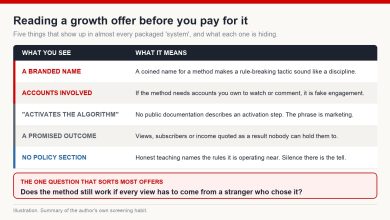
There is a guide that circulates in almost every creator community, and it is always presented as the careful version of a thing everyone knows is risky. Do not spam views with fresh accounts, it says. Instead, create the accounts and leave them alone for a week or two first. Have them watch videos in your topic. Have them subscribe to a few large channels in that topic. Have them read some news, browse a little, behave the way a person behaves. Then, once they have a history, they read as real viewers, and you can use them to give your own uploads a first push.
I have been making YouTube content since 2017, mostly faceless channels aimed at viewers in the US, the UK, Germany and Japan, and I want to take this one seriously rather than wave it away. It is worth taking seriously because it sounds like engineering. It has stages, waiting periods and failure modes. It is the kind of advice that feels earned.
It is also wrong in two separate ways, and they are worth separating, because most arguments about it only address the first one.
What the waiting period is supposed to buy
The theory runs like this. The platform is watching for accounts that behave mechanically. A brand new account that opens one video, leaves a comment and disappears looks like automation. An account with weeks of ordinary browsing behind it does not. So you build the ordinary browsing first, and by the time the account touches your video, it has a history that vouches for it.
Underneath that is an assumption nobody states out loud: that an account accumulates some kind of standing, and that this standing is then lent to whatever it interacts with. Age it enough and its view counts for more.
What the watching actually trains
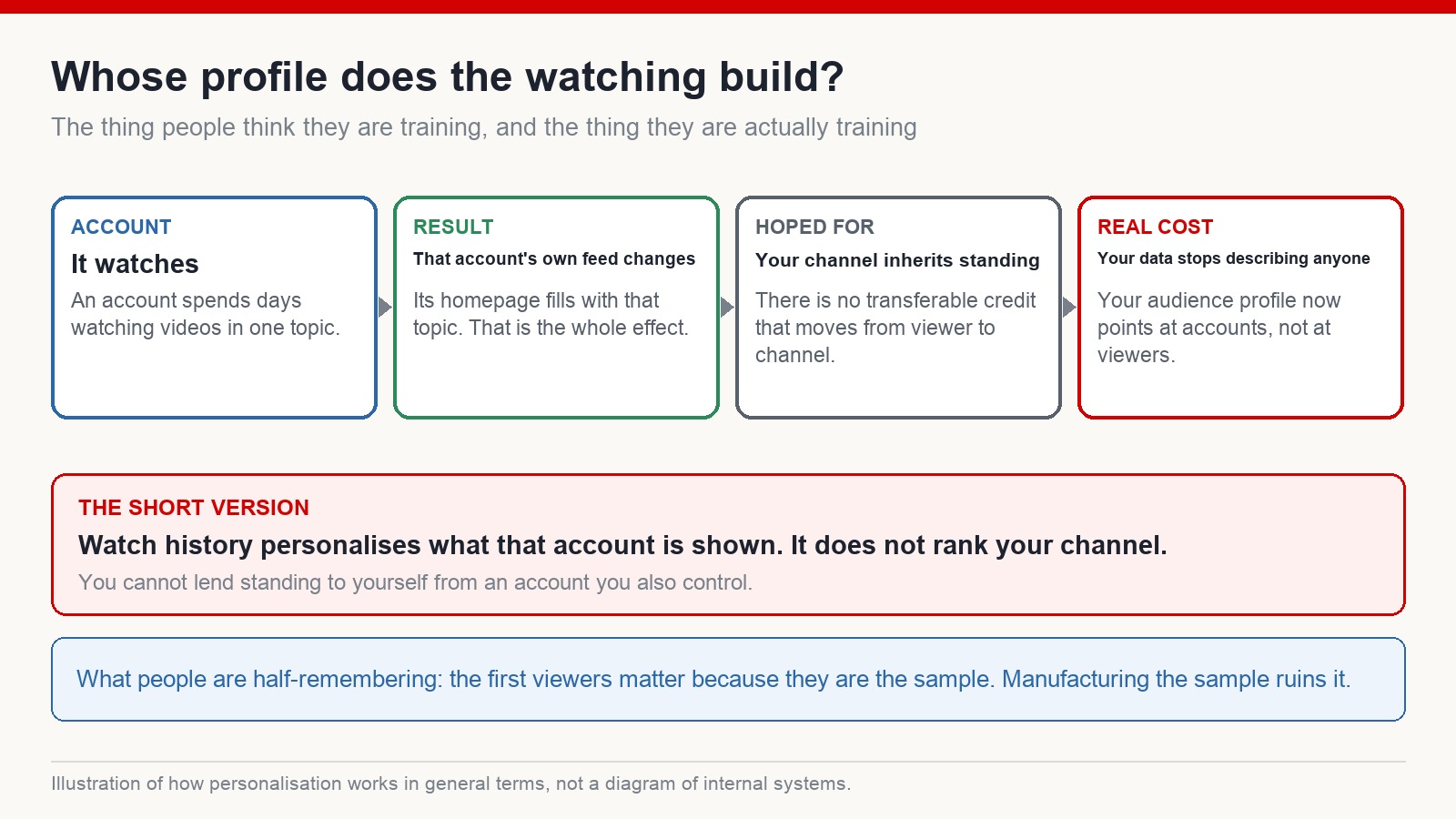
Here is the part that gets skipped. When an account spends two weeks watching videos about one topic, something real does happen: that account’s own recommendations change. Its homepage fills up with that topic. Personalisation is doing exactly what it is designed to do.
That is the whole effect. It is a change to what that account gets shown. There is no separate score being accumulated that can then be handed to a channel, and no mechanism by which a viewer’s browsing history makes their view worth more to somebody else’s video. The aging process is training a feed, not building a credential.
So the first problem with the plan is not ethical at all. It is that the thing being carefully constructed does not do the job it is being constructed for. You can age an account for six months and it is still one view from one account you control.
The rule all of this sits under
The second problem is the one that ends channels.
YouTube’s spam and deceptive practices policy defines fake engagement as views, likes, comments or subscribers that do not come from real people with genuine interest. Read that definition slowly, because everything turns on it. It describes the source of the interaction. It says nothing about the method, the tooling, or how convincing the result looks from outside.
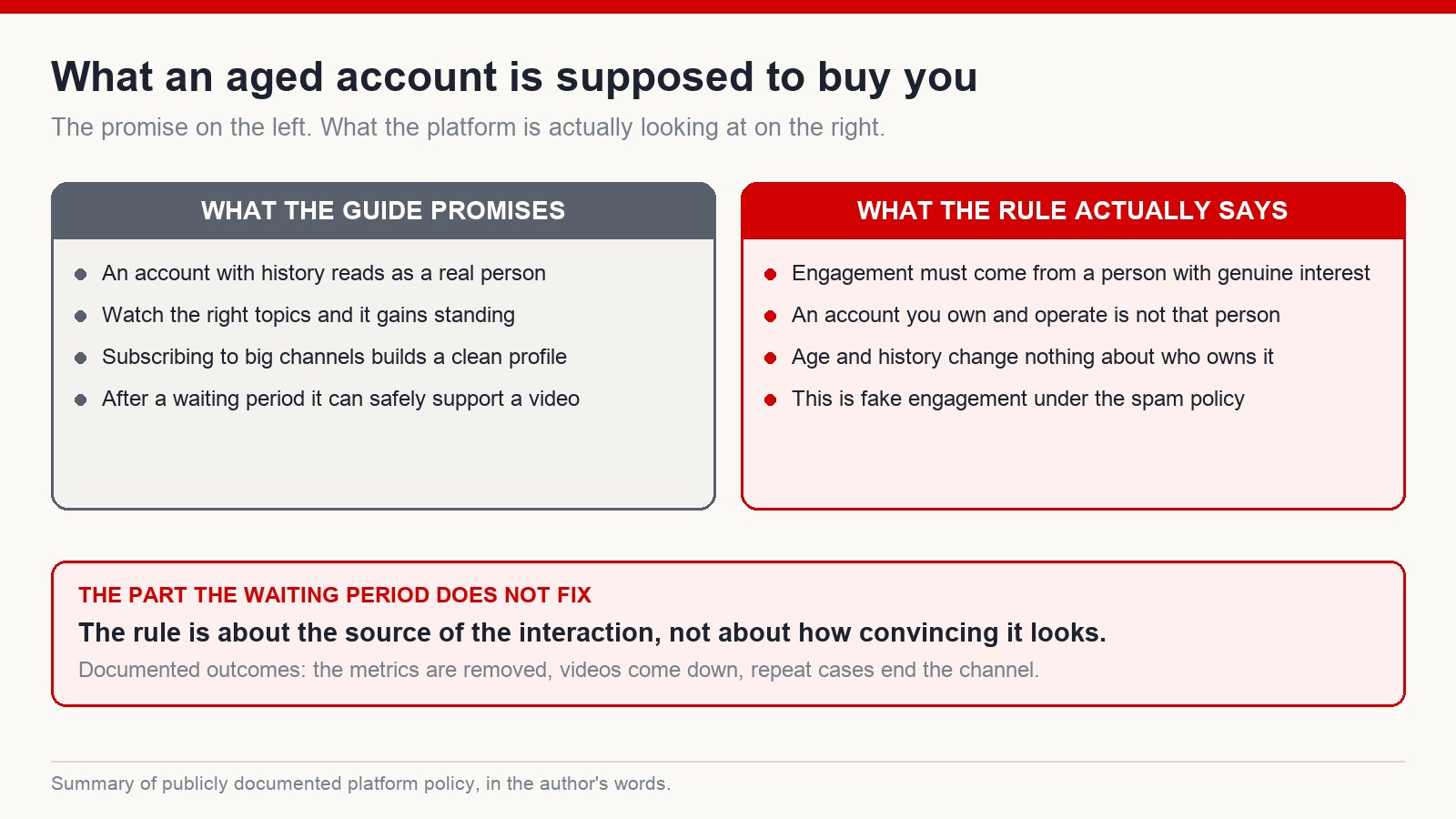
An account you created, own and operate is not a real person with genuine interest in your video. You are the channel, using a second door. Aging it does not change who is behind it. Neither does giving it a plausible browsing history, or spacing out its activity, or having it watch other people’s videos in between. Every one of those steps is an attempt to change how the account looks, and the rule is not about how it looks.
The documented consequences run in three stages. The affected metrics are removed. Individual videos are taken down. Repeated cases end the channel. None of it requires anyone to establish intent, because there is nothing to establish – the numbers simply stop counting, and if the pattern continues, the account goes.
“But mine are properly separated”
This is the objection that arrives every single time, and it is an argument about detection rather than about the rule. It says: these cannot be linked back to me. Even granting that, which is a large thing to grant, it has no bearing on whether the practice is permitted. The rule is not “do not get caught running extra accounts.” The rule is that engagement has to come from people who wanted the video.
There is a practical wrinkle too. Setups like this do not fail one account at a time. They fail as a group, because the pieces end up sharing something – a recovery address, a payment detail, a connection, or simply the same behavioural pattern repeated across every account in the set. That is why the stories people tell afterwards are almost never “one video lost its views.” They are usually about losing several things at once, including the main channel that the whole arrangement existed to protect.
The cost that lands even if nothing is ever detected
Set the policy aside completely for a moment. Assume you get away with it forever. It is still a bad trade, and this is the part that gets under-explained.
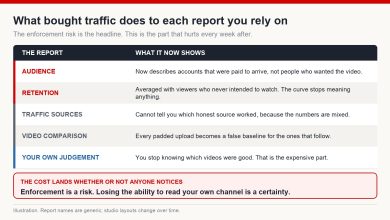
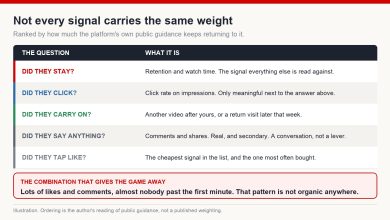
YouTube decides what to do with a new video by showing it to a small group and watching what those people do. Every early viewer is a data point in that test. Feed accounts into it that had no interest in the topic and you have not helped the test – you have contaminated the sample. They stop watching early, so the retention curve sags. They never chose the thumbnail, so the click-through figure describes nothing. Your audience profile now points at accounts rather than at people, which shapes who the video is offered to next, and the video after that inherits it.
And there is a cost you keep paying afterwards. You can no longer trust a single chart in your own analytics, which means you have removed the only instrument that tells you whether the work is any good. A hundred viewers who genuinely wanted the video will teach you more than a thousand who did not – and the thousand will actively mislead you.
If you have already built one of these
Plenty of people reading this have a set of accounts running right now, because it was handed to them as best practice by somebody they trusted. Unwinding it is straightforward, and it is much better done before something breaks than after.
- Stop using those accounts on anything connected to your channel, starting today rather than after the current upload has run its course.
- Remove the comments they have left. Comments are the visible half, and they are the half that a viewer can notice and report.
- Unsubscribe them from your channel. An inflated subscriber figure that never watches anything is a drag on every subsequent video’s early test.
- Do not delete your own channel or panic-delete videos. Nothing about stopping requires that.
- Expect your numbers to look worse for a while. They are not getting worse; they are starting to describe reality, and reality is the thing you need to work from.
Give it a month of clean uploads before you judge anything, then compare against the median of your own last ten videos rather than against whatever the accounts used to produce.
What the first day is actually for
The observation buried underneath all of this is not wrong. The first day does matter, because that is when the sample is collected. The mistake is concluding that the sample should therefore be manufactured.
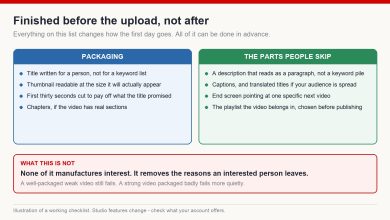
What genuinely helps in that window is unglamorous, and most of it happens before you publish. Knowing precisely who the video is for, so the small group it gets shown to is a group that recognises it. A title and thumbnail that describe the actual video, so the people who click are the people who will stay. An opening that pays off the thumbnail’s promise inside the first thirty seconds.
After publishing, the honest list is short: tell the audience you already have, through a community post, a short-form clip or a mailing list if you have one. Post the pinned comment straight away, from your own channel account, with a question in it. Answer the comments that arrive, as yourself. Share it in places where you are genuinely a participant rather than a stranger dropping a link. That is the entire list, and it is short because the honest list is short.
Does account age matter at all on YouTube?
For your own channel, an established upload history gives the recommendation system more to work with when it decides who to show a new video to. For accounts you create in order to watch your own videos, age changes nothing about the rule they fall under.
What if I only use one extra account, occasionally?
The definition does not have a threshold. One account you control leaving one comment to start a conversation falls under the same rule as fifty. The scale changes the likely consequence, not the category.
Is it a problem to watch my own videos from my own account?
Watching your own work back to check the edit is a normal thing to do and nobody is suggesting otherwise. The line is between reviewing a video and generating engagement figures with accounts you operate.
What about asking friends and family to watch?
Different situation, but be careful about what you ask for. A person who genuinely wants to watch is a viewer. A person you instructed to watch a video they have no interest in is a data point that will mislead you, even where no policy is engaged.
How do I tell whether my early traffic is helping or hurting?
Look at how long the early viewers stay compared with the median of your own last ten uploads. If the first day brings a spike in views and a dip in average watch time, the traffic is not the audience the video was made for.
The short version
Aging an account trains that account’s feed. It does not lend standing to your channel, it does not change who owns the account, and it puts the channel you are trying to grow inside the policy that gets channels removed. The waiting period is real work spent building something that was never going to do the job.
The unglamorous version of the first day is the version that compounds. If you want the whole process for building a faceless channel for an English-speaking audience, that is what we work through at mmoyoutube.com. Results vary, and platform policies change – read the current one yourself before you take anybody’s summary of it, including mine.