The Keyword Check I Run Before Publishing Anything
A good video that nobody was shown
The version of this that stings is a video you were proud of. Well shot, well cut, a thumbnail you spent real time on — and forty views a week later.
Usually nothing is wrong with the video. What is missing is the last few minutes before publication, where you check whether anybody could find this thing and whether it looks like it belongs on your channel. Those minutes are cheap. Everything they catch becomes expensive once the upload is live, because the early distribution of a video is shaped by how the first viewers respond to it, and you only get that once.
What follows is the check I run before pressing publish. It is a working routine, not a rule handed down by the platform, and it takes about fifteen minutes.
The check itself
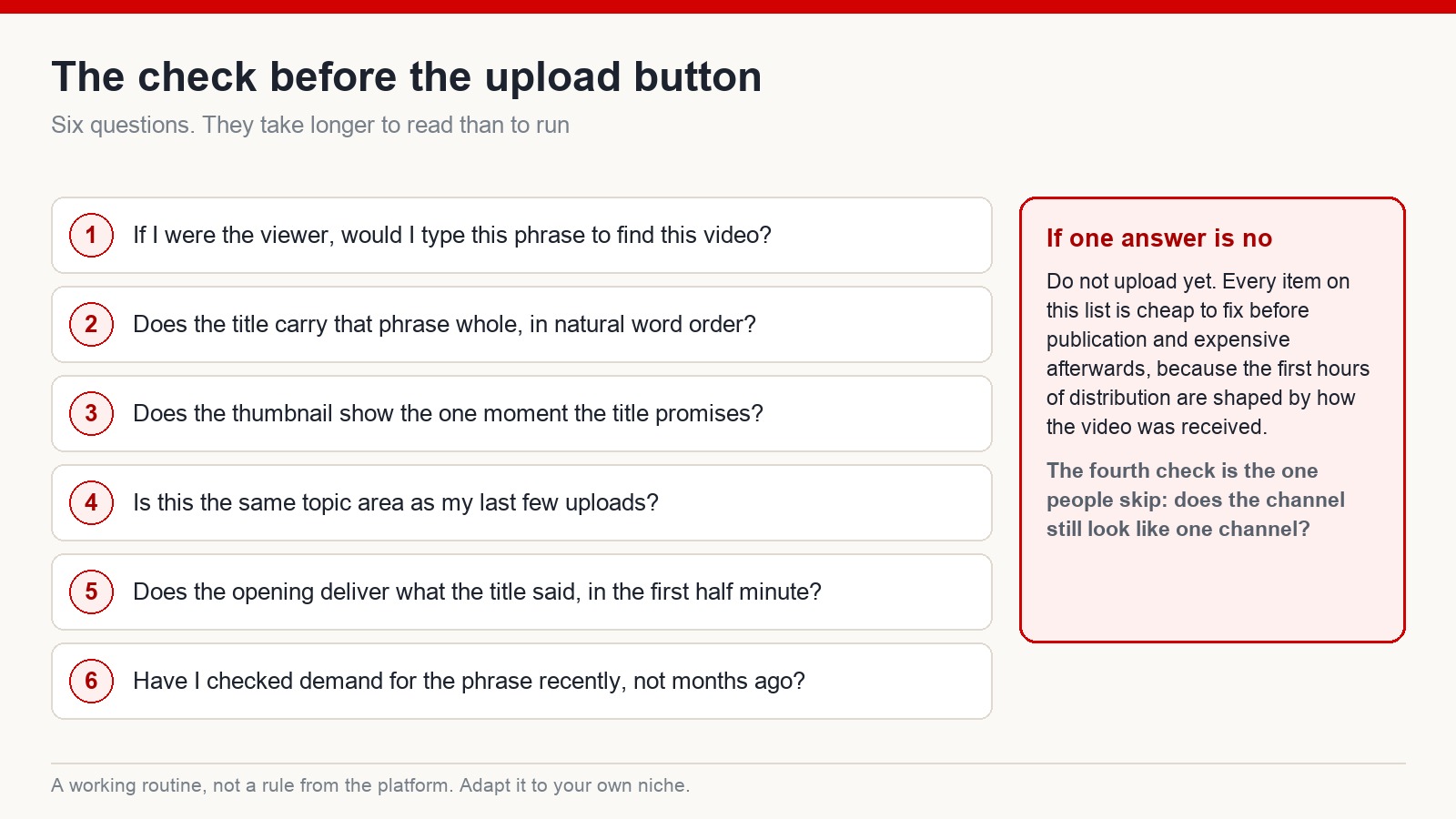
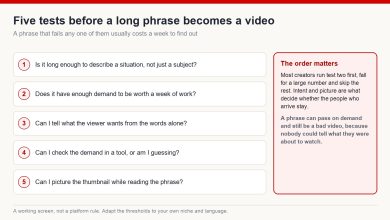
1. If I were the viewer, what would I type to find this? Ask it before anything else, because everything downstream depends on the answer. If you cannot produce a phrase a real person would type, the video has no route in other than being recommended, and recommendation is the hardest door for a small channel to get through.
2. Does the title carry that phrase whole, in natural word order? Not scattered across the sentence, not reordered to sound clever. Whole, and readable. If the phrase has to be mangled to fit, either the phrase or the title is wrong.
3. Does the thumbnail show the one moment the title promises? One moment, not three. If you cannot describe the image in about four words, the design is doing too much and the viewer will resolve none of it at scrolling speed.
4. Is this the same topic area as my last few uploads? This is the one people skip, and it is the one that compounds. A channel with five unrelated subjects gives the system nothing stable to work with. A channel where the same topic keeps returning becomes legible surprisingly quickly.
5. Does the opening deliver what the title said, in the first half minute? Whatever the title promised, the first thirty seconds should visibly be about that. Nobody stays for a payoff they were not shown was coming.
6. Have I checked demand for this phrase recently? Not when you planned the series two months ago. Interest drifts, competitors publish, and the estimates themselves get revised.
If any answer is no, do not upload yet. All six are cheap to fix now and impossible to fix later without losing the video’s first run.
The question underneath all six
Every item on that list is a version of one question: does this video look, from the outside, like the thing it actually is?
Creators tend to evaluate their own work from the inside — they know what is in the video, so the title seems obviously accurate and the thumbnail obviously clear. A stranger has none of that. They have an image, a line of text, and about a second. The check is a way of forcing yourself into their position for fifteen minutes before it stops being fixable.
The mistakes the check is designed to catch
Five failures come up again and again, and every one of them is caught by one of the questions above.
Aiming at a phrase far too big for the channel. Broad head terms are contested by channels with years of history. A newer channel does better one or two steps down, where the demand is smaller and the existing answers are thinner.
Stuffing. Several phrases welded into one title on the theory that more coverage means more chances. It reads like a tag field, and it makes the video look automated.
A different subject every week. Each video may be fine. The channel is unreadable, and the audience one video brings has no reason to stay for the next.
Describing the content instead of the need. A title that accurately describes what is in the video, and never mentions why anyone would want it.
Only publishing what is hot. Trend-driven uploads spike and then stop mattering. A catalogue built entirely from them has to be rebuilt continuously.
Keep the answers somewhere
The check works better when it is not run from memory, and the tool for that is unglamorous: one sheet, four columns.
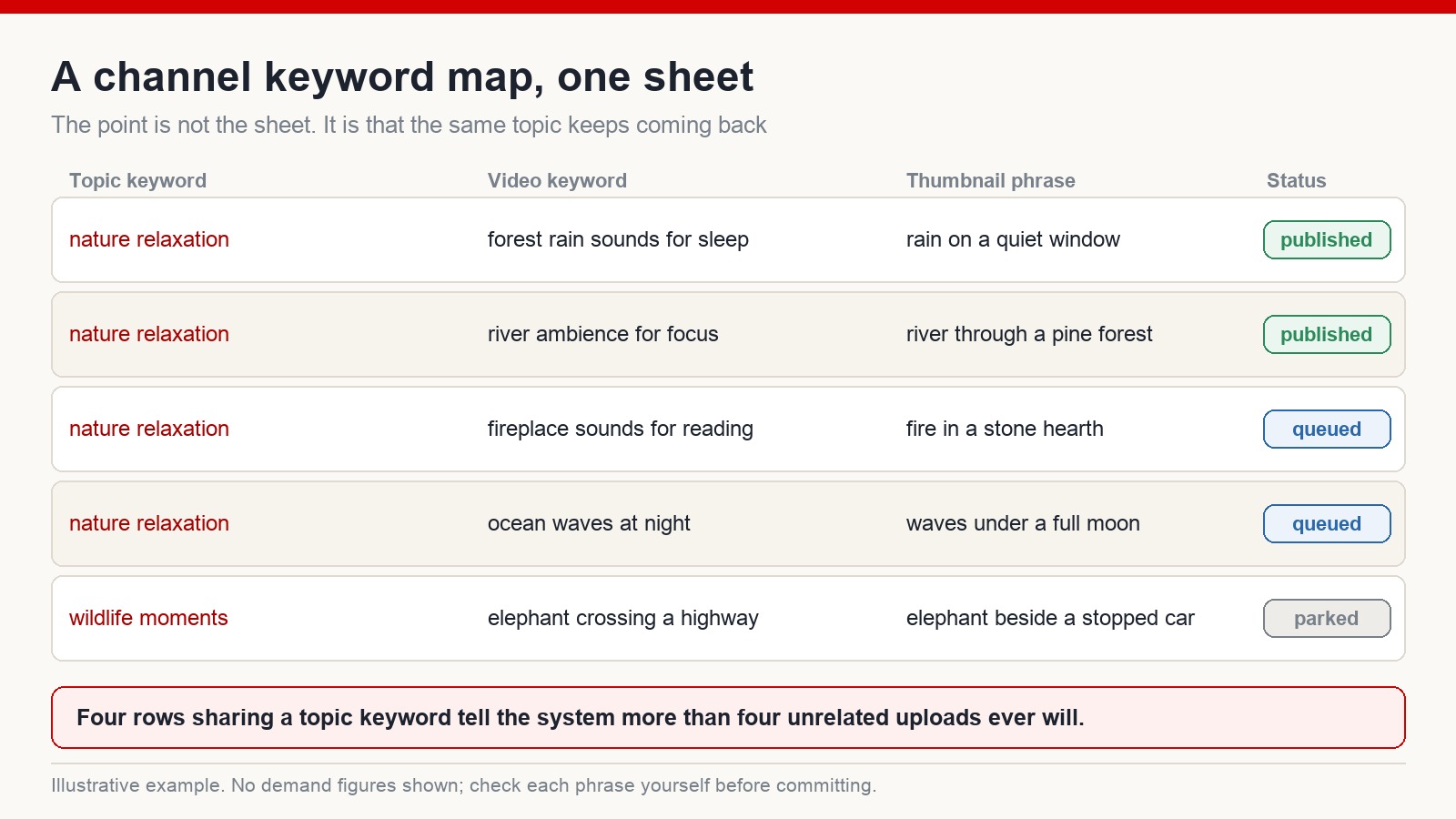
Topic keyword, video keyword, thumbnail phrase, status. One row per video, published and planned. It takes a couple of minutes per entry and it does three things nothing else does.
It shows you at a glance whether the channel is holding one topic or quietly drifting across four. It stops you accidentally making the same video twice, which happens more often than people admit. And it turns your channel into something you can plan against: when a row performs, the neighbouring rows are your next three videos rather than a blank page.
The point is not the sheet. It is the column on the left repeating.
How often to redo the research
Keyword sets go stale. Not fast, but steadily, and the drift is invisible until you check.
A reasonable rhythm is a proper review every twenty to thirty uploads, or roughly monthly if you publish often. In a review, you are asking three things: has demand moved for the phrases you are building on, have stronger competitors arrived in the space, and is the audience using new vocabulary that was not there when you started.
Between reviews, the six-question check before each upload is enough. You do not need to re-research the whole channel for every video, and re-researching nothing for six months is how a channel finds itself optimised for a version of its niche that no longer exists.
Where the description and tags fit
Briefly, because they absorb far more attention than they deserve.
Write a description that a human would understand, containing the phrase because it belongs there rather than because it is being placed. Add a small number of genuine variants as tags and move on. Neither of these carries the weight that the title, the thumbnail and the first thirty seconds carry, and time moved from those to metadata fields is time spent in the wrong place.
The same applies to your channel name. A keyword in it can help a stranger understand what you do, which is worth something. It is a positioning decision made once, not a field to optimise repeatedly.
Frequently asked questions
What should a beginner focus on first?
Phrases real people type, in a subject you can keep publishing about. Specific beats broad while the channel has no history, and consistency beats variety.
Is it worth chasing trending topics?
Sparingly. Trends bring short bursts and then stop. A catalogue of evergreen phrases keeps working, and the two mix well if the evergreen part is the majority.
How often should I redo keyword research?
A full review every twenty to thirty uploads, or about monthly if you publish frequently. The per-video check before each upload handles the rest.
Should every video use the same topic keyword?
Not word for word in every title — that reads as mechanical. But the topic should be recognisable across the body of work, which is what the sheet is for.
What if a video fails the check but I have already made it?
Fix what is fixable: the title, the thumbnail, the description. If the subject genuinely does not belong on the channel, publishing it anyway costs more than shelving it.
Fifteen minutes, before the button
Nothing in this routine guarantees a video will be seen. Distribution depends on far more than wording, platform behaviour changes without notice, and results differ enormously between channels and subjects.
What it does is remove the failures you control. The video nobody could have found. The title that promised something the opening did not deliver. The upload that belonged to a different channel than the four before it. Those are the losses worth preventing, and fifteen minutes is a cheap price for preventing them.
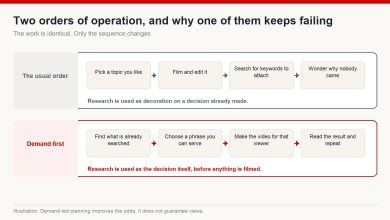
The next time you are about to publish, spend that quarter of an hour on the question a viewer would ask, rather than on the effects panel. It is usually the higher-value edit.
If you want the full process for building a faceless channel aimed at English-speaking audiences, that is what I teach at mmoyoutube.com.