When the Long-Tail Keyword Should Be Your Title, and When It Should Not
Clever titles that nobody was looking for
There was a stretch where I wrote titles to sound good. Short, intriguing, the kind of line that reads well out of context. The click-through rate was sometimes fine. The impressions were terrible, which made the click-through rate irrelevant.
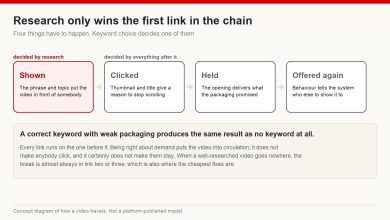
What I had missed is that a title is doing two jobs at once, and I was only doing one of them. It has to make a person want to look. It also has to tell the system who this video is for, so that it has some idea of where to put it in the first place. A title that is only intriguing has skipped the second job entirely.
Long-tail phrases — the specific, four-words-and-up kind — do the second job well. Some of the videos I titled that way did not spike at all. They accumulated views steadily for months, which on this platform is the more valuable outcome.
What counts as long-tail
A long-tail keyword is a phrase specific enough that you can tell what the person wanted. Usually four words or more, though the length matters less than the specificity.
Cat videos is a subject. Relaxing cat videos for anxiety is a request. The difference is a few words and an entirely different audience: one collects everyone who has ever been mildly interested in cats, the other collects people in a particular state of mind looking for a particular effect.
That second group is smaller, and far easier to satisfy. Which is the whole trade.
Why specific phrases suit small channels
The system has to decide who to show a video to, and it has very little information about a new channel to work from. A specific phrase gives it more to go on than a vague one, and it gives the viewer a clearer promise, which usually shows up in how long people stay.
This matters most for the formats where nobody is arriving for a personality: faceless channels, ambient and music content, explanatory videos, anything evergreen. There is no existing audience turning up out of habit, so the words have to do the work of finding the right people.
The compounding effect is worth mentioning too. A video attached to a stable, specific need keeps being relevant to that need. A video attached to a moment stops mattering when the moment does.
When the phrase should be the title, word for word
Not every long-tail phrase deserves to be a title. Four conditions, and I want all of them before I use a phrase verbatim.
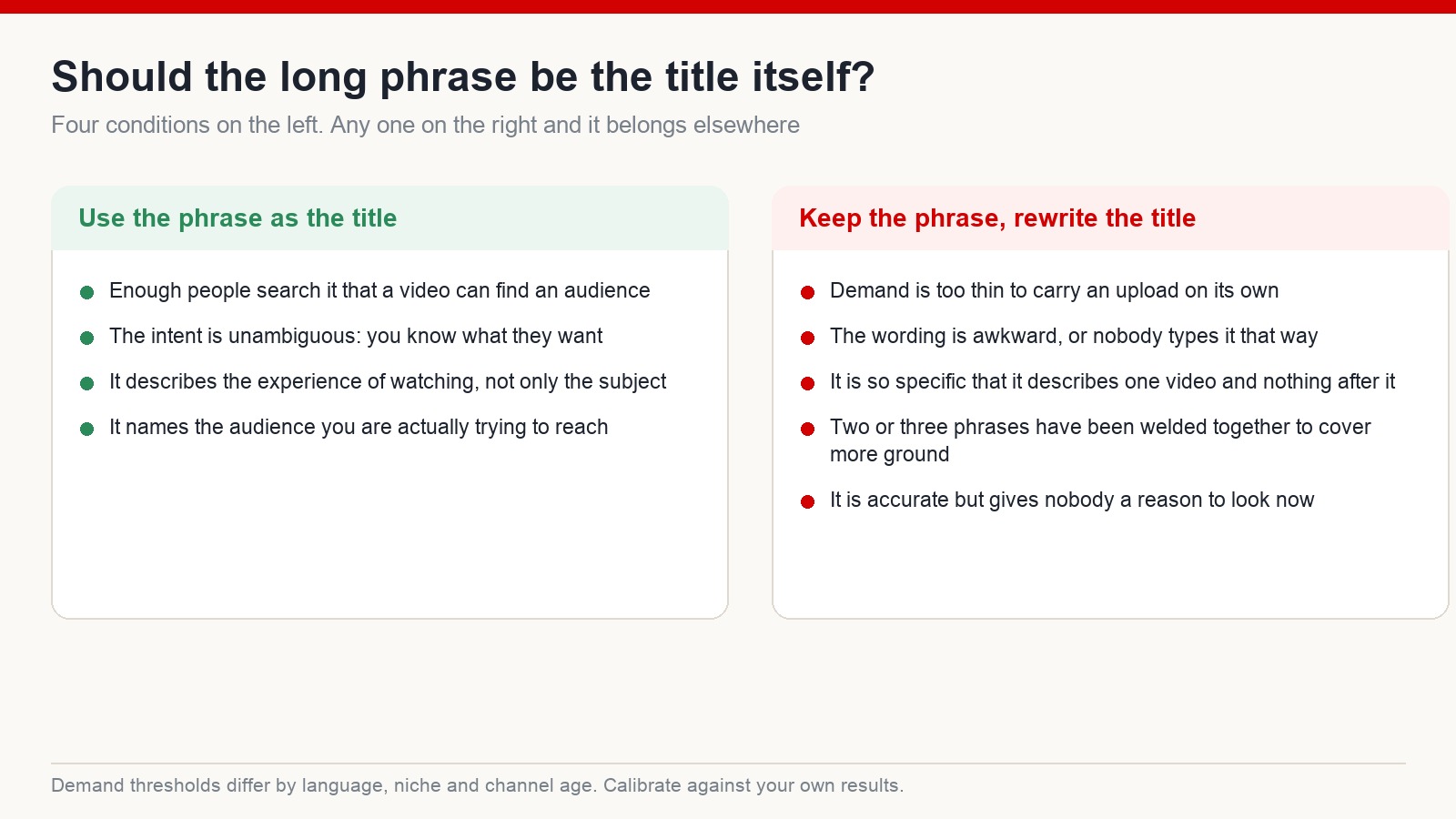
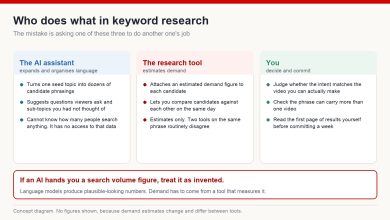
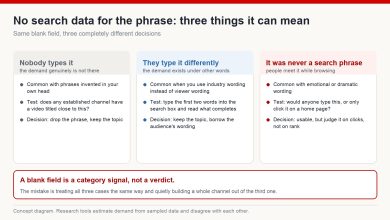
There is enough demand to be worth answering. Specific does not mean invisible. A phrase can be beautifully precise and searched by almost nobody, and ranking first for it changes nothing. Check before you commit, and be aware that research figures are estimates that move — different tools disagree, and all of them revise.
The intent is unambiguous. Read the phrase and ask what the person wants. If two different videos could both honestly answer it, the phrase is still too vague to be a title.
It describes the experience, not only the subject. Ocean sounds names a category. Deep ocean sounds for sleep names what the viewer will do with it. The second is the one that gives you a chance of holding them, because they arrived knowing what they were getting.
It names the audience you actually want. The same footage can be offered to different rooms. Funny dog videos and calm pet videos for stress relief can describe overlapping clips and attract completely different people, with completely different expectations about pace and length.
When to keep the phrase but rewrite the title
The opposite cases are just as important, and they are where the advice usually goes wrong.
If demand is too thin, the phrase belongs in the description or in your notes for a future video, not on the front of one. If the wording is awkward — grammatically odd, or simply not how anybody speaks — using it verbatim makes the channel look automated, which costs more than the phrase is worth.
And if the phrase is so specific that it describes exactly one video and nothing after it, you have a title rather than a strategy. Something like white cat sleeping beside a blue window during rain reads beautifully and has essentially no audience behind it. Cinematic and unsearched is still unsearched.
The two ways long-tail titles fail
The first is stacking. People find three phrases they like and weld them together, on the theory that more phrases means more chances to be found.
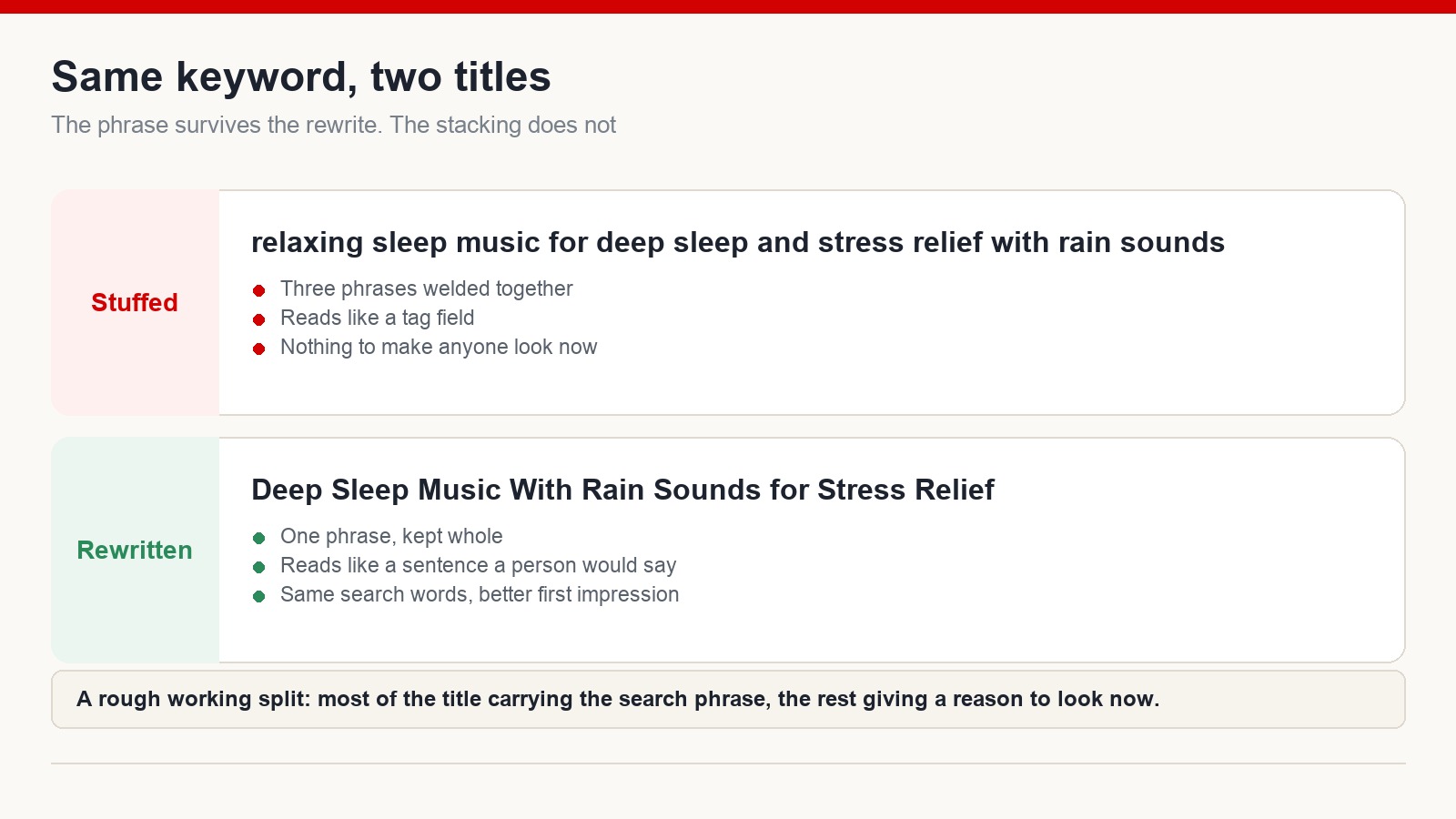
Something like relaxing sleep music for deep sleep and stress relief with rain sounds contains everything and reads like a tag field. It is not that it breaks a rule; it is that no human being reads that and feels anything. Deep Sleep Music With Rain Sounds for Stress Relief keeps the same search words in an order a person would actually say them.
The second failure is the reverse of my early mistake: a title that is perfectly descriptive and gives nobody a reason to look now. Accurate, findable, and completely inert. Being found is the beginning of the job rather than the end of it.
The split I use
The working balance I keep coming back to is most of the title carrying the search phrase, and the remainder giving a reason to look.
So instead of peaceful panda videos for sleep, which is accurate and flat, something like Peaceful Panda Videos That Calm Your Mind Before Bed. The phrase is intact, the meaning is unchanged, and there is now a suggestion of an outcome rather than a category label.
Three shapes that hold up when you need them:
- Phrase plus payoff — Relaxing Ocean Sounds That Quiet a Busy Mind.
- Phrase plus a question the viewer already had — Why Ambient Videos Are So Hard to Turn Off.
- Phrase plus the intended use — Deep Focus Music for Studying Without Distraction.
In each case the searchable part survives intact. What changes is that somebody now has a reason to click rather than merely a way to find it.
Frequently asked questions
How many words makes a keyword long-tail?
Four or more is the usual definition, but specificity matters more than length. A three-word phrase that names a clear need is more useful than a six-word one that names nothing.
Should the whole phrase go in the title?
Only when it reads naturally and has enough demand behind it. Otherwise keep the phrase intact inside a title that a person would actually say.
Are low-demand phrases ever worth targeting?
Occasionally — if you are deliberately building depth in a narrow subject and expect the audience to arrive through your other videos rather than through search. As a general strategy, no.
Do long-tail titles improve retention?
They can, indirectly. A clearer promise means the people who click are more likely to have wanted what they got. It does nothing for a video whose opening does not deliver.
How often should I recheck demand for a phrase?
Before committing to a run of videos, and periodically afterwards. Interest drifts, competitors publish, and tool estimates get revised.
Optimise to be watched, not only to be found
Long-tail phrases are not a ranking trick. They are a way of being clear about who a video is for, early enough that the system and the viewer both understand it before anyone has committed anything.
Use the phrase as the title when demand supports it, the intent is obvious, and the sentence reads like something a person would say. Keep it and rewrite around it otherwise. And do not stop at being findable — a video nobody had a reason to click is in the same position as a video nobody could find.
None of this is a promise of views. Distribution depends on many things outside the title, and results differ by channel and subject. What clear phrasing buys you is that the people who do arrive are the ones you meant to reach.
The full process I use for building faceless channels aimed at English-speaking audiences is at mmoyoutube.com.