What Actually Moves Your YouTube RPM
Here is a question every creator eventually asks, usually after comparing notes with someone else.
Two channels finish the month with roughly the same number of views. One of them earned several times what the other did. Nobody cheated, nothing went wrong, and the difference is not really about the videos – it is about who watched them and what those views were worth to an advertiser.
The number that describes that gap is RPM. It is the single most misunderstood figure in the analytics panel, and it is worth understanding properly, because it is the one metric where a decision you make before you script anything has more effect than anything you do afterwards.
I have been making videos since 2017, mostly faceless channels aimed at viewers in the US, the UK, Germany and Japan.
What RPM actually is
RPM means revenue per mille – your estimated earnings per thousand views, after the platform takes its share.
The important detail, and the one most people miss: RPM is calculated across your total views, including every view that never showed an ad at all. That is why RPM always looks lower than CPM, which is what advertisers pay per thousand ad impressions. They are answering different questions, and comparing your RPM to somebody’s CPM will make you feel unnecessarily bad.
The other thing to know is that RPM is not a property of your channel. It is an outcome. It moves constantly, and it moves for reasons largely outside your control on any given day.
What actually moves it
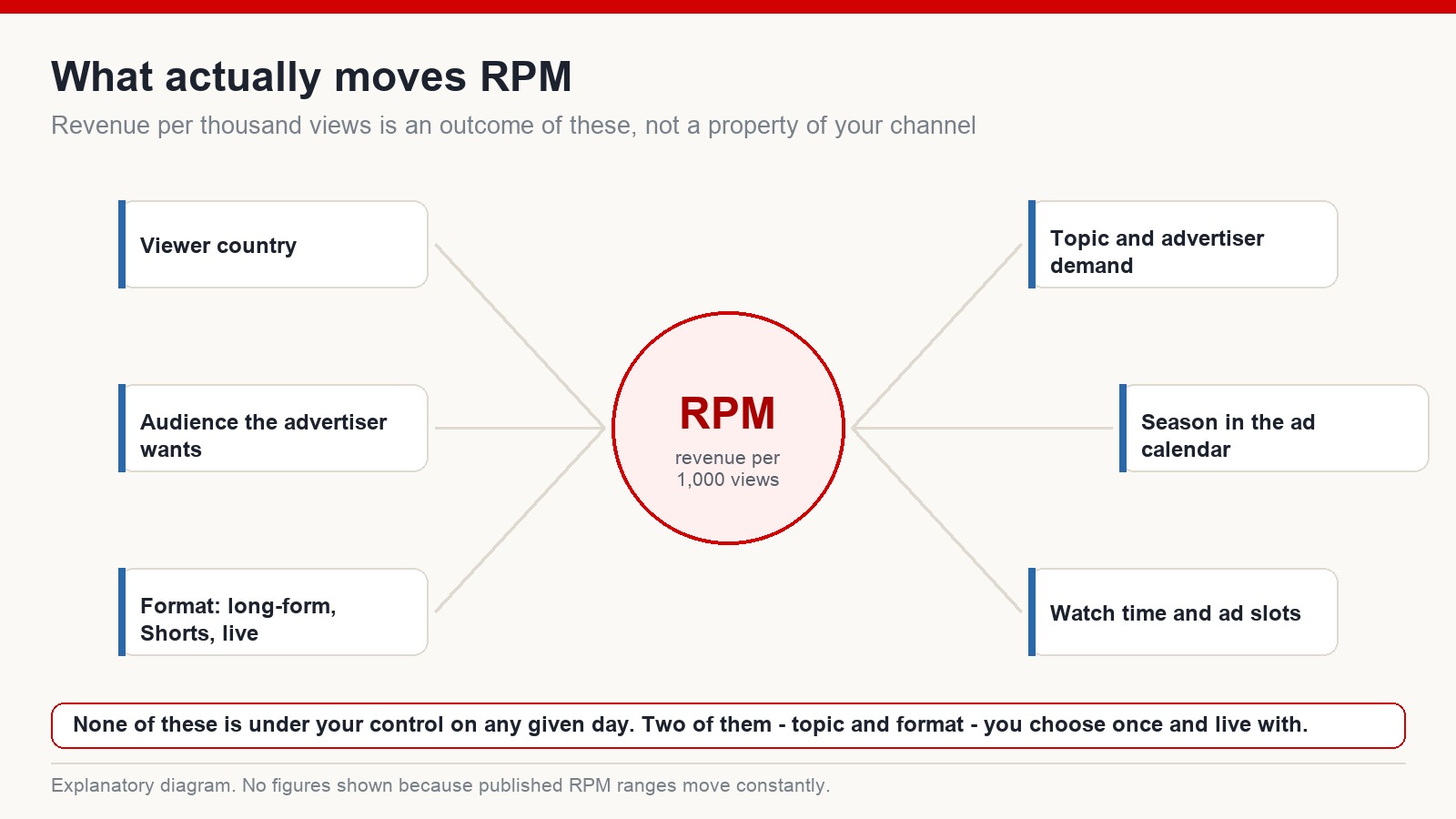
Six things do most of the work:
- Where the viewer is. Advertiser budgets are wildly uneven between markets, and that is the biggest single input.
- What the subject is. Some categories attract advertisers with far deeper pockets than others.
- When it happens. Ad demand rises and falls through the year, so the same video can be worth noticeably different amounts in different months.
- How long people stay. Longer watch time means more opportunity for ads to be served.
- Format and placement. Long-form, Shorts and live are priced on completely different bases.
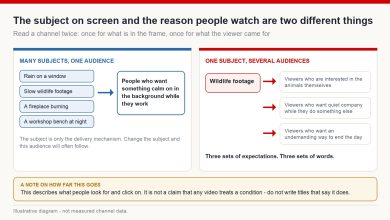
- Who the audience actually is. Advertisers are buying access to a group of people, not a number.
Read that list again and notice something: only two of those six are choices you make. Topic and format. You choose them once, near the start, and then live with the consequences for a long time. Everything else is weather.
Why nobody can give you a multiplier
The most common version of this question is “how many times higher is RPM in an English-speaking market?” and the honest answer is that there is no such number.
The gap varies by country, by subject, by audience, by season and by whatever advertisers happen to be doing that quarter. In some categories the difference is modest. In others it is substantial. Any specific multiplier you read – including in articles like this one – is a snapshot of someone’s particular channel at a particular time, and treating it as a forecast for yours is how people end up disappointed.
So do not go looking for the coefficient. Go looking for an audience you can genuinely serve, and let the rate be whatever it turns out to be.
Reach is a separate argument from rate
It is worth separating two reasons people build for an international audience, because they get bundled together and they are not the same.
The first is the rate, which is what everything above was about. The second is simply the size of the room. A video in a language spoken by tens of millions of people has a ceiling defined by that. The same video in a language spoken by hundreds of millions has a much higher one – not just for ad revenue, but for subscribers, sponsorships and anything else a channel can eventually sell.
Of those two arguments, the second is the sturdier one. Rates change. Room size does not.
Two levers, one equation
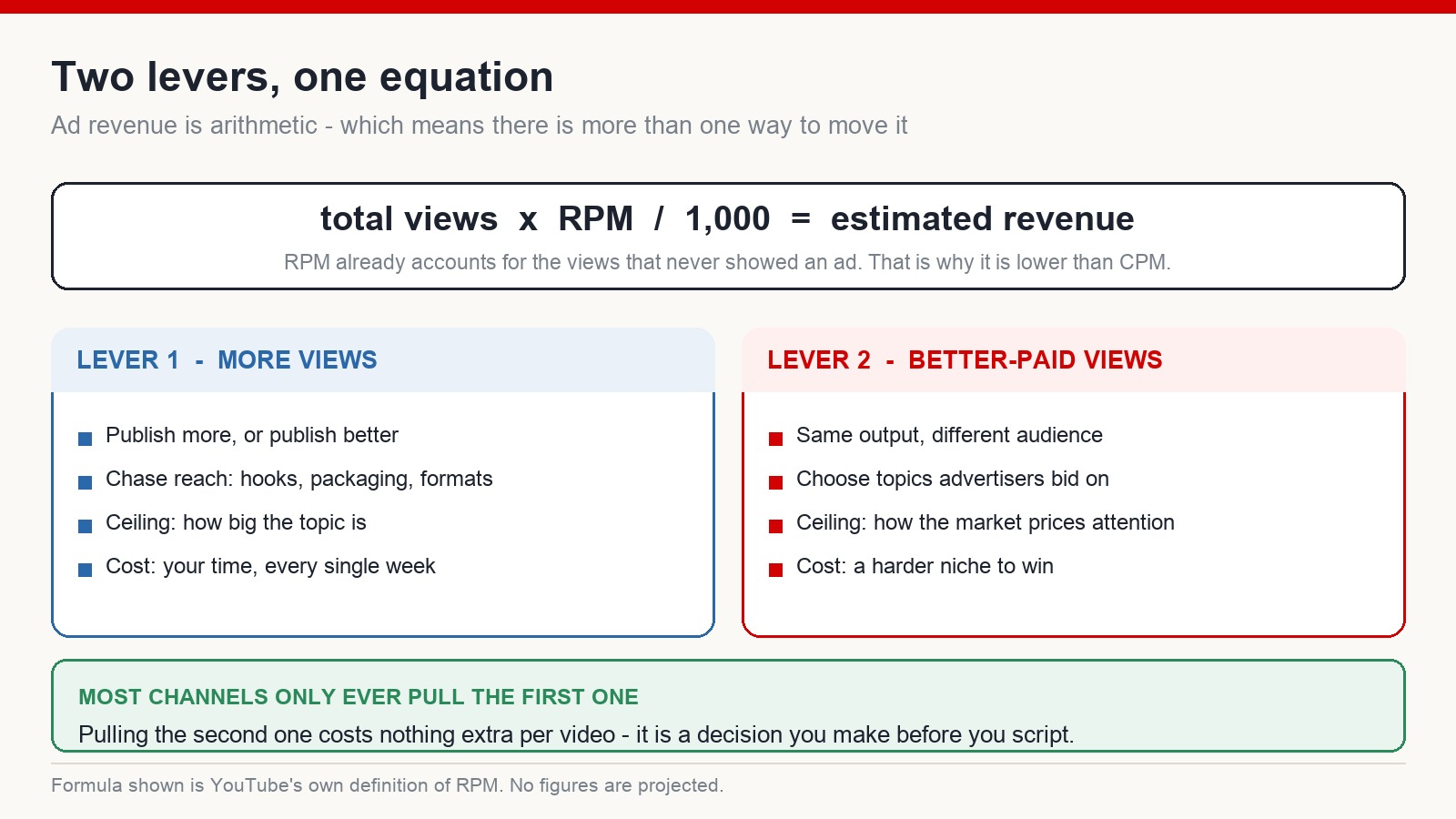
Ad revenue is arithmetic. Total views multiplied by RPM, divided by a thousand. That is an identity, not an estimate, and it means there are exactly two things you can push on.
Lever one is more views. Publish more, or publish better. Chase reach through hooks, packaging and format. The ceiling is how large your subject is, and the cost is your time, every week, forever. This is the lever everybody pulls.
Lever two is better-paid views. Same output, different audience. Choose subjects that advertisers actually bid on. The ceiling is how the market prices attention, and the cost is that the more valuable niches are usually harder to win.
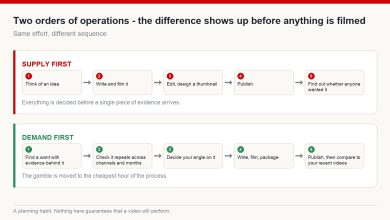
Most channels only ever pull the first one. The second costs nothing extra per video – it is a decision made before you write the script, not extra work after it.
Three ways to pull the second lever
Choose a subject advertisers want to be next to
Some categories – technology, finance, business, education, software, marketing – attract more advertiser competition than broad entertainment does. That is not a moral judgement about the content; it is just where budgets sit.
Two caveats worth stating plainly. Higher-value categories are more competitive, which means a harder climb for a new channel. And some of them – anything touching money, health or major life decisions – come with a genuine obligation to be careful about what you claim. A high advertiser rate is not worth much if the content is irresponsible.
Attract the audience you meant to attract
Your title, thumbnail and opening decide who clicks. If the packaging pulls in an audience that has nothing to do with the subject, the retention is poor and the audience is worth less. Precision beats reach here more often than people expect.
Some creators test which framing brings in which audience – a calmer, more specific set of words versus a broader, louder one. That is a reasonable experiment, but it is an experiment: check it against your own data rather than assuming the result transfers from someone else’s channel.
Keep people watching
Longer watch time and better retention help twice over: they give the video more opportunity to be recommended, and they create more room for ads to appear. It is the least glamorous of the three, and the most reliable.
So should you build for a different market?
It depends on what you actually want, and both answers are legitimate.
If the goal is a personal brand in your own country, selling to a local audience, or building a community in your own language, that is a coherent plan and the local market is exactly where you should be. Switching markets to chase a rate would be a mistake.
If the goal is scale – a bigger audience, more revenue lines, less dependence on one small market – then building for a larger language is worth serious consideration. Plenty of people run both in parallel, which spreads the risk and is a perfectly sensible answer.
Where RPM belongs in your thinking
Building for an international audience is not a shortcut, and it is not a fast route to anything. It is a way to put the same work in front of more people, some of whom are worth more to advertisers.
Nothing here guarantees anything. Rates move, policies change, niches cool off, and plenty of well-made channels never earn much at all. Treat any figure you read as history rather than forecast, and do not commit money you need against a projection.
The channels that last are not the ones optimising RPM. They are the ones making something people actually want, understanding who those people are, and improving on real data. Get that right and the rate becomes a consequence rather than a target.
If you want a structured path for building a faceless channel aimed at an English-speaking audience, that is what I teach at mmoyoutube.com.
Frequently asked questions
What is RPM?
Estimated revenue per thousand views, after the platform’s share. It is calculated across total views, including views that never showed an ad, which is why it reads lower than CPM.
What is the difference between RPM and CPM?
CPM is what advertisers pay per thousand ad impressions, before the revenue split. RPM is what actually reaches you, spread across all of your views. CPM describes the ad market; RPM describes your channel.
Is RPM always higher for an international audience?
No. It depends on country, subject, audience, season and advertiser demand. Some markets do attract heavier ad spending, which lifts rates in certain niches, but there is no reliable multiplier and there are plenty of counter-examples.
Why did my RPM drop even though views went up?
Usually a change in the mix rather than a problem. A video that reached a different country, a different format, or a seasonal dip in ad spending will all move it. Look at the composition of the traffic before assuming something is broken.
Should I abandon my current audience to chase a higher rate?
Rarely, and not on the strength of a rate alone. An audience that already trusts you has value that does not show up in RPM. Running a second channel for a wider market is usually a better move than abandoning the first.