AI Thumbnails: The Risk Is Not Detection, It Is Looking Like Everyone Else
The question I get asked most often about generated thumbnails is some version of: will YouTube flag this as spam? It is a reasonable worry and it is aimed at the wrong risk. In practice the thing that quietly costs faceless channels their reach is not a detector. It is that six channels in the same niche are all producing images a viewer cannot tell apart.
I have been building YouTube channels since 2017, most of that on faceless channels aimed at English-speaking audiences, and I use generated imagery in that work. What follows is how I keep AI youtube thumbnails from collapsing into the same look as everyone else’s — and, separately, what the platform rules genuinely say, as opposed to what gets repeated in forums.
What Is Written Down, and What Is Folklore
Worth separating these before anything else, because the folklore version leads people to strange decisions.
What is documented: a thumbnail must not misrepresent what is in the video. That is a stated policy with real consequences, and it applies identically whether the image was photographed, painted or generated. There are also policies covering mass-produced, repetitive content that adds nothing, which matter for monetisation.
What is not documented: any mechanism that detects that an image was generated and reduces the video’s reach for that reason. I have seen no evidence of it, and I would not build a workflow around avoiding it. Separately, YouTube does ask you to disclose realistic synthetic content in the video itself — that is a labelling obligation, not a penalty on the artwork.
So the honest framing is this: nothing is coming to punish you for using a generator. What can happen is that your packaging becomes invisible, or that it promises something the video does not contain. Both of those are your decisions, not the platform’s.
The Real Failure Is Sameness
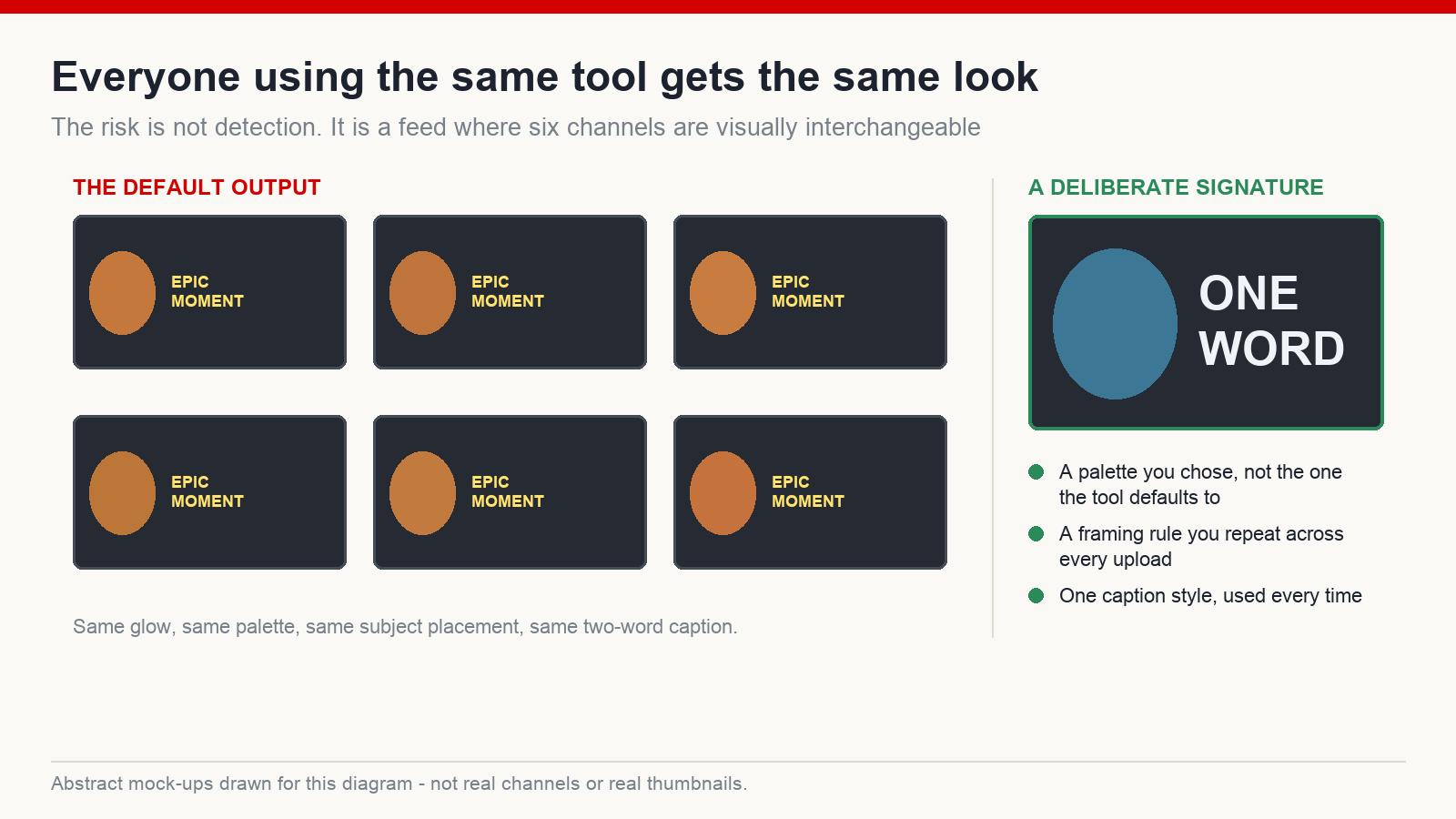
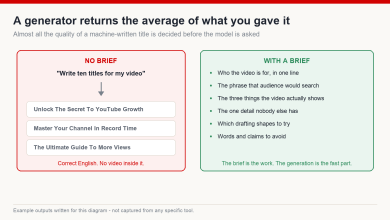
Here is what actually happens. An image model has a house style. Ask it for a dramatic scene and it gives you a particular kind of light, a particular colour temperature, a particular way of centring the subject. It is a good look. It is also the same look that every other creator asking a similar question receives.
Put six of those side by side in a feed and the result is not a penalty. It is worse than a penalty: it is indifference. The viewer’s eye has nothing to catch on, because nothing distinguishes any one tile from its neighbours. Your click-through rate does not collapse dramatically; it just sits flat, and you spend three months blaming the content.
The same problem appears when creators copy a competitor’s packaging on purpose — same layout, same framing, one detail changed. Whatever recognition that image earns tends to flow to whoever established it first. You end up doing the work of building an identity and handing the benefit to someone else.
Study the Mechanism, Not the Image
When a thumbnail in your niche is clearly working, the useful move is not to reproduce it. It is to work out what it is doing.
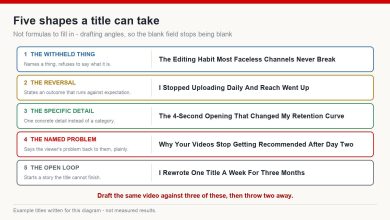
Ask what the frame is exploiting. An impossible scale? A moment of visible danger? A reaction with no visible cause? A strong contrast that separates it from the surrounding grid? Once you can name the mechanism in a sentence, you can build a completely different image that uses the same mechanism. That is the difference between borrowing a technique and copying a picture, and it is the only version of competitor research worth the time.
Fix the Style, Vary the Subject
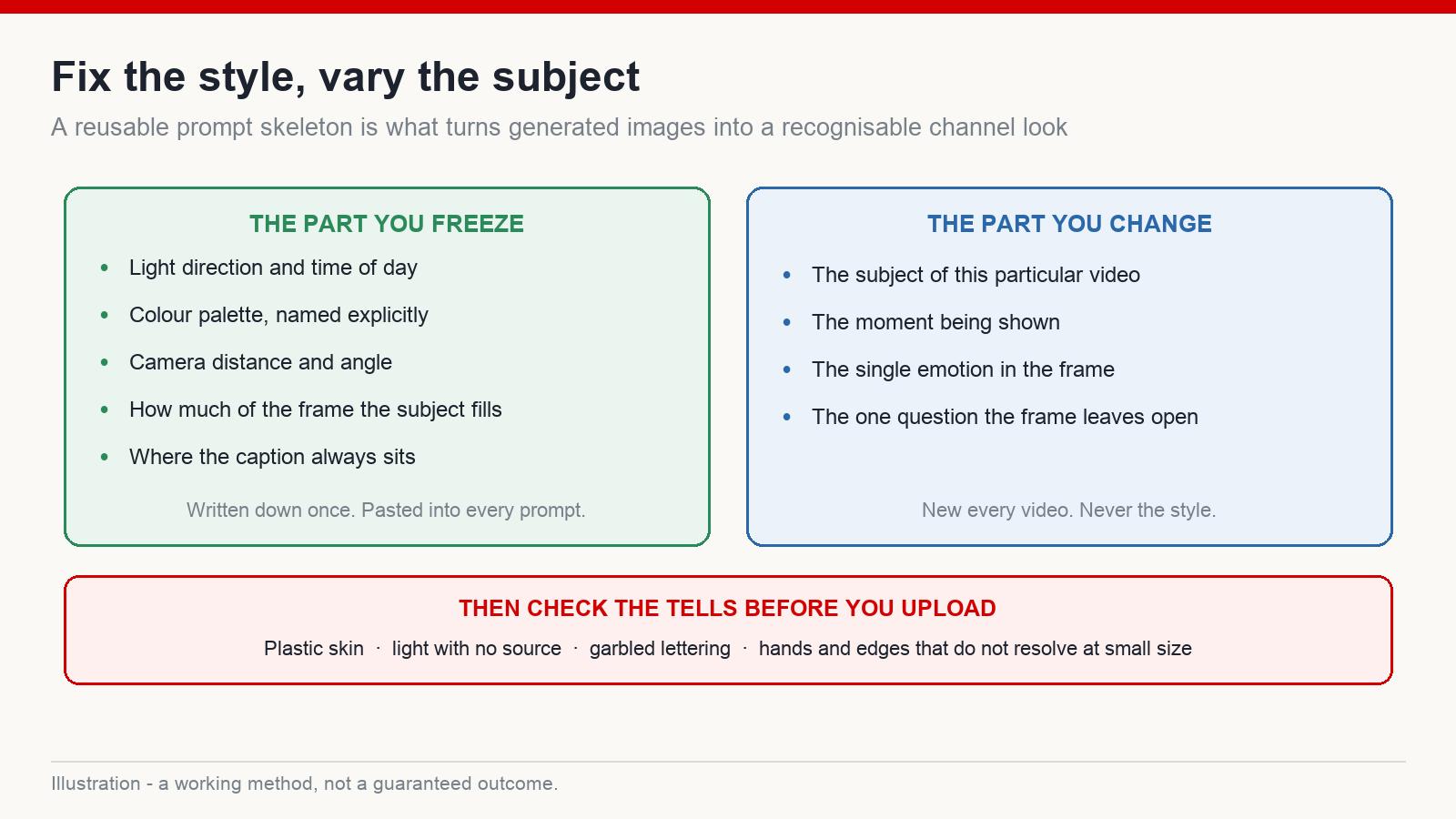
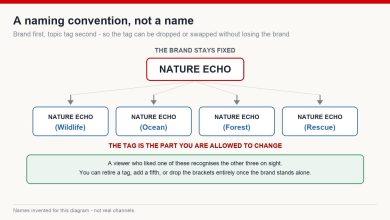
The practical answer to sameness is a prompt skeleton you reuse: a fixed style section and a variable subject section.
The part you freeze is written down once and pasted into every prompt — light direction, an explicitly named palette, camera distance, how much of the frame the subject occupies, where the caption always sits. The part you change is everything about this specific video: the subject, the moment, the single emotion, the question the frame leaves open.
Do that for twenty uploads and something useful happens. Your thumbnails start being recognisable at a glance, before the viewer reads the channel name. That recognition is the closest thing to a compounding asset in packaging, and it is entirely available to faceless channels — a consistent visual signature does the job a presenter’s face does elsewhere.
One caveat: consistent is not identical. If every thumbnail uses the same subject in the same pose, you have not built a signature, you have built a template, and viewers stop seeing new uploads as new.
Where Generated Images Give Themselves Away
Generated frames fail in recognisable ways, and viewers notice faster than creators expect:
- Plastic surfaces. Skin with no texture, everything lit as though polished.
- Light with no source. Glow arriving from a direction nothing in the frame could produce.
- Garbled lettering. Words the model has hallucinated into signs, boxes or screens. Never leave generated text in a thumbnail — add your caption yourself, in a real font.
- Edges that do not resolve. Hands, fingers, overlapping objects. Fine at full size, mush at feed size.
The fix for all four is the same and takes ten seconds: shrink the image to the size it will actually be seen at, and look at it there. Most of these failures are only visible in the editing window, which is the one place nobody watches YouTube.
The Line You Should Not Cross
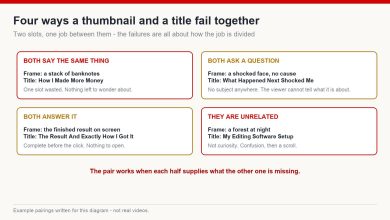
The thumbnail has to depict something the video contains. Not approximately — specifically. If the frame shows an event, the video has to show that event, early enough that the viewer is not left waiting for it.
This is where “will I get flagged” becomes a real question rather than folklore, and it has nothing to do with how the image was made. Generation makes overpromising much easier, because you can render anything, including things you never filmed and cannot show. That is the temptation to watch, and it is also a mathematical trap: an over-promising thumbnail raises the click rate and lowers retention, and the retention number is the one that decides whether the video keeps being distributed.
A Workflow That Stays Clean
- Look at what is working in your niche and write down the mechanism, not the image.
- Write a fresh prompt from the mechanism, using your frozen style block.
- Generate several versions. The first output is a starting point, not a result.
- Add captions yourself in a real font. Do not ship generated lettering.
- Shrink it and check it at phone size.
- Run two questions: does this show something in the video, and could a viewer confuse it with an existing channel?
The Short Version
The danger with generated thumbnails is not a detector. It is defaulting — to the tool’s house style, or to a competitor’s layout — and ending up with packaging that nobody can tell apart from anything else. Freeze a style you chose, vary the subject, add your own text, check it small, and keep the promise the frame makes. Results vary by niche and format, and policies change, so re-read the current rules before you build anything on top of them.
If you want the full workflow around packaging and the production system behind a faceless channel, that is what we work through at mmoyoutube.com.
FAQ
Will a generated thumbnail reduce my reach?
Not for being generated, as far as anything documented shows. It can hurt you if it misrepresents the video, or if it looks identical to everything else in the feed and nobody has a reason to click it.
Do I have to disclose a generated thumbnail?
The realistic-synthetic disclosure that YouTube asks for concerns the video’s content. Check the current wording in the upload flow rather than trusting a summary, including this one — the rules have been revised more than once.
Can I use a competitor’s style if I change the subject?
You can study why it works. Reproducing its layout and colour treatment mostly transfers recognition to the channel that got there first.
How many versions should I generate?
Enough that you are choosing rather than accepting. The first output reflects the tool’s defaults more than your intent.