The Click Happens Before Anyone Reads Your Title
Somebody spends three hours on a title. Adds a number. Adds a keyword. Rewrites it eight times, finds a phrasing that finally feels clever, publishes, and watches the click-through rate come in flat.
The usual conclusion is that the title was not good enough. Usually it is something more uncomfortable than that: most of the people who saw the video never read the title at all.
They scrolled past an image. The image did not stop them. Everything downstream of that never happened.
The order is not the one you plan for
When you are making a video, the title feels like the front door, because it is the thing you write first and think about hardest. From the other side of the screen it works differently.
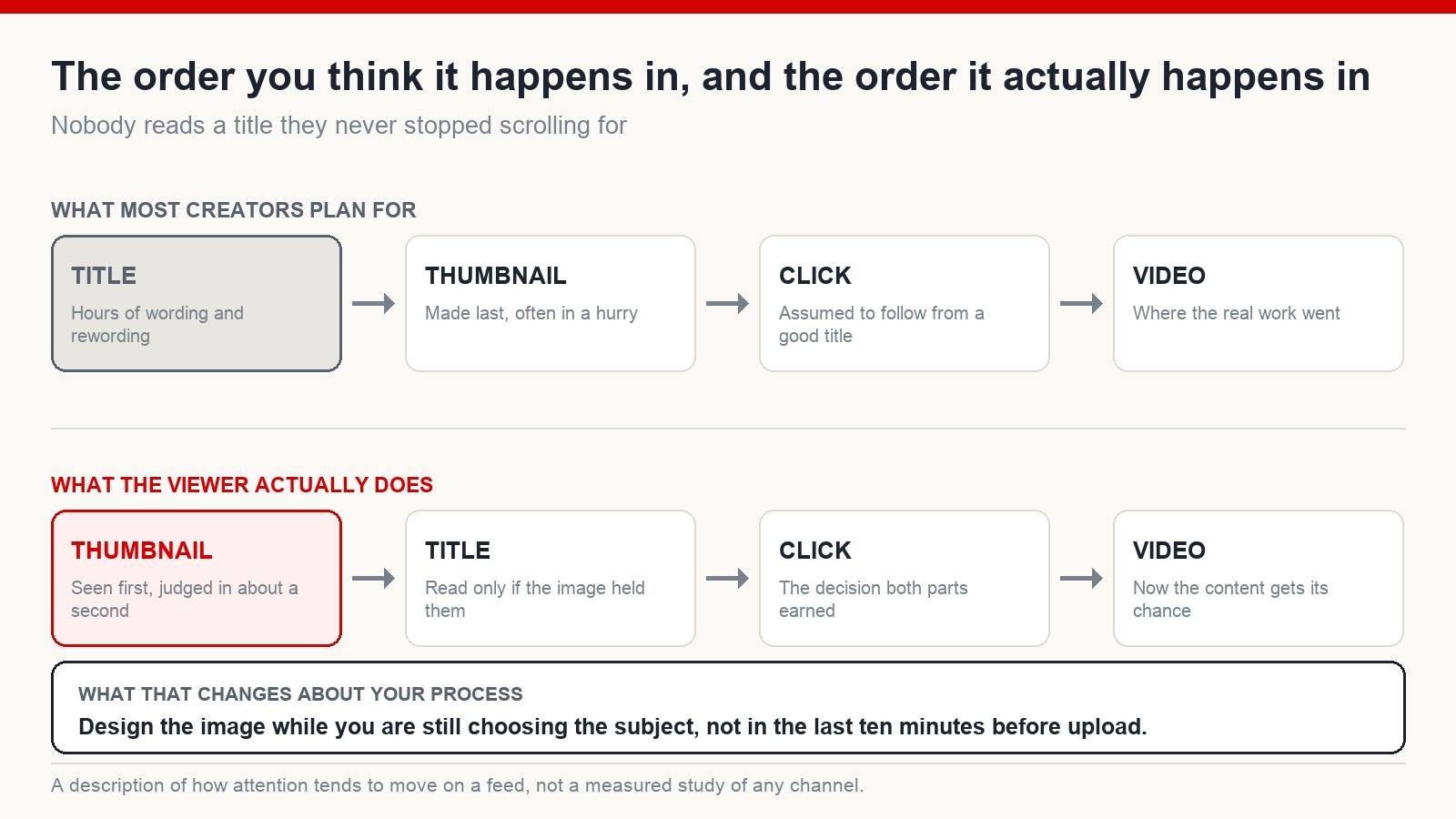
A viewer moving down a feed is processing pictures. The eye lands on an image, decides in roughly a second whether there is anything there, and either moves on or slows down. Only if it slows down does the title get read – and at that point the title’s job is not to attract, it is to explain what the image was hinting at and give a reason to commit several minutes.
So the two are not competing. They are sequential. The thumbnail buys you the chance to be read; the title converts that chance into a click. A brilliant title behind a flat image is a locked door with a beautiful sign inside it.
Everybody researches the phrase. Almost nobody researches the picture
Keyword research is now a habit. People check what viewers search for, what phrasing performs, which terms are too broad. All of that is worth doing.
Then they get to the thumbnail with twenty minutes left before upload and grab a frame from the video.
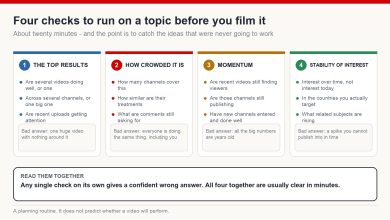
The missing question is the mirror image of the keyword question. Not what do people type, but what do people want to see. Some subjects have an obvious answer and some genuinely do not, and knowing which one you are dealing with should influence the video before you script it.
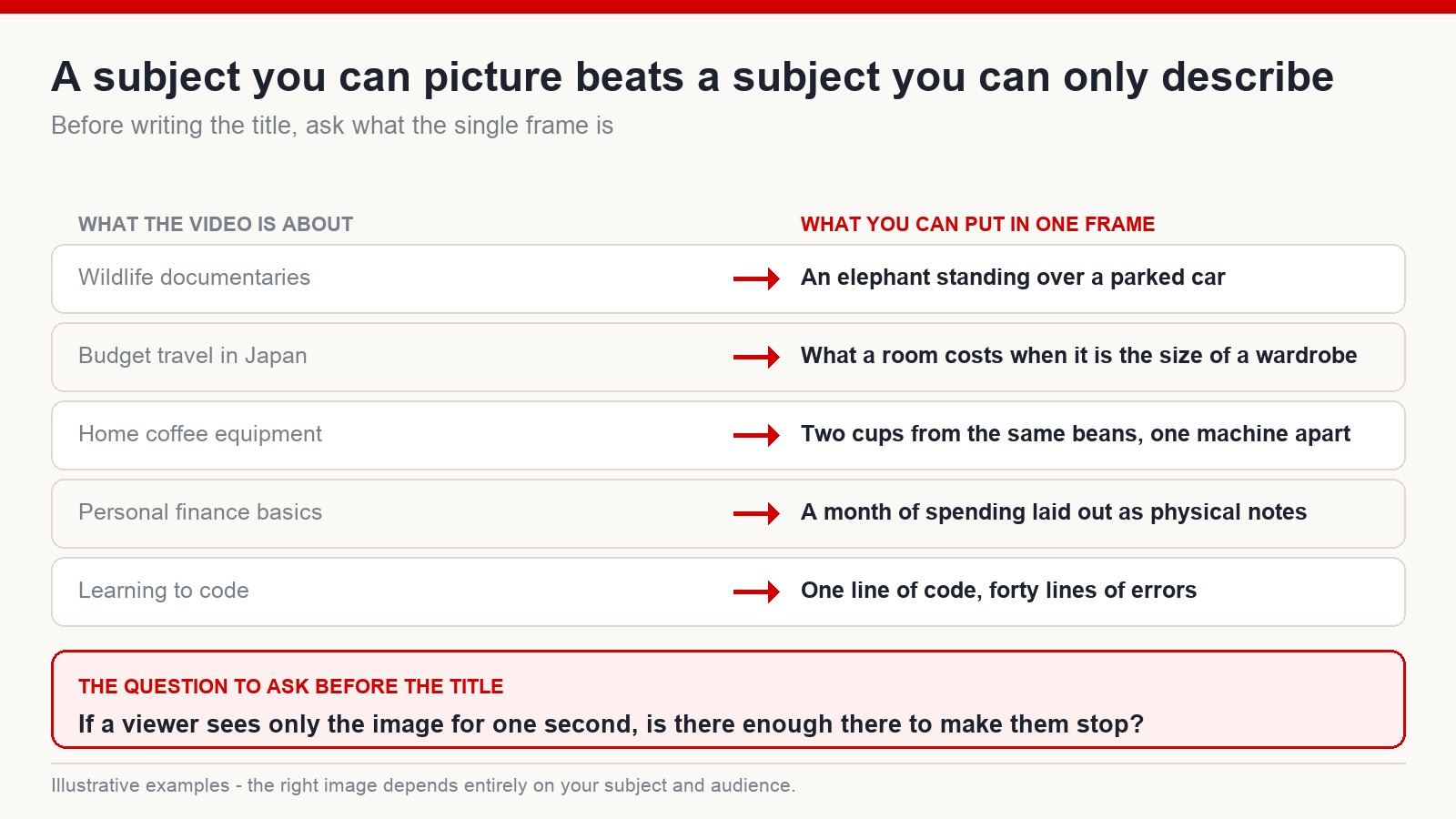
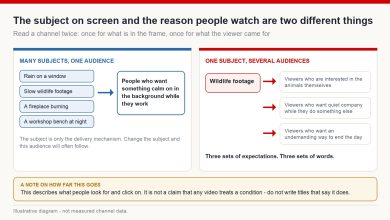
Compare two versions of the same territory. “Wildlife documentaries” is a category. Nothing appears in your head when you read it – or rather, something vague and generic does, which is worse. “An elephant standing over a parked car” puts a picture there immediately, and with it a question. What happened? Was anyone inside? How did that end?
That question is the entire mechanism. Curiosity is not created by the words. It is created by a specific image that is missing an explanation.
What makes an image stop somebody
Watching how strong channels package things, the same properties turn up again and again:
- A clear action. Something is happening, not being presented.
- Legible emotion. A face, a body, an object in a state you can read instantly.
- An unexpected moment. The thing that should not be there.
- Contrast. Two states side by side, so the difference does the explaining.
- Rarity. Something the viewer has not already seen forty times this week.
Notice what is absent from that list: summarising the video. Strong thumbnails almost never try to tell the whole story. They show one moment and leave the rest missing. The frame is a question, and the video is the answer – which is also why a thumbnail that gives everything away tends to underperform even when it is technically the best-looking image in the file.
You are not competing with one video
This is the part that reframes everything for people.
Your video is never judged on its own. It appears in a grid, surrounded by other videos, several of which are made by channels with more resources than you and years more practice at exactly this. A viewer scrolling that grid is not evaluating quality. They are scanning until something interrupts them.
Which explains a pattern that otherwise looks unfair: a carefully made, genuinely useful video sitting at a few hundred views while something far more casual goes wide. It is often not that the second video is better. It won the first two seconds, and the first two seconds are the only round most videos ever get to play.
But the click is a door, not a verdict
Two honest cautions, because this argument gets pushed too far.
First, click-through rate is not a score you can chase in isolation. Once somebody clicks, the platform is watching what happens next – how long they stay, whether they finish, whether they go on to watch something else. An image that wins clicks and then disappoints delivers a worse outcome than a modest image with a video that holds people. The thumbnail opens the door. Nothing about it keeps anybody in the room.
Second, there is a real line between intriguing and misleading. Promising something in an image that the video does not deliver is not a growth tactic – it is against the platform’s rules, it burns the audience you spent months earning, and it teaches the recommendation system that your clicks are not worth serving. The rule I use is simple: the moment in the thumbnail has to actually be in the video, and it has to mean what the image implies it means.
It is also worth saying that there is no universal click-through number to aim at. It varies enormously by subject, by format, by where the impressions came from, and by how established the channel is. The only comparison that tells you anything is against your own recent videos.
How to work this into the process
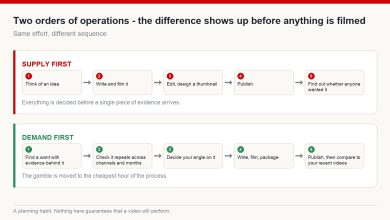
The practical change is about ordering, not effort.
Decide the frame before you decide the script. When you are choosing between video ideas, ask what the single image would be for each one. If an idea has no answer, that is information – it will be a harder video to get seen, however good it is.
Make the image early. Even a rough version. It tends to sharpen the video, because it forces you to name the one moment the whole thing is about.
Look at it small. On a phone, in a feed, next to competing videos. Most thumbnails that fail were only ever judged full-screen on a laptop, where they look fine.
Change one thing at a time. If you swap the image and the title together and the numbers move, you have learned nothing about which one did it.
The question to ask before you publish
Not “is my title good enough”. That question is one step too late in the sequence.
Ask instead: if somebody sees only the image, for one second, in a crowded feed, with no context – is there enough there to make them stop?
If the answer is no, the title cannot rescue it. If the answer is yes, everything you put into the video finally gets a chance to matter.
Which matters more, the thumbnail or the title?
They do different jobs in sequence. The image decides whether anybody stops; the title decides whether stopping turns into a click. Neither works without the other, but the image runs first, which is why it deserves more of your planning time than it usually gets.
What is a one-frame idea?
A subject specific enough to be shown in a single picture that raises a question. Broad categories cannot do that. A concrete moment – an object in an unexpected state, two things compared side by side, a reaction you can read instantly – can.
Does a high click-through rate mean a video will do well?
No. It means more people opened it. Whether it travels depends on what happens after the click – watch time, retention and whether viewers keep going. A high click rate followed by immediate exits is a worse signal than a modest one followed by people who stay.
Should I make the thumbnail more dramatic than the video?
No. An image that promises something the video does not contain breaks platform rules, costs you the trust of the people who did click, and teaches the system that your traffic is low quality. Show a real moment from the video, made as compelling as it honestly is.
If you want the fuller version of how packaging, research and format fit together for an English-speaking audience, that is what I teach at mmoyoutube.com.