Running Several YouTube Channels From One Google Account
The question arrives in almost identical wording every few months. Do I need a lot of Google accounts to run YouTube properly? How many channels can one account hold? Is there a limit that gets you flagged?
Two very different things are tangled together in that question, and untangling them is most of the answer. One is a real operational problem: if you publish more than one channel, how do you organise the accounts so you do not lose access to years of work. The other is the belief that a stock of accounts is itself a growth asset – something you build up so it can be pointed at your videos later. The first is worth thinking about carefully. The second is a policy problem with a marketing name on it.
I run several channels aimed at English-speaking audiences and have been doing this since 2017. Here is how the structure actually works, and where the boring admin matters far more than people expect.
The structure, plainly
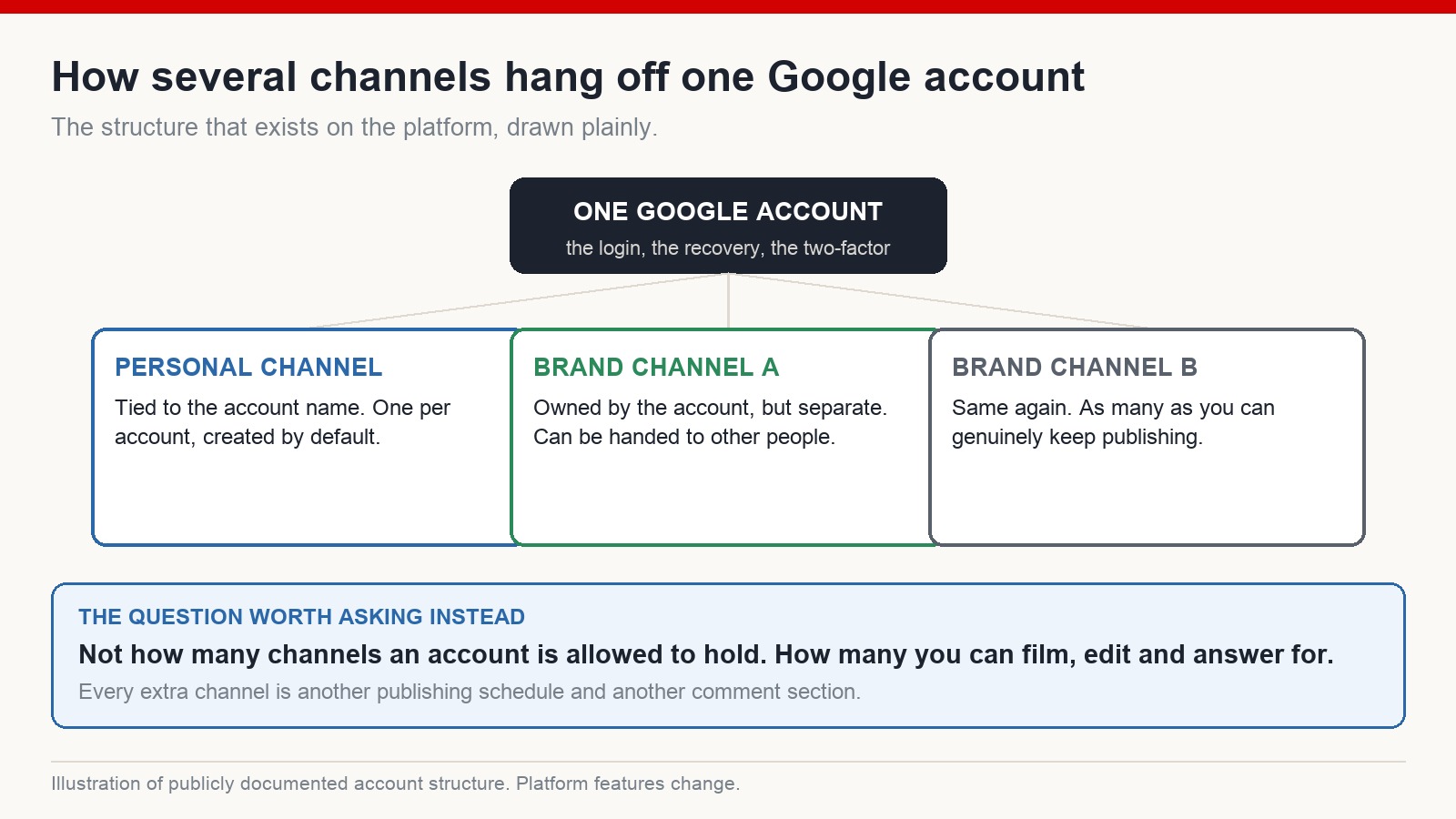
A Google account is a login. Attached to that login sit channels. The first one is the personal channel, tied to the account name. Beyond that, you can create channels that exist as separate entities under the same login – historically called brand channels – each with its own name, its own subscribers, its own analytics.
The useful property of those separate channels is that access to them can be granted to other people without handing over your password. You can add someone as a manager or an editor of one channel while they have no access at all to the rest of your account. When you eventually work with an editor or a thumbnail designer, that distinction is the difference between delegating and gambling.
Exact limits and feature names change over time, and they differ depending on how the account was set up, so treat any specific number you read – including in older articles – as something to verify in your own account settings rather than as a rule.
The number that matters is not the platform’s
People ask how many channels an account is allowed to hold. The more useful question is how many channels you can film, edit, publish and answer for, week after week, without any of them going quiet.
Every additional channel is another publishing schedule, another comment section, another set of numbers to read, another topic to stay current in. I have watched more people fail by spreading themselves across four half-maintained channels than by concentrating on one. A channel that goes quiet for three months does not sit there patiently; it loses whatever momentum it had, and restarting is harder than starting.
If you want a working rule, it is this: add a second channel when the first one runs without you thinking about it, and not before.
Separate the channels that should be separate
There is one genuine reason to split content across channels rather than piling it into one, and it has nothing to do with accounts. It is that a channel’s audience is built around an expectation. If half your uploads are cooking and half are woodworking, every video disappoints most of the people it reaches, and the platform has a harder time working out who to show anything to.
That is a content decision. It happens to be implemented through channels, which is why it gets confused with an account question. The test is simple: would a person who liked your last video plausibly want this one? If not, it probably belongs somewhere else.
The admin that nobody does until it is too late
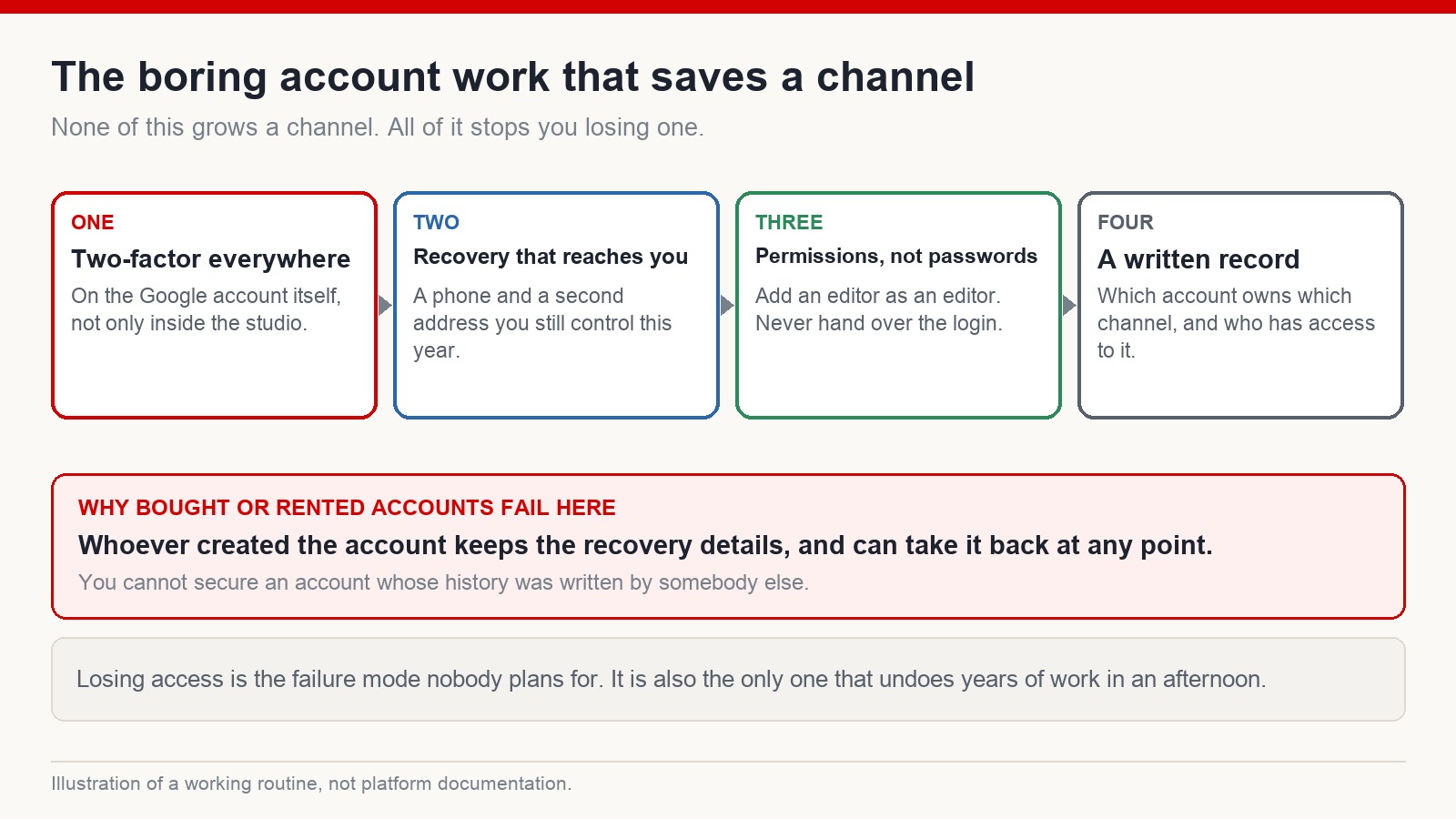
None of what follows grows a channel. All of it prevents the failure that undoes everything else.
Two-factor authentication on the Google account itself. Not just inside the creator tools – on the account that owns them. Channel takeovers usually arrive as a convincing email about a sponsorship or a copyright issue, and two-factor is what stands between a bad five seconds and losing the channel.
Recovery details you still control. A phone number that is current and a backup address you can still open. Check these once a year. People discover the old recovery address is dead at precisely the moment they need it.
Permissions instead of passwords. When you bring in an editor, add them as an editor. Sharing the login means you cannot revoke access cleanly, you cannot see who did what, and their security is now your security.
A written record. One document listing which account owns which channel and who has access to it. This sounds excessive until you have three channels and cannot remember which login owns the second one.
Why bought or rented accounts fail on their own terms
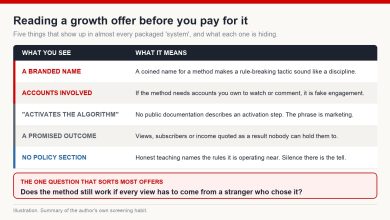
There is a market in ready-made accounts, usually sold on the promise that an account with history is more useful than a fresh one. Set aside the growth claim for a moment and look at it purely as an asset you are acquiring.
Whoever created that account set the recovery details. Recovery is designed to be strong, because it exists so that real owners can get back in after losing everything. That strength works against you here: the original creator retains a path back into an account you are now depending on. You cannot secure an account whose history was written by somebody else.
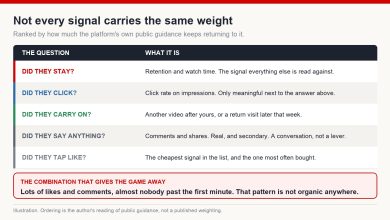
Now add the growth claim back. The reason these accounts are marketed at creators is the idea that a set of accounts with plausible histories can watch, like and comment on a new video to give it a start. That is fake engagement under YouTube’s spam and deceptive practices policy – engagement created by the person who benefits from it, regardless of how convincing the accounts look. The documented outcomes are metrics being removed, videos coming down, and repeat cases ending channels.
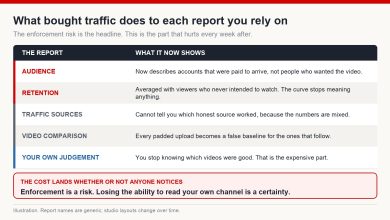
And there is the quieter cost that lands even if nothing is ever enforced: those interactions enter your analytics. Your retention curve is now an average of people who wanted the video and accounts that were performing interest. Your audience report describes accounts rather than viewers. Every padded upload becomes a false baseline for the next one. You have paid money to stop being able to read your own channel.
The version of this that is legitimate
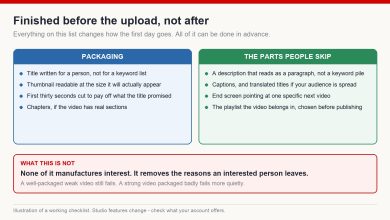
If the underlying wish is that a new video should reach interested people quickly, that wish is fine. The honest ways to satisfy it are unglamorous and they work: a mailing list of people who asked to hear from you, a community you have genuinely participated in for months, another platform where you already publish, a short clip that earns its own click, and your own back catalogue pointing at the new video through end screens and playlists.
None of that requires a second account. All of it brings people who would have chosen the video anyway – which is the only kind of early traffic that leaves your data intact.
If you have already built a stack of accounts
Stop using them for your own content, completely rather than gradually. Do not delete your published videos in a panic; deleting takes the genuine views and comments with them and undoes nothing. Publish three or four uploads with no help added, and treat the median of those as the first honest baseline your channel has had. Secure the accounts you actually publish from, using the checklist above, and let the rest go.
How many YouTube channels can one Google account have?
More than one, through separate brand channels, and the specific number has changed over the years. Check your own account settings rather than trusting a figure in an article – including this one.
Is it against the rules to run several channels?
No. Running multiple channels for genuinely different topics is normal. What is not allowed is using extra accounts to interact with your own content to inflate its metrics.
Should each channel have its own Google account?
Not necessarily, and one account with brand channels is usually simpler to secure. Separate accounts make sense when different people need genuinely separate ownership, or when a channel may be sold or handed over later.
Do old accounts perform better than new ones?
Account age changes nothing about how a video is distributed. It is a selling point for account sellers, not a documented ranking factor.
What is the single most important account setting?
Two-factor authentication, followed by recovery details that still reach you. Losing access is the one failure that undoes years of work in an afternoon.
The short version
One login can hold several channels, and the platform’s limit is not your constraint – your capacity to publish is. Split channels by audience expectation, not by account strategy. Spend an hour on two-factor, recovery details and permissions, because that hour protects everything else. And treat any account stack sold as a growth tool as what it is: a policy risk you carry, bought with money, paid for again in data you can no longer trust.
If you want the rest of the process for building a faceless channel aimed at an English-speaking audience, that is what we work through at mmoyoutube.com.