Five Tests a Long-Tail Keyword Has to Pass Before I Make the Video
For a long time I assumed that short, punchy titles were the only ones worth writing. Then I spent a few weeks going through faceless channels that were growing steadily rather than spiking — psychology, personal finance, sleep content, narrated explainers — and the pattern was the opposite of what I expected. A lot of the videos doing quiet, durable numbers were built on long phrases. Not clever ones. Long, plain, almost boring ones.
The catch is that most long phrases are worthless. Length by itself buys you nothing, and it is easy to spend a week producing a video for a phrase that reads well and that nobody has ever typed. So the useful question is not should I use long-tail keywords. It is: which long phrase is worth building a video around, and how do I tell before I commit the week?
What makes a phrase long-tail
Roughly four words and up, but the word count is a symptom rather than the definition. What actually changes is how much of the viewer’s situation the phrase carries.
Psychology is a subject. Psychology facts about introverts is an audience. Why introverts avoid phone calls is a situation someone recognises in themselves. Every step down that list narrows who will type it and sharpens what they expect when they arrive.
That sharpening is the entire advantage. A vague phrase brings a crowd of people with different intentions, most of whom wanted something else and leave quickly. A specific phrase brings fewer people who mostly wanted exactly this.
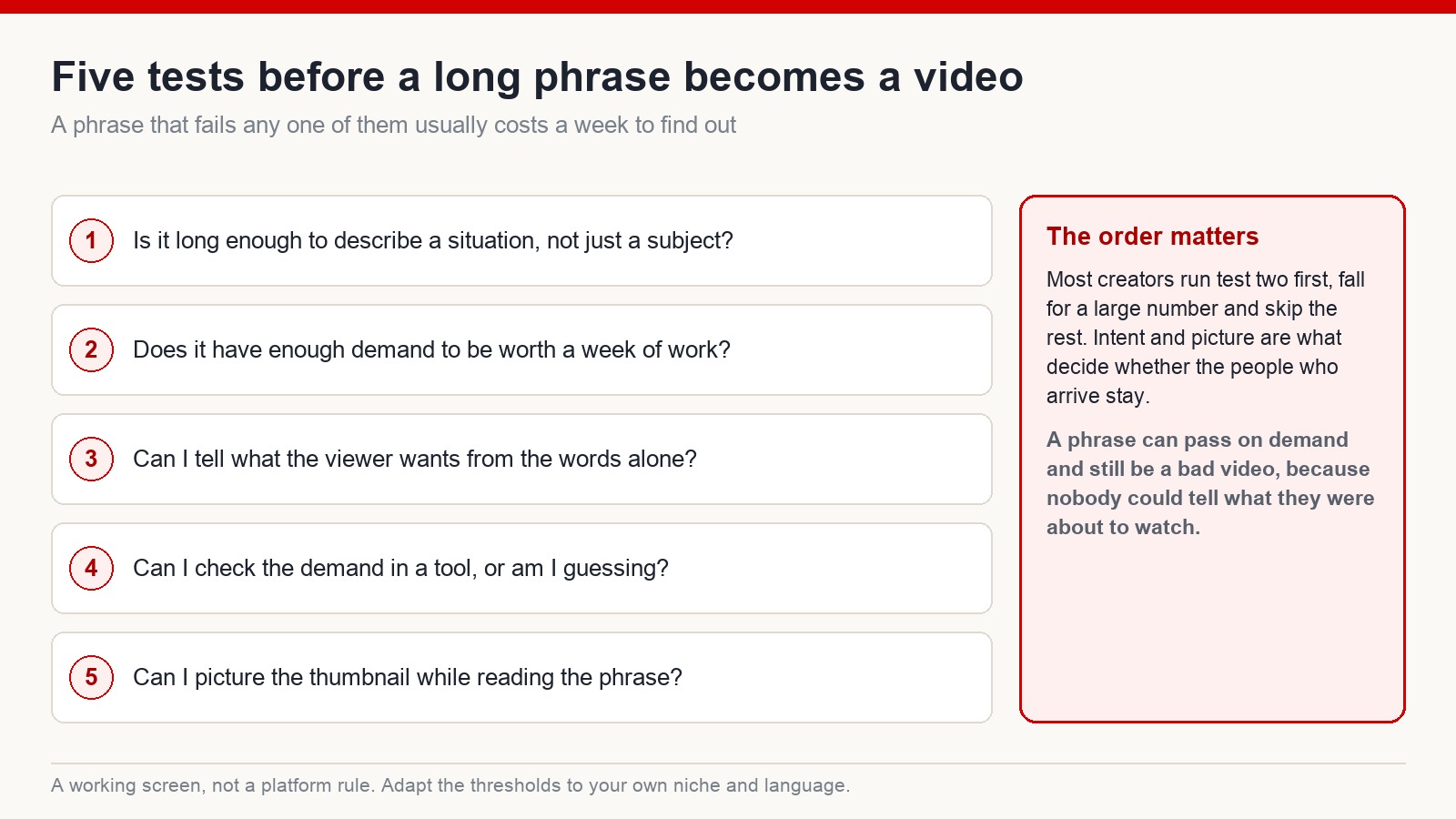
Test one: does it describe a situation, not just a subject?
Read the phrase and ask what the viewer was doing thirty seconds before they typed it. If you can answer — they were lying awake, they had just avoided a call, they had failed at something for the third time — the phrase carries a situation. If the only honest answer is “they were interested in the topic”, it does not.
Success mindset fails this test. How to build discipline when you feel unmotivated passes it easily, because the words themselves contain the moment.
Test two: is there enough demand to be worth the week?
This is the test everyone runs first, and it is the one most likely to mislead you, so it is worth being careful about what the number is.
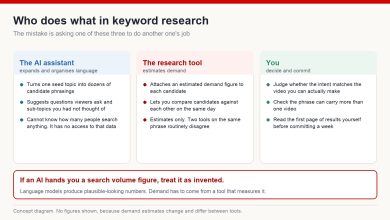
Search volume in a research tool is an estimate built from sampled and modelled data. Two tools looking at the same phrase on the same day routinely disagree, sometimes substantially, and both revise their figures over time. It is a rough compass, not a measurement.
Which is why I would not hand you a threshold and call it a standard. You will see one creator recommend a band of roughly one to ten thousand searches a month and another recommend something several times larger, and both can be describing real experience in their own niche and language. The right floor depends on the subject, the market and how much history your channel already has.
What is dependable is the shape of the judgement: below some point, the demand is real but too thin to carry a week of work, and ranking first for it changes nothing. Above some point, the demand is being served by channels with years of back catalogue. Find those two lines for your own niche by checking a batch of phrases and then watching what your own videos actually do.
Test three: can you tell what the viewer wants from the words alone?
Cover up everything you know about the topic and read the phrase cold. Could you write the first line of the video from it?
With how to tell if a snake is venomous you could. With dangerous animals facts you could not — you would be guessing at whether this is a list, a documentary, a safety guide or a story, and so is the person who typed it.
Unclear intent is the reason a video with respectable demand can still empty out in the first minute. The people arrived, and each of them wanted a slightly different video.
Test four: can you actually check it, or are you guessing?
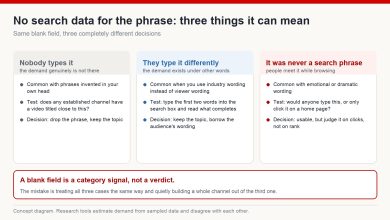
Some phrases return nothing in a research tool. That is information rather than a verdict — there are several reasons a phrase can come back blank — but it does change what the video is.
If the demand is measurable, you can compare candidates against each other before committing and you have some idea what you are walking into. If it is not, the video is being packaged for clicks rather than answering a question, which is a legitimate thing to do but a completely different bet. What you should not do is treat an unmeasurable phrase as though it were a measured one because it sounded good.
Test five: can you picture the thumbnail while you read it?
This one sounds soft and it is the one I would keep if I had to drop four.
Read the phrase and see whether an image arrives on its own. King cobra vs black mamba produces a picture instantly. Understanding reptile behaviour produces nothing. A phrase that suggests an image gives you a title and a thumbnail that agree with each other, and the two are read together in about a second on a crowded page.
A phrase can pass every other test and still make a bad video, because nobody looking at it could tell what they were about to watch.
Three shapes that keep coming up
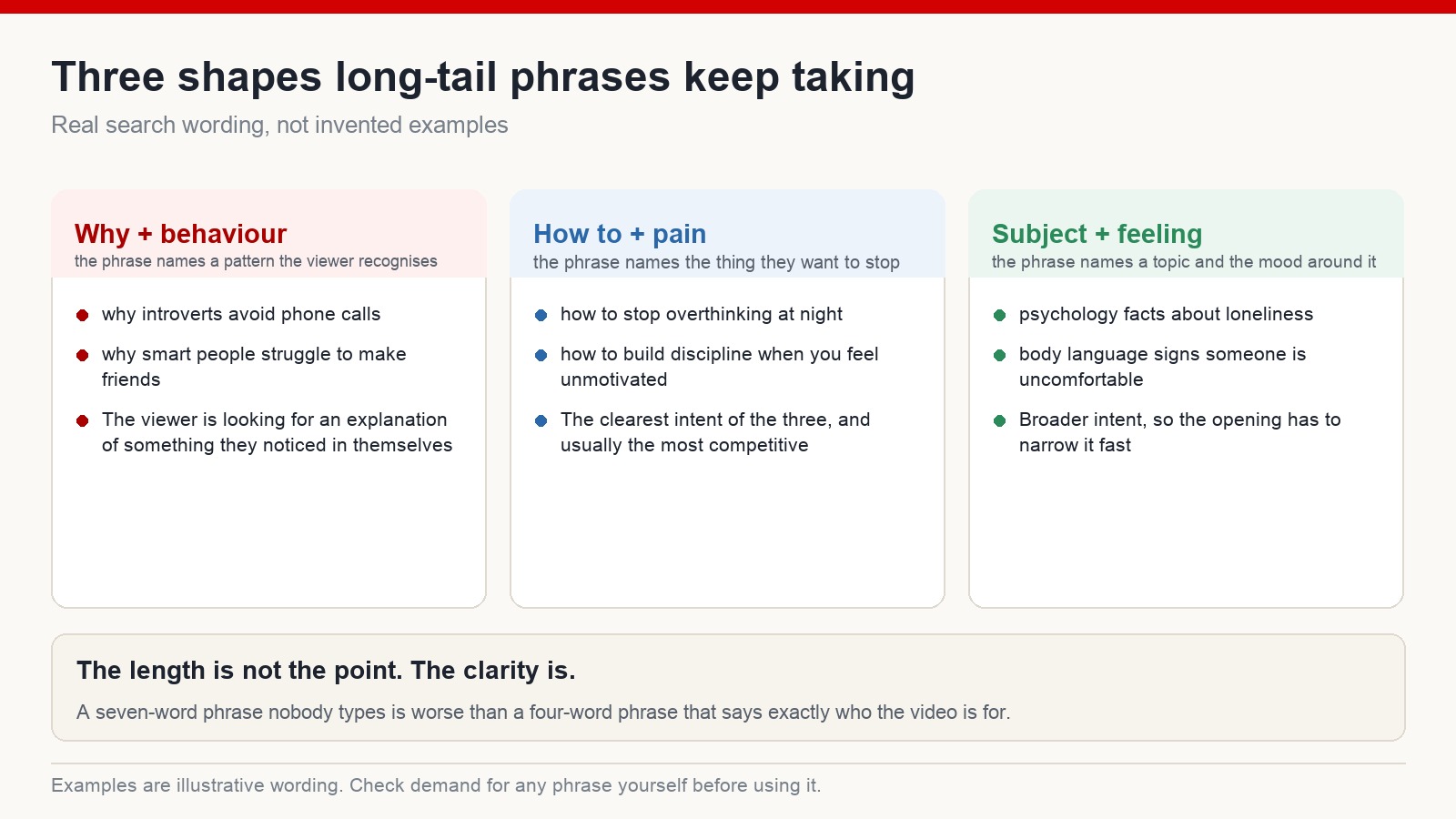
Why + behaviour. Why introverts avoid phone calls. The viewer noticed something in themselves and wants it explained. These tend to hold attention well because the answer is genuinely unknown to them at the start.
How to + pain point. How to stop overthinking at night. The clearest intent of the three and usually the most contested, because everyone can see the demand.
Subject + feeling. Psychology facts about loneliness. Broader, so the opening has to narrow it quickly, but it opens up territory the other two shapes miss.
None of these is a formula to fill in mechanically. They are patterns to notice when you are reading how your audience already phrases things.
Where the candidates come from
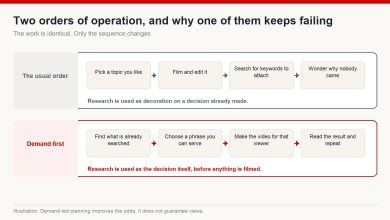
The fastest source is titles that already work. Find videos in your subject with numbers well above what their channels normally do, and break each title into its component phrases rather than treating it as one unit.
A title like Dark Psychology Tricks Manipulators Use contains at least four candidates: dark psychology, psychology tricks, dark psychology tricks, how manipulators behave. Check them separately and they will not be equally strong — that gap is the whole point of the exercise. Then run the survivors through the five tests above.
Two habits make this worth doing. Check the wording in the language and market you actually publish to, because a phrase can look substantial worldwide and be thin where your audience is. And write the candidates down with the date you checked them, because demand drifts and a figure from three months ago is a historical record.
The mistakes that cost the most
Long but unsearched. A phrase you assembled yourself, which reads beautifully and which nobody has ever typed.
Volume without intent. A large number attached to a phrase so broad that the audience has nothing in common. High demand, high exit rate.
Unpicturable. Passes on demand and intent, and gives you nothing to put in the thumbnail.
Correct but flat. The phrase is fine and the title is only the phrase, with no reason to watch this week rather than some other week.
What this cannot do
Screening phrases this way improves your odds and prevents the one failure you cannot fix afterwards: producing a video nobody was looking for. It does not produce views. A video built on a well-chosen phrase still fails if the packaging is weak, the opening loses people, or the subject quietly got crowded in the months between your research and your upload.
Estimates are estimates, platform behaviour changes, and results differ enormously between channels and subjects. Treat the screen as a way to spend your production time on better bets, not as a guarantee about any single video.
Frequently asked questions
How many words makes a keyword long-tail?
Around four and up is the usual convention, but the word count matters less than whether the phrase describes a situation clearly enough that you know who the video is for.
What search volume should I look for?
There is no universal figure, and published recommendations vary widely because they come from different niches and languages. Find the workable range for your own subject by checking a batch of phrases and then reading what your own videos do.
Why do long phrases suit small channels?
Fewer strong answers already exist, and the people who arrive already know what they want, so they are more likely to stay — which is the signal that decides whether the video gets shown to anyone else.
Should I use the whole phrase as the title?
Only when it reads like something a person would say. If it reads like a query, keep the phrase intact and add a short clause that gives a reason to watch now.
Which tool should I check demand in?
Any of the mainstream research extensions will do. What matters more is checking the same phrase in more than one, and treating a disagreement between them as a reason to be cautious rather than to pick the higher number.
If you want the whole workflow — niche, keyword set, packaging — laid out for building a faceless channel aimed at English-speaking audiences, that is what I teach at mmoyoutube.com. Results vary by channel, subject and market.