Real Trend or View Mirage: How to Tell If a YouTube Niche Is Worth It
The most expensive mistake a new creator makes is looking at one enormous video and concluding: that is a good niche.
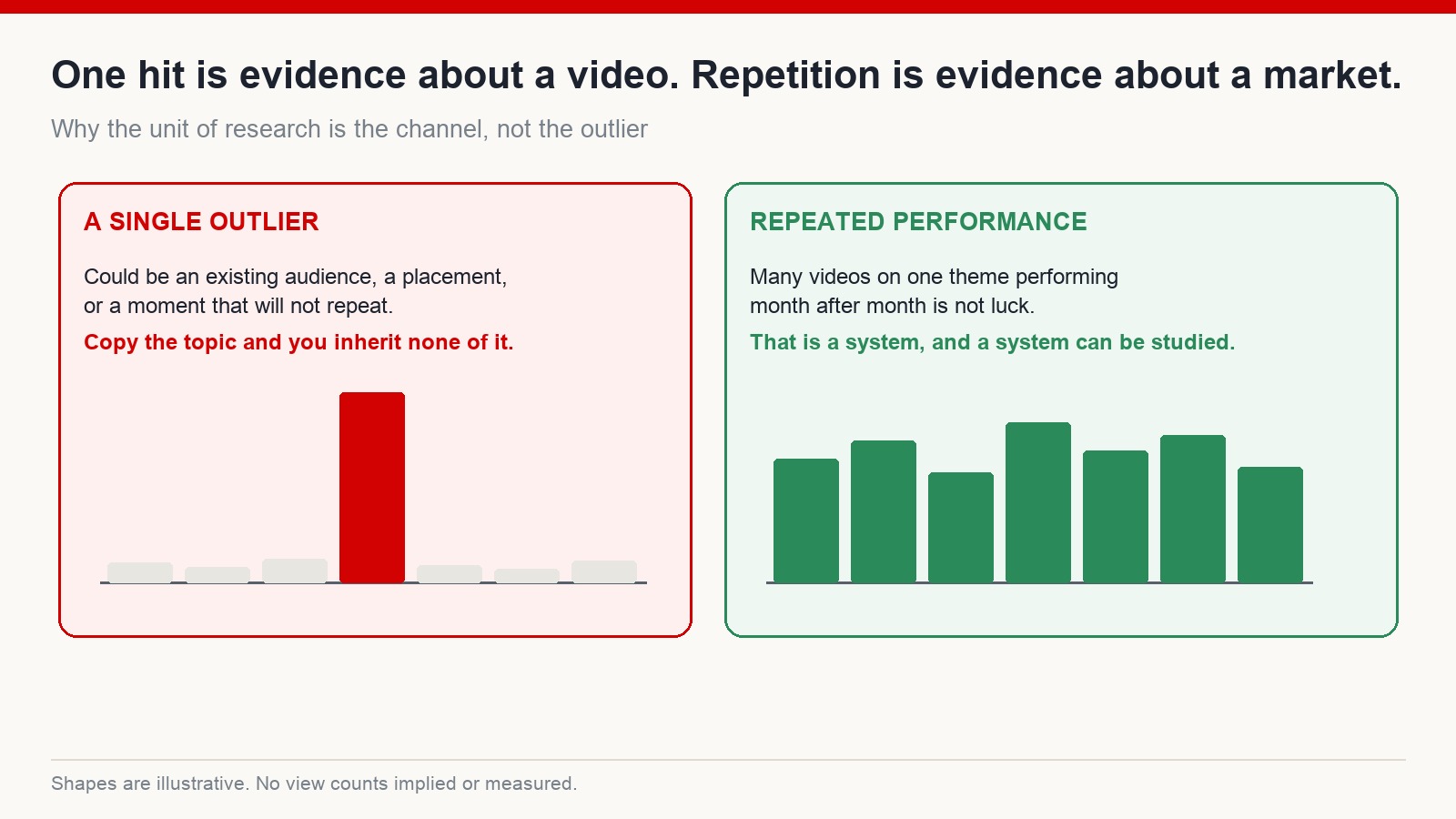
Sometimes it is. Very often it is not. A single video can carry a huge number for reasons that have nothing to do with the topic – an established subscriber base pushing it out of the gate, a lucky placement, a moment of external attention that will not repeat. Copy the topic and you inherit none of that.
If you want to build rather than gamble, you need a way to tell four things apart: a real trend, a temporary spike, genuine ongoing demand, and a topic that simply looks busy. The good news is that the difference leaves a trace in the data. The work is learning to read it.
Start with channels, not with videos
A video can get lucky. A channel producing large numbers month after month cannot – not repeatedly, not by accident. So the unit of evidence is the channel.
The channels worth studying share a profile: they are still uploading, their recent videos still perform rather than only their old hits, and their output is large and steady enough that luck is not a plausible explanation. Set a threshold you can apply consistently and use the same one every time, so you are comparing like with like rather than moving the goalposts to justify a topic you already like.
Then resist the urge to watch everything. People open a promising channel, scroll two hundred videos, take scattered notes and come away with nothing. Look at the twelve most-viewed instead. That is where the audience has already voted.
Read the majority, not the maximum
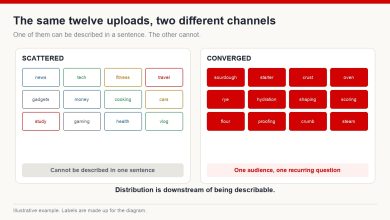
Take those twelve and group them by what they are actually about. Not by the surface category – by the specific thing happening in the video.
You will often find something like this: three videos about one recurring situation, four about another, five about a third. At that point the data has stopped being a list and started being a sentence. The channel is not “an animal channel”. It is a channel about wildlife rescue that happens to post other animal content around it.
That distinction is enormous, and it is exactly what most people skip. They read the label on the shelf. The useful information is in what actually sells.
This is the majority principle applied to research rather than to your own uploads: one hit can be an accident, but several videos winning on the same specific theme is a system, and only a system can be copied deliberately.
The entry-door test
Here is the step almost everyone leaves out, and it is the one that prevents the most bad decisions.
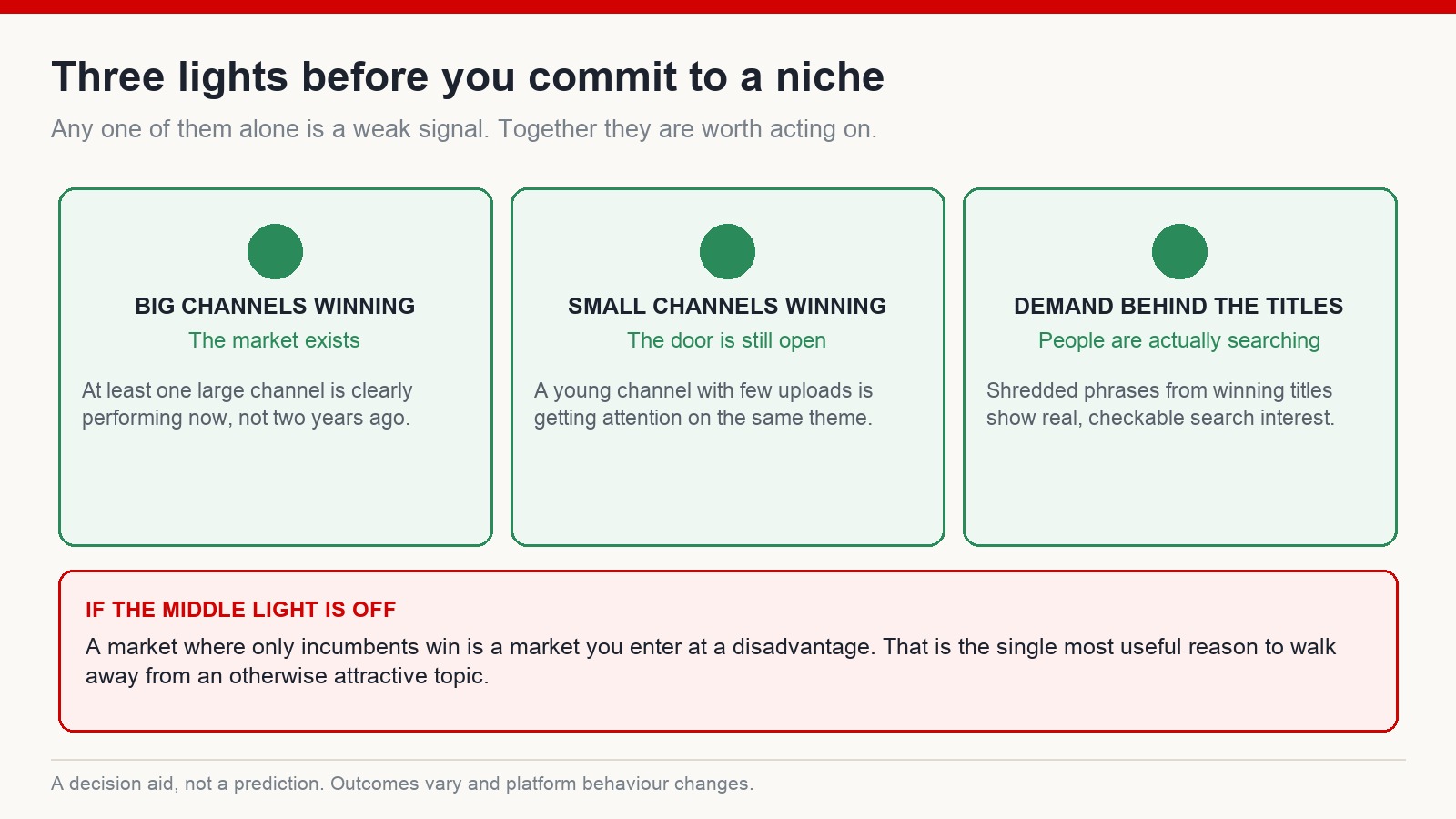
If only large channels are winning in a topic, you have learned very little. Big channels win partly because they are big – established audiences, years of history, brand recognition. Their success might be evidence about them rather than evidence about the market.
So go looking for the opposite: a channel with a small subscriber count, a short history, not many uploads, and views far out of proportion to its size. When you find one, the conclusion is different and much more useful. That is not the strength of a channel. That is the strength of the demand.
I think of it as the entry-door test. Big channels winning proves the market exists. A small channel winning proves the door is still open. You want both lights on before you commit months of production to a topic.
Shredding the titles: where the demand actually lives
Most people stop after competitor analysis. There is one more step, and it changes what you build.
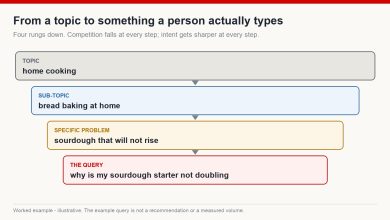
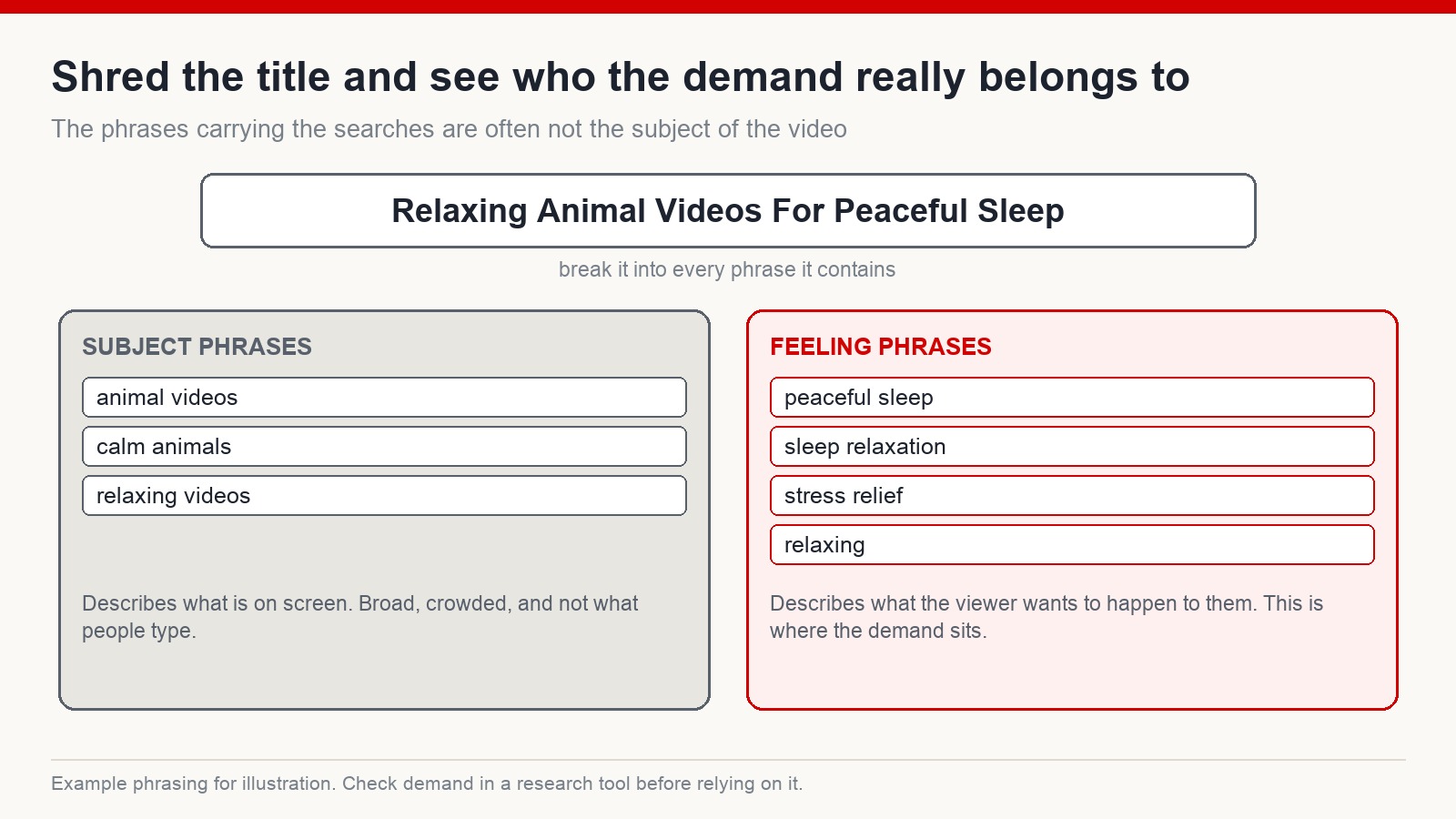
Take the titles of the videos that are winning and break them into their component phrases. A title like Relaxing Animal Videos For Peaceful Sleep is not one idea. It is a stack of them: relaxing animal videos, peaceful sleep, sleep relaxation, calm animals, relaxing videos.
Now check each fragment against search demand in a research tool. This is where the picture usually flips.
What the shred usually reveals
Run this on a few winning titles in a calm-content niche and a pattern jumps out. The phrases carrying the demand are rarely the subject. They are words like relaxing, peaceful, calm, stress relief, healing.
Which tells you something the view counts alone never would: the audience is not searching for animals. They are searching for a feeling. The animal is the delivery vehicle.
That is why two channels can post visually similar cat footage and land in completely different places. One is packaged as animal content and competes with everything else in that enormous category. The other is packaged as a way to fall asleep, and competes for a specific need at a specific hour of the night.
Once you see it, you cannot unsee it, and it changes titles, thumbnails, pacing, music and length all at once.
Being honest about search volume
People always want a number here. I will give you mine, with a warning attached.
The band I personally work in sits in the middle: roughly a few thousand monthly searches at the low end, up to the low tens of thousands at the top. Below that band, demand is often too thin to build a library on. Above it, the phrase is usually broad enough that you are competing with everyone.
The warning: that is my working range, not a law. Different tools report wildly different figures for the same phrase, estimates shift over time, and a “small” keyword in a high-intent topic can be worth more than a large one in a crowded topic. Treat any band, including mine, as a starting calibration you adjust with your own results.
The five-minute check
Before committing to any niche, run through this:
- Is at least one large channel in this topic clearly still winning right now, not two years ago?
- In its twelve most-viewed videos, does one specific theme hold the majority?
- Is there at least one small, young channel doing well on that same theme?
- Do the shredded phrases from winning titles show real search demand?
- Could you produce fifty to a hundred videos on this without running dry?
Mostly yes means the topic is worth serious research. A no on the third question in particular should slow you down: a market where only incumbents win is a market you enter at a disadvantage.
What this method cannot do
It cannot tell you a niche will work. Nothing can. Demand moves, competitors arrive, recommendation behaviour changes, and policies change with it. Two people can enter the same validated niche in the same month and get very different outcomes.
What it does is stop you burning six months on a topic that never had underlying demand in the first place – which is the failure mode that ends most channels, and the one that is genuinely avoidable.
Where this leaves you
Next time a video with an enormous view count lands in your feed, do not open a document and start planning a channel around it. Spend fifteen minutes instead: check the channel’s top twelve, look for a small channel winning on the same theme, and shred the titles to see which phrases carry the demand.
Most of the niches that hold up over time leave very clear tracks. They are only invisible to people who never learned to look down.
Frequently asked questions
Why look at twelve videos rather than three?
Three is small enough that a single outlier distorts the whole picture. Twelve is large enough for a repeated theme to separate itself from noise, and small enough to analyse in one sitting.
Can a small channel really confirm a trend?
It is the strongest single signal available to a newcomer. If several small, young channels are getting significant attention on the same theme, the demand is coming from the market rather than from anyone’s existing audience.
Should I jump on whatever is trending hardest?
Rarely. A topic that peaks quickly usually falls just as fast, and by the time it is obvious enough to notice, the crowd has arrived. Prefer themes you can still produce against in a year.
Does this work for faceless channels?
Particularly well. Faceless production removes the presenter as a differentiator, which makes topic and packaging carry almost all of the weight – so validating demand up front matters more, not less.
If you want the full research process for building toward an English-speaking audience, it is laid out at mmoyoutube.com.