Keyword Stuffing Is Over: What YouTube Measures Instead
A playbook that stopped working, and the people still running it
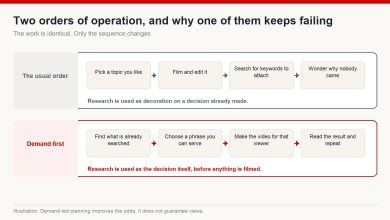
There was a period when a fairly mechanical approach to YouTube worked. Load the title with phrases. Fill every tag slot. Write a description long enough to hide a small novel in. Repeat the target term until it looked deliberate.
It worked because the system had less to go on. Metadata was a large part of what there was.
That is no longer the situation, and the awkward consequence is that you can now execute the old playbook perfectly and still watch a video sink. The platform has said openly that its recommendations are driven mainly by what people watch, how long they watch, and whether they seem satisfied afterwards. None of that is something you can write into a description.
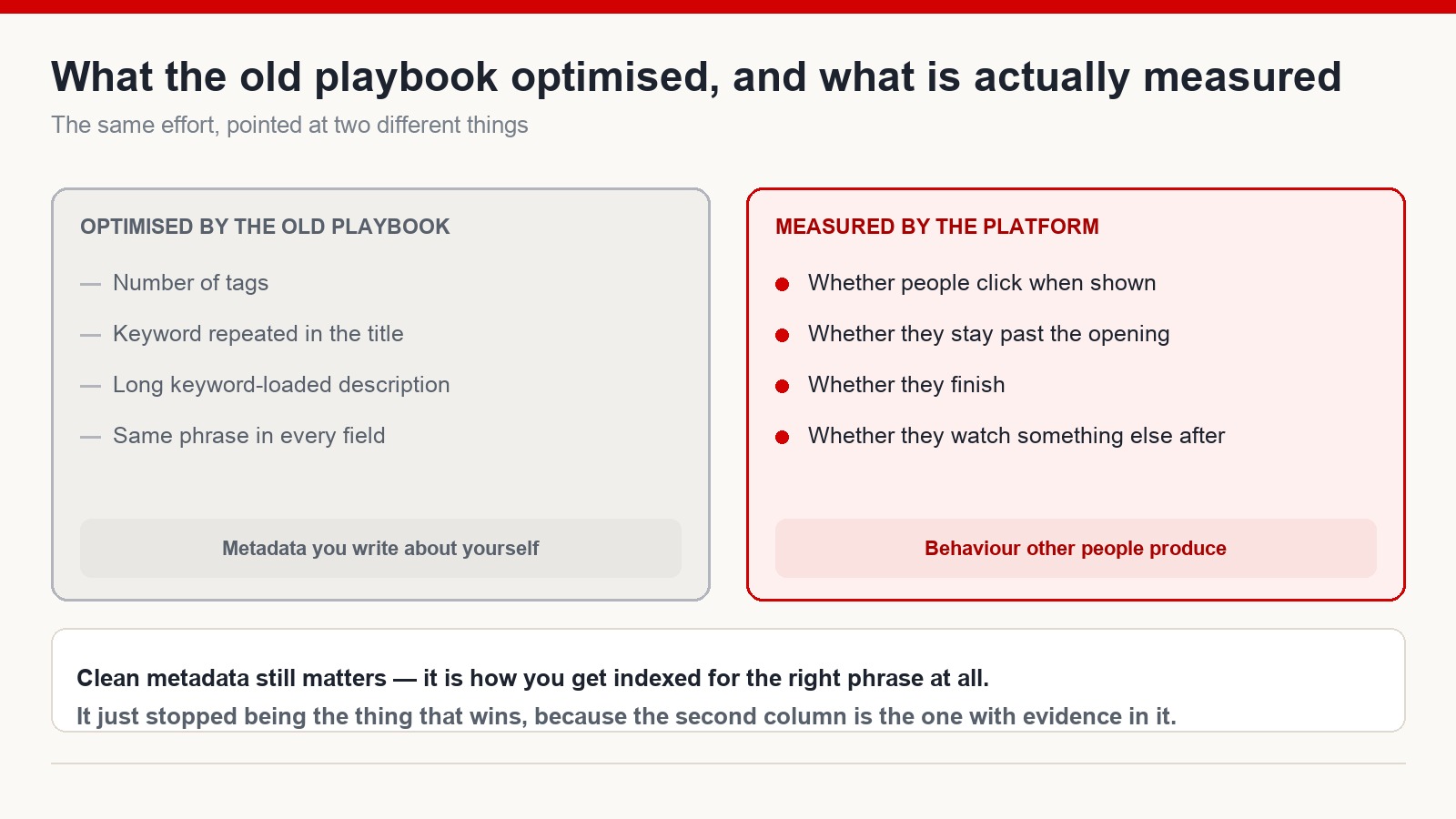
The useful way to hold this is not “SEO is dead”. Metadata still decides what you can be found for at all. It just stopped being the thing that wins, because the column on the right is the one with evidence in it.
Mistake one: optimising for phrases nobody types
The most common version of keyword stuffing I see is not repetition — it is volume of phrases with nothing behind them.
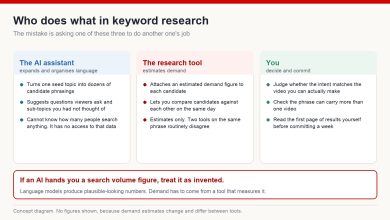
Someone breaks a competitor’s title into pieces, collects every fragment, and packs all of them into their own metadata without checking whether anyone searches any of them. The video ends up thoroughly optimised for demand that does not exist.
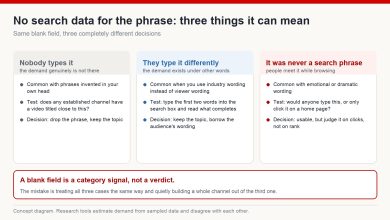
I have run this check on real keyword sets in quiet niches and been surprised by how thin they are. In one set I built for a pet-accessory subject, most of the phrases that looked obvious turned out to have very little demand behind them once measured — and no amount of metadata work makes a phrase people are not typing into a source of traffic.
So the first correction is not “use fewer keywords”. It is: check that the ones you use have someone behind them.
Mistake two: aiming only at the top of the funnel
The second pattern is aiming at the broadest possible term because the demand figure looks impressive.
Psychology. Motivation. Science. Animals.
The problem is not competition, though there is plenty. The problem is that nobody typing those words is telling you what they want. “Psychology” could be relationships, manipulation tactics, depression, communication, study techniques, self-help. Six audiences with nothing in common. A video aimed at that phrase gets shown to a mixture of people, most of whom wanted something else, and their leaving is the loudest signal the video produces.
Specific phrases fix this by carrying intent. Dark psychology tricks to read people tells you exactly who is asking and what they expect. It is a smaller audience and a much better matched one, and being well matched is what makes a video worth showing to more people.
The thumbnail is read before the words
There is a sequencing detail that the old playbook never accounted for.
Very few people read a title first. They see the image, feel a flicker of curiosity, and only then read the words to find out what the image is about. The image is doing the recruiting.
Which means part of your keyword thinking should be about what is visible, not only what is written. A thumbnail that shows one legible thing — an abandoned building, an animal mid-movement, a face reacting — is doing the same job a phrase does, faster. Images are processed before text, and in a scrolling feed that head start decides most of what happens.
This does not license misleading images. It is the opposite: because the image makes the promise, the image is what the video has to keep.
Mistake three: search phrases with nothing to make anyone look now
Phrases people actively search are the base of a channel. They are also, on their own, a recipe for videos that perform steadily and never break out.
What they lack is a reason to look now. In a feed, a technically accurate title competes against everything else on the screen, and accuracy is not a hook.
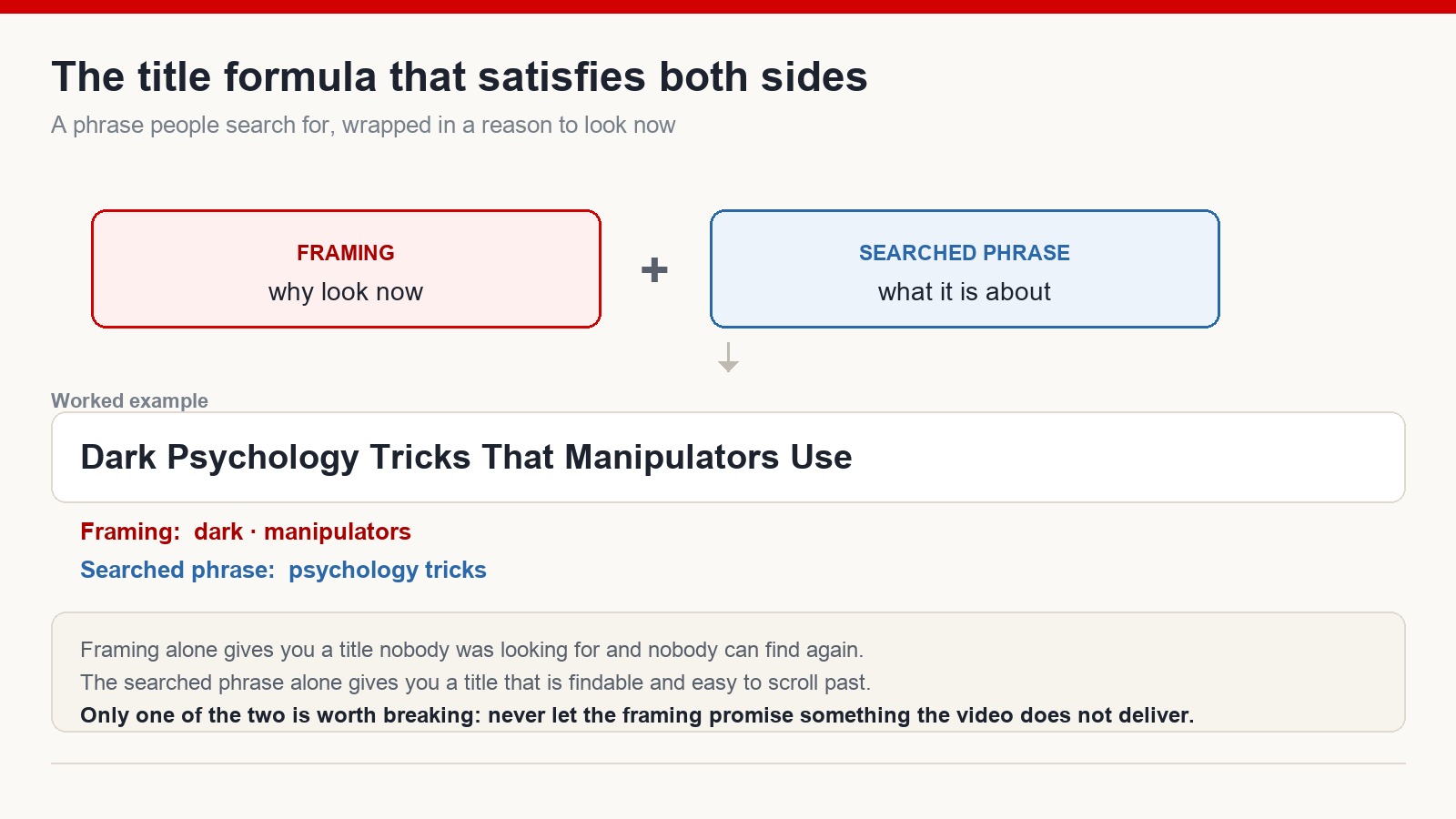
The combination that tends to work is a searched phrase wrapped in a framing that gives someone a reason to stop. Dark Psychology Tricks That Manipulators Use contains a phrase people type — psychology tricks — and a framing that makes it feel urgent rather than academic. Search can place it; the feed has a reason to click it.
Framing on its own gives you a title nobody was looking for and nobody can find again. The searched phrase on its own gives you a title that is findable and easy to scroll past. There is only one rule you should never break in balancing them: the framing must not promise something the video does not deliver. A misleading frame lifts clicks for a day and then teaches the system, correctly, that people who click this do not stay.
Mistake four: treating tags like they still carry weight
Tags are the most stubborn habit from the old era. YouTube’s own guidance describes them as playing a minimal role in discovery, useful mainly for common misspellings of a title. That is a long way from the thirty-tag rituals still circulating.
Fill them in properly and move on:
- Your main phrase, plus a handful of genuine variants.
- Lower case, spelled the way a person would type it.
- No scraping the tag list from a large channel — their tags describe their video.
Capitals and long unrelated lists do not help, and they make a channel look like it is trying to game something. The time saved is better spent on the first thirty seconds of the video.
Mistake five: describing the content, ignoring the audience
The last one is subtle and it is where experienced creators separate from beginners.
Most titles describe what is in the video. The stronger move is to describe who it is for and what they get. Those are not always the same thing, and choosing the second frequently opens an audience the first would never have reached — the same footage, offered to a different room.
The change costs nothing but a rewrite. It is worth doing before you conclude a video failed, because a lot of “failed” videos were simply offered to the wrong crowd.
What modern optimisation actually is
If the old model was “insert keywords so the machine can file this”, the current one is closer to “make it unambiguous who this is for, then give them a reason to click and a reason to stay”.
A workflow that reflects that:
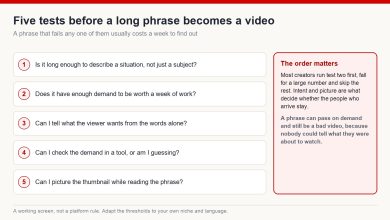
- Check that demand exists before you write anything. A phrase with almost nobody behind it is not worth optimising for.
- Move down the funnel. Prefer phrases that carry intent over categories that carry volume.
- Design the thumbnail as a promise that can be understood in a glance, and that the video keeps.
- Combine framing with a searched phrase in the title, without overselling.
- Keep metadata clean, natural and consistent — one phrase carried through, no padding.
- Judge the result on behaviour, not on how thoroughly you filled in the fields.
A caution worth stating plainly
None of this guarantees anything. Two videos with identical research and comparable packaging can perform completely differently, and the reasons are frequently invisible from outside — timing, what else was published that week, which audience the system tested it on first.
Platform behaviour also changes. Advice that describes how discovery works today is a snapshot, and the safest position is to treat every rule of thumb, including the ones here, as something to test against your own results rather than something to trust.
What I would defend confidently is only this: the old approach optimised the part that is easiest to control and least measured, while the part that decides outcomes is produced by other people. Once you have seen it that way, it is difficult to go back to counting tags.
Frequently asked questions
Is keyword stuffing penalised?
Whether or not it triggers anything, it rarely helps. Metadata that reads as spam damages the thing that does matter — whether a person clicks and stays.
Should I use phrases with very low demand?
Usually not as a main target. Ranking first for a phrase almost nobody types produces almost nothing. They can be worth including as secondary terms if they are genuinely relevant.
Is the thumbnail more important than the title?
In a feed it is usually seen first, so it does more of the recruiting. They work as a pair, though: an image that raises a question and a title that answers just enough of it.
Do tags still do anything?
Very little. YouTube describes their role in discovery as minimal, mainly helping with misspellings. Fill them in accurately and stop there.
Can I rely on emotive framing alone?
It is unstable on its own. Framing without a searchable phrase gives you a video that cannot be found again after its first week, and a promise the video cannot keep costs more than the click was worth.
If you want the whole approach applied to building faceless channels for English-speaking audiences, that is what I teach at mmoyoutube.com. Results vary and platform behaviour changes.