How to Measure Progress on YouTube Before the Views Arrive
I got my first running medal a while back. Not a podium medal. A finisher’s medal — the one they hand to everybody who crosses the line, including the people who walked the last two kilometres.
Somebody could reasonably laugh at that. Plenty of people run faster. What they did not see were the mornings I had to argue myself out of bed, the early weeks when a few kilometres left me wrecked, or the days my legs hurt and the entire plan for the run was get out of the door and see.
I bring it up because it is the closest thing I have to an honest description of what building a YouTube channel feels like in the stretch nobody talks about — the months where the work is real and the numbers are not yet. Nine years of building channels for English-speaking audiences, and the single most common reason I see people quit is not that they failed. It is that they had no way to tell whether they were making progress, so they assumed they were not.
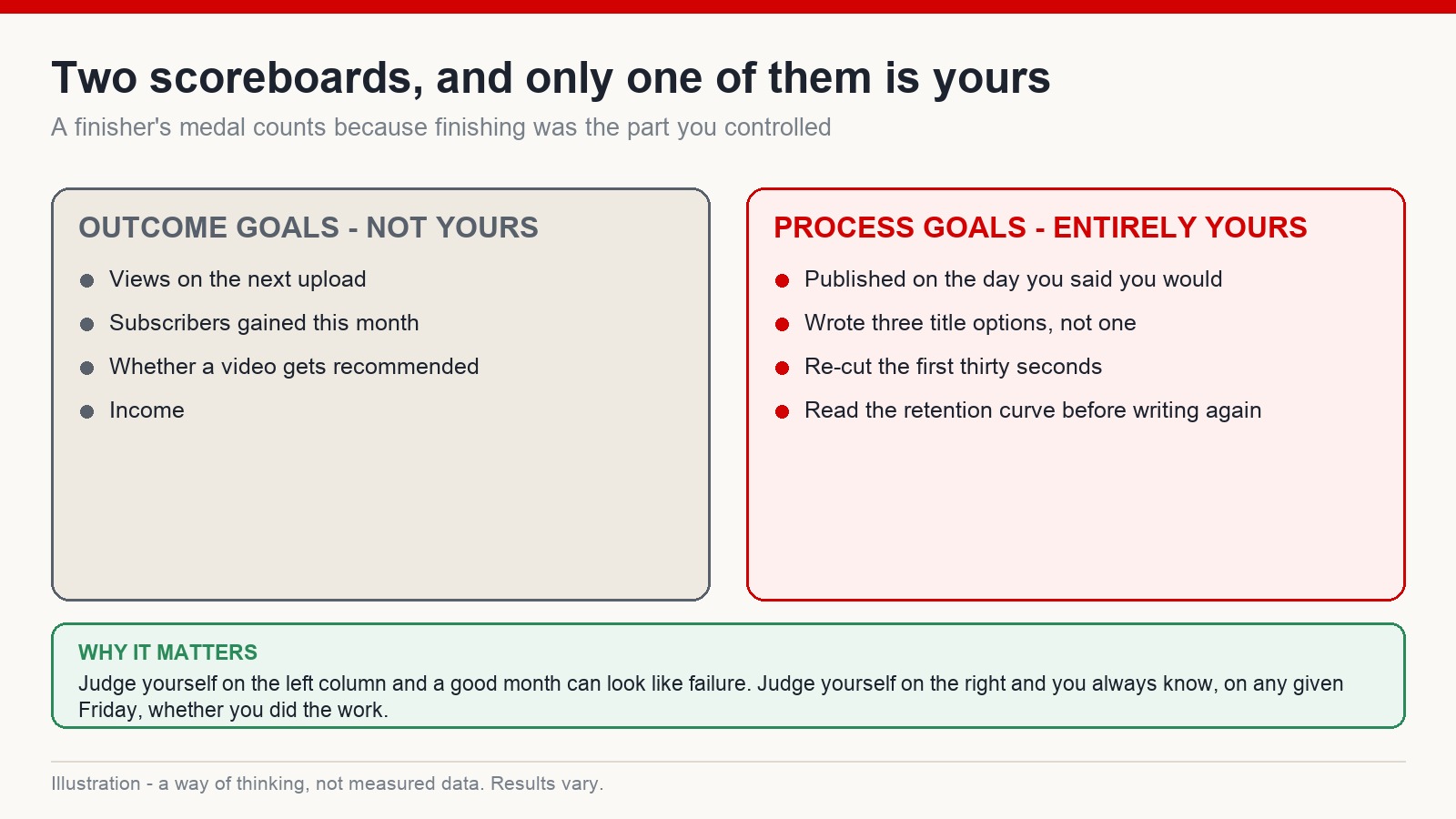
Two scoreboards, and only one of them is yours
Every creator is keeping score. Most are keeping score on the wrong board.
The outcome board holds views on the next upload, subscribers this month, whether a video gets recommended, income. All of it matters. None of it is under your control on any given week. It depends on what else was published that day, on who happened to be in the mood for your subject, on a recommendation system that owes you nothing.
The process board holds things that are entirely yours: you published on the day you said you would. You wrote three title options instead of defending your first one. You re-cut the opening thirty seconds. You read the retention curve of your last upload before you started writing the next.
Judge yourself on the first board and a perfectly good month can look like failure, which is exactly how people talk themselves out of a career. Judge yourself on the second and you always know, on any given Friday, whether you actually did the work.
That is what a finisher’s medal is. It is not a claim that you were fast. It is evidence that on the day it counted, you did not stop.
Why outcome-only scoring breaks young channels
There is a mechanical reason this matters, not just a motivational one.
Early uploads produce small numbers, and small numbers are noisy. One video getting a handful more views than another tells you almost nothing about whether the thumbnail was better; it might just be the day of the week. If your only feedback signal is a noisy one, you will start making changes based on noise — new niche, new format, new schedule — and each change wipes out the evidence the previous one was about to give you.
Process scoring is what stops that. It gives you something to be accountable to during the period when the outcome data is too thin to be honest with you.
What “one per cent better” actually looks like
The phrase is so overused it has stopped meaning anything. Here is the version that is real, because you can point at it on a specific video.
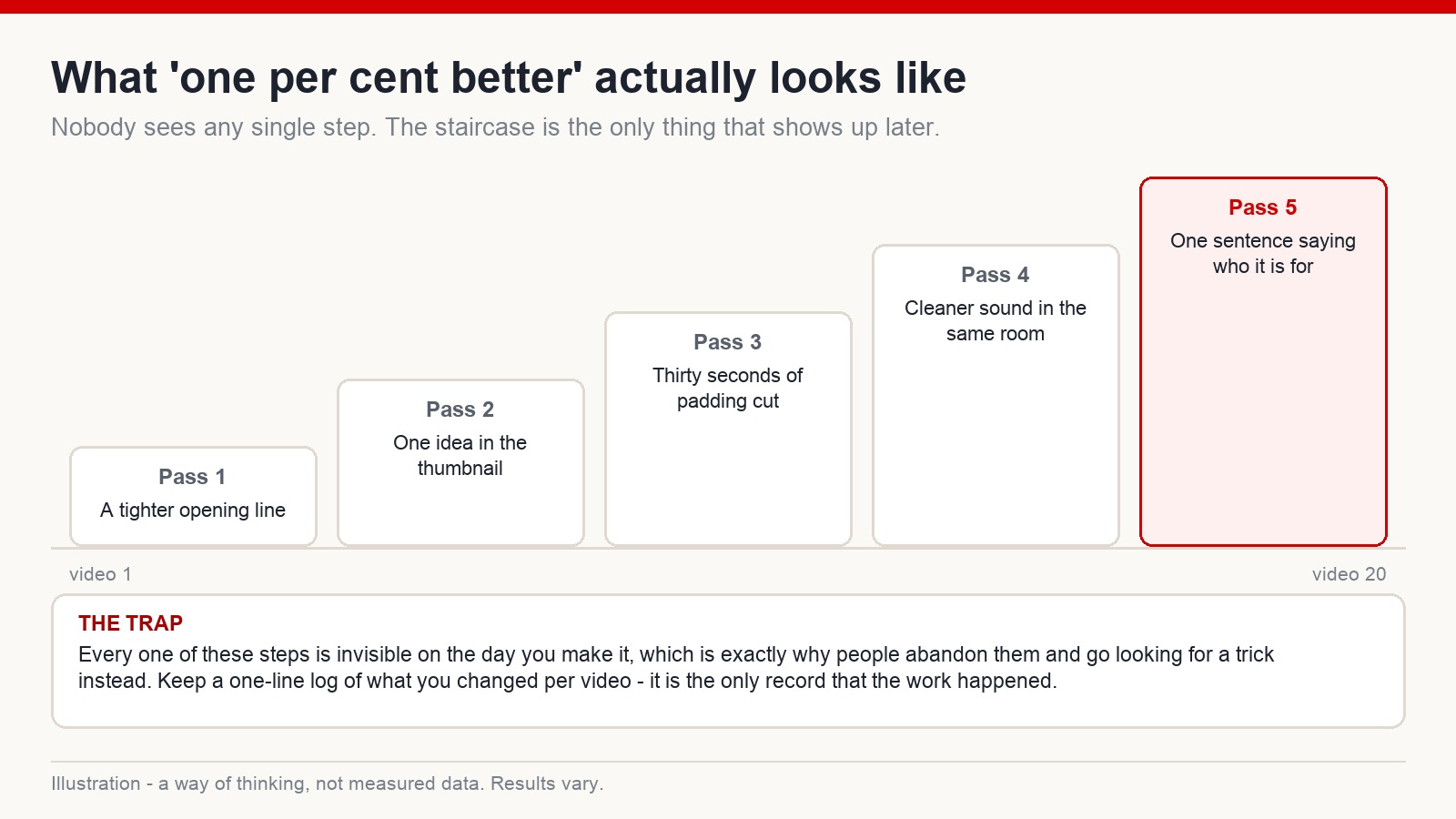
- Pass one: a tighter opening line — you cut the greeting and started at the moment something happens.
- Pass two: one idea in the thumbnail instead of three.
- Pass three: thirty seconds of padding removed from the middle.
- Pass four: cleaner sound, in the same room, for no money.
- Pass five: one sentence early on that tells the viewer who this video is for.
Not one of those steps is visible on the day you make it. That is precisely why people abandon them and go hunting for a trick instead. Twenty videos later, the accumulation is the difference between a channel that reads as amateur and one that reads as competent, and nobody can point to the moment it happened.
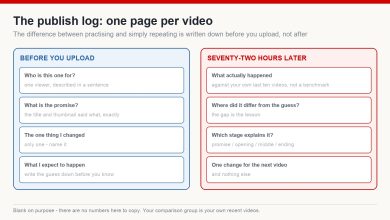
The practical version: keep a one-line log per video of the single thing you changed. It takes ten seconds and it is the only record you will ever have that the work happened. When a discouraging week arrives — and it will — that log is more useful than any pep talk, because it is not an opinion.
Your only fair control group is your own last ten videos
When you do look at the numbers, look at them the right way.
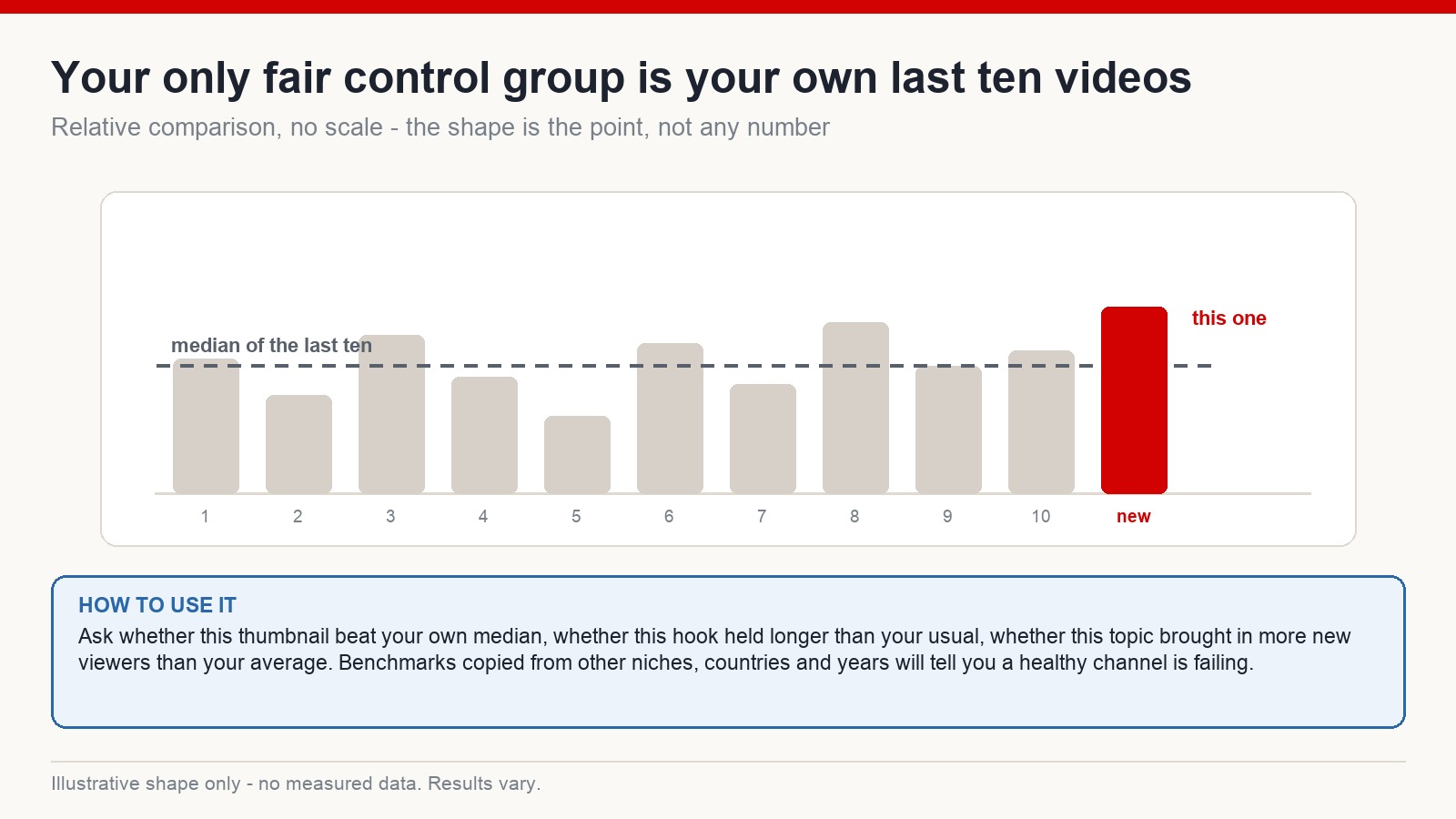
The internet is full of benchmark figures: this click-through rate is healthy, that retention is good, this many subscribers by month six. They come from other niches, other countries, other languages and other years. Measured against them, a perfectly healthy small channel looks like a disaster, and people quit over an illusion.
The comparison that is actually valid is internal. Did this thumbnail beat the median of your own last ten? Did this hook hold people longer than your usual? Did this topic bring in more viewers who had never watched you before than your average does? That comparison is honest, it is available today, and it points at something you can change.
It also has a pleasant side effect: it is impossible to feel behind against your own median. You are either above it, below it, or level, and all three are information.
A twenty-minute weekly review
Here is the whole routine I use, and recommend to the creators I work with. It is short on purpose, because a review you dread is a review you skip.
- Did I publish what I said I would? Yes or no. No explanation, no negotiation.
- What one thing did I change this week, and what happened? Read it against your own median, not against anything you saw online.
- Where do people leave the last video? Find the moment on the retention curve, then watch those fifteen seconds. Usually the answer is embarrassingly obvious.
- What is the one change for next week? One. Not five. Five changes and you will never know which one worked.
Four questions. If the answers are boring for a few months, that is what it looks like when it is going correctly.
Which opinions get to change your plan
The other thing that quietly ends channels is other people — usually well meaning, usually early.
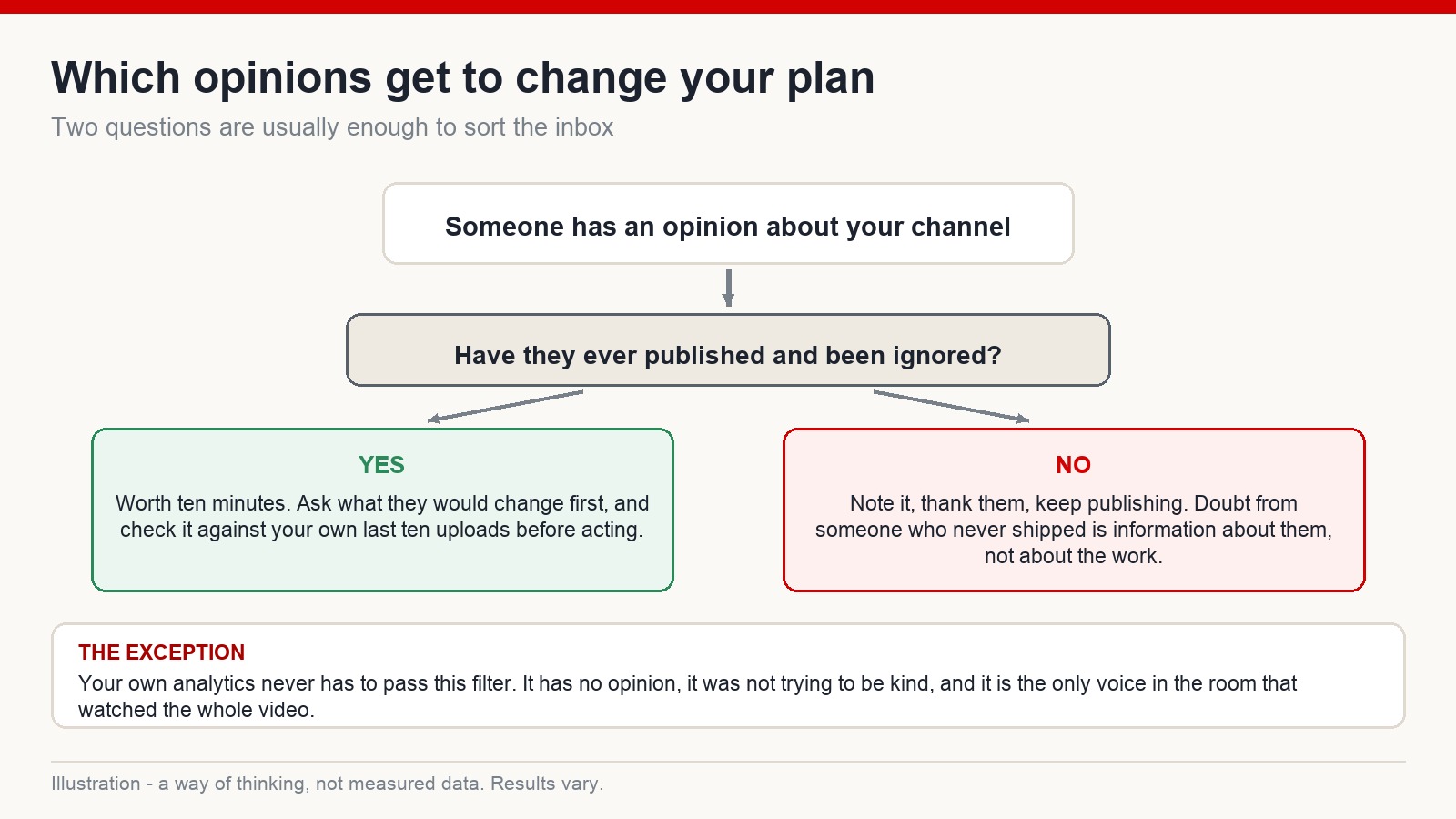
Not all criticism is equal, and the filter I use is one question: has this person ever published something and been ignored?
If yes, give it ten minutes. Ask what they would change first, then check it against your own last ten uploads before you act on it. They know what this stretch costs, and their instinct is worth borrowing.
If no, note it, thank them, keep publishing. Doubt from someone who has never shipped anything is information about them, not about the work. It is not malice; they simply do not have a reference point for what a channel looks like at month three, so they compare you against the finished thing they watch at night.
The one exception is your own analytics. It never has to pass this filter. It has no opinion, it was not trying to be kind, and it is the only voice in the room that watched the whole video.
When the process scoreboard is lying to you
I should be honest about the failure mode of everything I have just written, because it exists.
Process goals can become a way of feeling productive while going nowhere. If you publish faithfully for a year, review every week, change one thing at a time, and the numbers have not moved at all — not up, not sideways, nothing — then the process is not the problem. Something structural is: the format is wrong for the audience, or the subject has no demand behind it, or the packaging is unreadable to anybody outside your own head.
Process discipline is what earns you the right to make that judgement with evidence instead of emotion. It is not a substitute for making it. Somewhere between three and six months of honest work is usually enough data to know whether you are on a slow curve or a flat line, and telling the difference is a skill in itself.
And to be plain about outcomes: results vary enormously between creators doing similar work, platform behaviour changes without notice, and no amount of consistency entitles anybody to a particular result. What it does is make you the sort of creator a result can happen to.
What the medal was actually for
When I finally held that medal, I was not thinking about the time on the clock. I was thinking about the mornings, and the version of me from a few years earlier who was fairly sure running was for other people.
The same thing is true of a channel that eventually works. What you will be proud of is not the view count. It will be the twenty videos published in months when nobody was watching, the week you sat down and fixed the hook instead of blaming the algorithm, the day you kept going after somebody you respected implied you were wasting your time.
You do not need to beat anybody. You need a scoreboard that tells the truth on a bad week, and a small, specific thing to improve on the next upload.
Frequently asked questions
How do I know if my channel is improving when views are flat?
Look at internal comparisons rather than totals: is the newest thumbnail beating the median of your own last ten, is the retention curve holding longer in the first minute, are more of your viewers new to the channel? Those move before totals do, and they are the things you can actually act on.
What are good process goals for a new creator?
Publishing on the day you committed to, writing several title options instead of one, re-cutting the opening thirty seconds, reading the last video’s retention before starting the next, and logging the single change you made per upload. All five are fully under your control.
How long before I judge whether a channel is working?
Give it enough uploads that you are reading signal rather than noise — for most people that means at least ten videos published at a steady pace, and realistically a few months. Judging after three uploads mostly measures luck.
Should I listen to friends and family who say YouTube is a waste of time?
Weigh it by experience. Feedback from someone who has published and been ignored is worth hearing; discouragement from someone who has never shipped anything is a description of their own risk tolerance. Neither should outrank what your analytics is telling you.
Does discipline in something like running actually transfer to creative work?
In my experience the transfer is not physical, it is the habit of acting on a day you do not feel like it. Practising that anywhere makes it easier everywhere, and both activities reward the person who keeps showing up over the person who starts strong.
If you want a structured way to build that kind of review loop into a channel aimed at an English-speaking audience, that is what I teach at mmoyoutube.com.