How to Expand a Faceless Channel Without Losing the Audience You Have
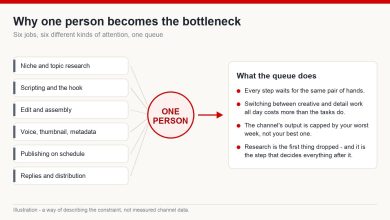
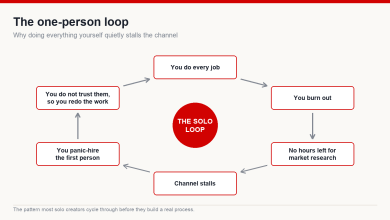
I have watched more channels die from growing in the wrong direction than from making bad videos. The bad ones are easy to spot and easy to fix. The other failure is quieter: everything works for a few months, then the owner starts adding topics, chasing whatever moved that week, and reaching for a bigger room than the one they were standing in. Six months later the reach has gone and nobody can point at a single video that caused it.
The mechanism is not mysterious. A recommendation system has to answer one question about your channel before it can do anything useful: who is this for? Every upload either sharpens that answer or blurs it. Publish four unrelated subjects in a row and you have not widened your audience – you have asked the system to start over.
This is about the other path: adding audience without losing the read the platform already has on you. It is what I do on channels aimed at English-speaking viewers, and none of it is a formula that always works. Channels differ enormously.
Expansion is not the same as variety
The instinct behind most bad expansion is “more topics means more views.” It sounds obviously true and it is mostly wrong, because the thing being optimised is not topic count. It is the consistency of who watches, how long they stay, and what else they watch afterwards.
If a channel about classroom software suddenly publishes about cryptocurrency, then about a celebrity argument, then about a phone launch, no single video has done anything wrong. Together they have made the channel unreadable. The system cannot find the right small test audience for the next upload, so it tests badly, and a bad test looks exactly like a bad video.
The right question is about the want, not the subject
Expanding correctly means adding topics that serve the same underlying want. The surface subject can move a long way as long as the reason someone watches does not.
Take a channel built on software for teachers. Travel vlogs are a different channel. Software for office workers, automation for freelancers, workflows for people running a small shop – those are the same channel, because the person watching wants the same thing in each case: to get more done with less of their day spent on it.
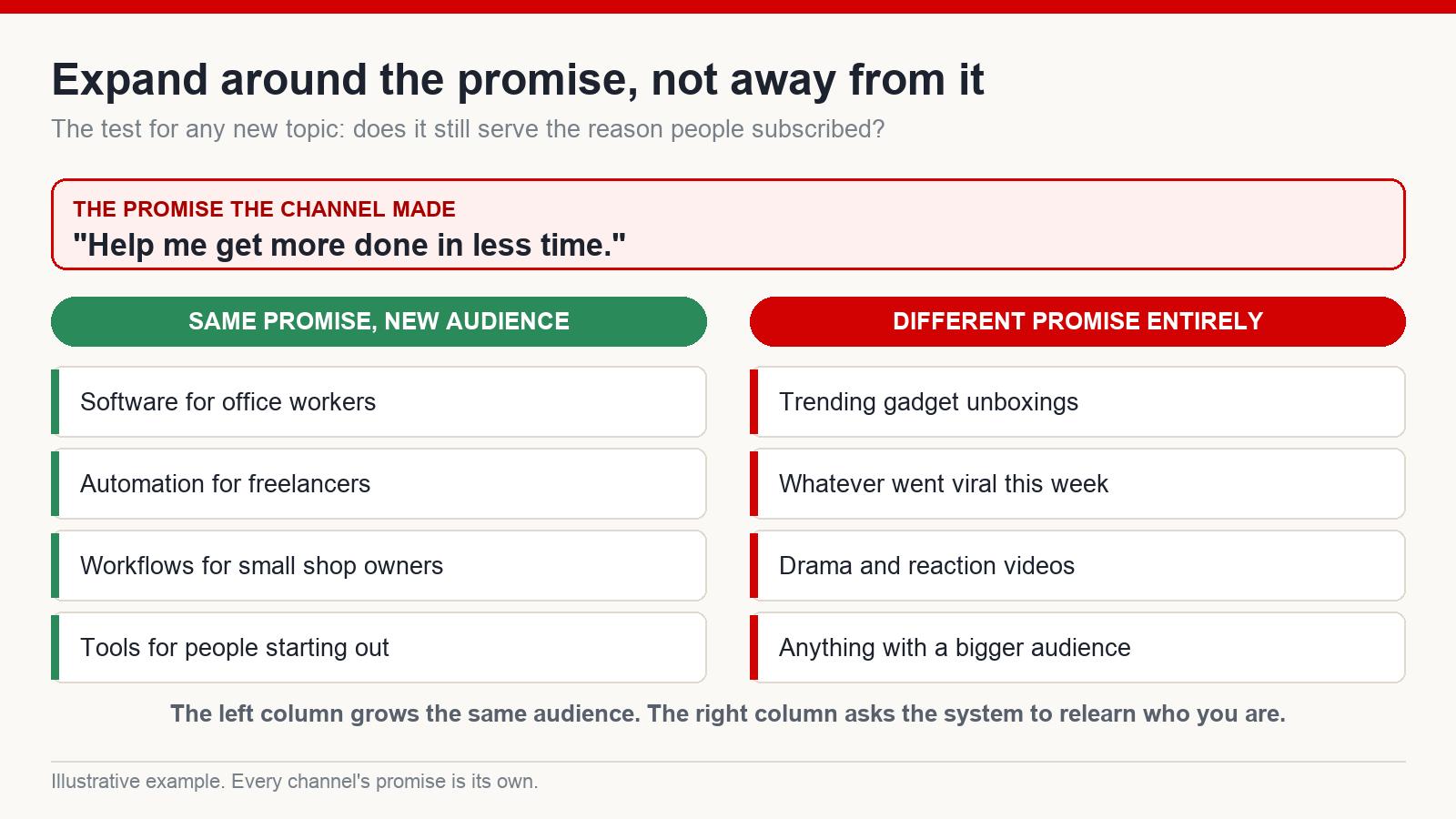
So the test before any new subject is not “is this popular?” It is: does this still serve the reason people subscribed? If you cannot answer that in a sentence, the topic is not an expansion. It is a different channel wearing your name.
Start narrower than feels comfortable
The channels that expand well are almost always the ones that started too small on purpose. Not “software.” Not even “software for teachers.” Something like slide-building for primary school teachers, or lesson prep for language teachers.
A subject that narrow feels like a mistake at the beginning, because the addressable audience looks tiny. What you get in exchange is the only thing that makes later expansion possible: an audience that knows exactly what you are for, and a system that knows it too. Widening from a sharp position is straightforward. Widening from a vague one is just more vagueness.
Change the person, not the subject
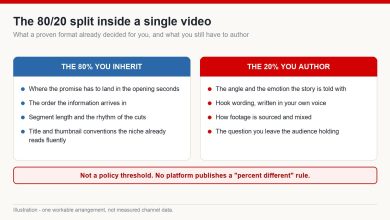
The most useful move I know is to hold the topic still and move the audience. One subject – say, using automation tools to save time on video work – splits into a real catalogue the moment you write it separately for people at different starting points: someone who has never edited anything, someone who already runs a channel and wants it faster, someone doing it alongside a full-time job, someone who has no budget for software at all.
Those are not five versions of one video. They have different fears, different first obstacles, and different definitions of a good outcome. Written properly, each one is a genuinely separate piece of work that happens to share a foundation.
Your comments are a research feed
Most creators read analytics carefully and comments idly. I think that is backwards. Analytics tells you what happened to the people who already found you. Comments tell you who is standing outside the door and cannot get in.
The pattern to look for is repetition. One person asking something is a person. Forty people asking the same thing is an audience you are not serving. And the question is rarely the useful part – the constraint behind it is.
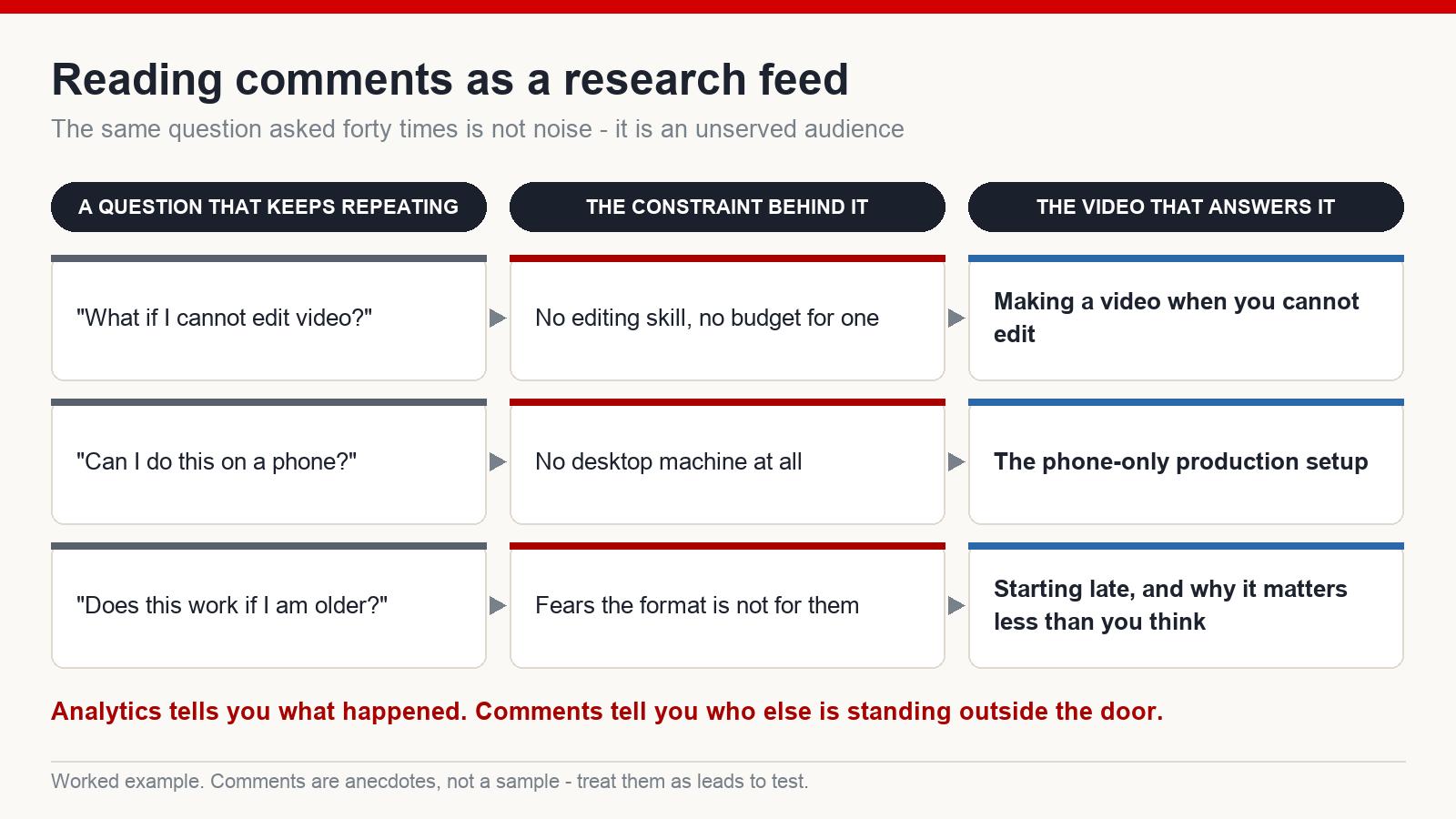
The process is three steps and takes an afternoon. Collect the questions that keep coming back. Write down the constraint sitting underneath each one – not “can I use a phone” but “has no desktop machine and assumes that disqualifies them.” Then build one video for that constraint specifically, named so the person recognises themselves in the title.
A caution: comments are anecdotes, not a sample. The people who write are not representative of the people who watch. Treat what you find as a lead worth testing, not as a demand you have measured.
Repackage for the new group, or do not bother
This is the step most people skip, and it quietly wastes the work. When you write for a new audience and then reuse your existing thumbnail style and title formula, you have made a video for one group and packaged it for another.
Different groups respond to different things. People trying to build an income care about speed, scale and leverage. People with a demanding day job care about the thing being small enough to actually finish. The subject can be identical and the right packaging still opposite. If the new video is not getting clicked, check whether you wrote it for one person and dressed it for another.
Do not expand because something trended
Chasing a spike is the most common way channels ruin a working position. A trending subject brings people in, and if those people have nothing in common with your audience, you have taught the system something false about who watches you. The spike passes in a week. The confusion lasts considerably longer.
The only defence is boring: check the new subject against the promise before you check it against the trend. If it serves the same want, a moment of attention is a gift. If it does not, it is a bill you pay later.
Where AI actually helps
Tools are good at the volume end of this: reading competitor catalogues quickly, drafting many title options, producing narration for languages you do not speak, generating illustration where footage is impossible to shoot. All of that is real time saved.
What they do not do is decide which audience to serve next. That judgment comes from reading your own comments, watching how retention differs between groups, and knowing your subject well enough to see the unserved edge of it. Point tools at production and they help enormously. Point them at direction and you get a larger volume of undirected work.
A short checklist before you widen
- Can you state the promise your channel makes in one sentence?
- Does the new subject still keep that promise?
- Is there a repeated question in your comments pointing at this group?
- Have you written the video for them rather than translating an old one?
- Have you rebuilt the thumbnail and title for what this group worries about?
- Are you adding one direction at a time, rather than five at once?
Expansion is not about making more. It is about understanding one group of people well enough to find the next group standing beside them. Results vary, platform behaviour changes, and no approach removes the risk of a flat quarter. But a channel that keeps its promise while widening tends to survive things that kill channels chasing whatever moved this week.
Frequently asked questions
How do I know when a niche is worth expanding from?
Usually when the same insight keeps reappearing in your scripts, when comments start asking about adjacent problems, and when your click-through rate holds up but views stop growing. That last combination normally means the packaging still works and the pool of people seeing it has stopped growing.
Should I change my channel’s topic completely?
Rarely, if you already have an audience that behaves consistently. A full change asks the system to relearn who you serve, and you lose the accumulated signal. Widening through adjacent angles keeps it.
How do I find out what my audience wants next?
Read your comments for repetition, then check retention separately for the videos aimed at different groups. Where people stay longer, there is usually more room.
Can I expand into several directions at once?
You can, and it tends to go badly. One direction at a time gives you a readable result. Several at once produces a set of numbers you cannot attribute to anything.
Does expanding hurt my existing videos?
It can, if the new audience behaves very differently from the old one – the back catalogue gets shown to people it was never written for. Keeping the underlying want constant is what limits that.
I have been building faceless channels for English-speaking audiences since 2017, and expansion is the part I have got wrong most often and learned most from. The longer version of how I approach it is at mmoyoutube.com.