Too Old to Start a YouTube Channel? What Starting Later Really Looks Like
The question comes up more than any other, usually phrased apologetically: am I too late for this?
What sits underneath it is rarely a question about the platform. It is a question about being a beginner in public at an age where you are supposed to have things figured out. Starting something new at twenty-two is called ambition. Starting the same thing at forty-two feels, from the inside, like an admission.
I have been building channels for English-speaking audiences for nine years, and I have worked with people who began well into a settled career. Here is what starting later actually looks like, without either the pep talk or the pretence that it costs nothing.
One creator, and the fear he actually had
A man I coached had exactly the life most people are advised to want. Stable job. Predictable salary. A schedule that had not changed in years and would not change for years more.
What bothered him was not the job. It was a question he kept returning to: if I keep doing exactly this for another five years, what have I got? The fear was not of failing at something new. It was of arriving at sixty having never found out.
When he first looked at building a channel, the objections arrived in a batch, and they will sound familiar. What if I spend months on it and nothing happens. What if I make videos nobody watches. What if the channel never reaches the threshold where it can earn anything. What if I am simply too late.
He started anyway – alongside the job, not instead of it. The first stretch was quiet, the way it is for nearly everybody. He kept going, one video at a time, learning the parts he was bad at in the order they became painful.
Eventually the channel crossed the threshold to join the platform’s partner programme. He described that moment to me afterwards, and the interesting thing was that it had almost nothing to do with money. It was the first piece of external evidence that the thing he had been doing in evenings was real work rather than a hobby he was embarrassed about.
The two risks, side by side
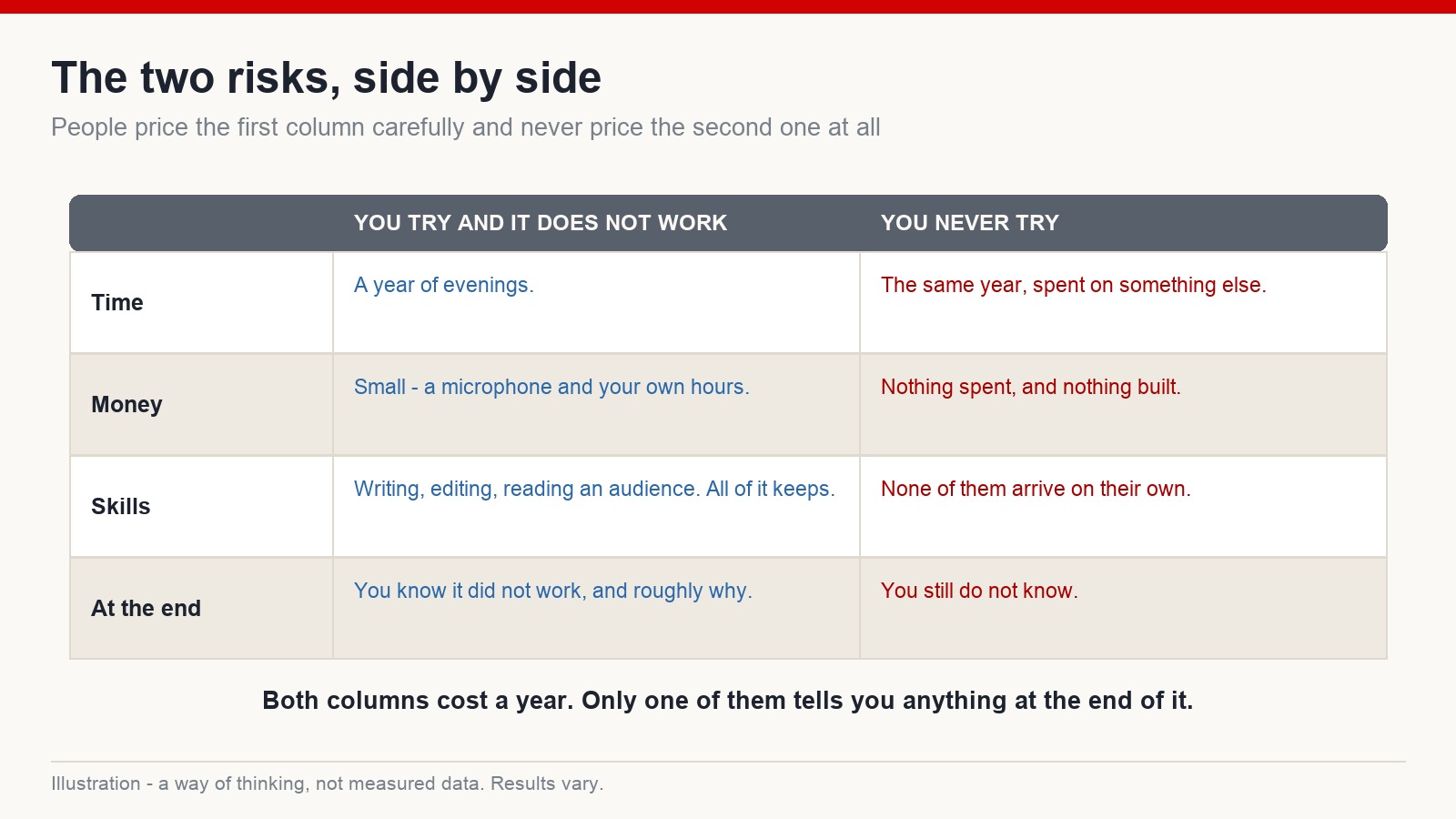
Most people price one of these risks in detail and never price the other at all.
If you try and it does not work, it costs you a year of evenings, a small amount of money – a microphone, some of your own hours – and you finish with writing, editing and audience-reading skills that transfer to anything else you ever do. You also know it did not work, and roughly why.
If you never try, it costs you the same year, spent on something else. Nothing is spent and nothing is built. None of the skills arrive on their own. And at the end of it you are exactly where you started, still not knowing.
Both columns cost a year. Only one of them tells you anything.
What a later start actually brings
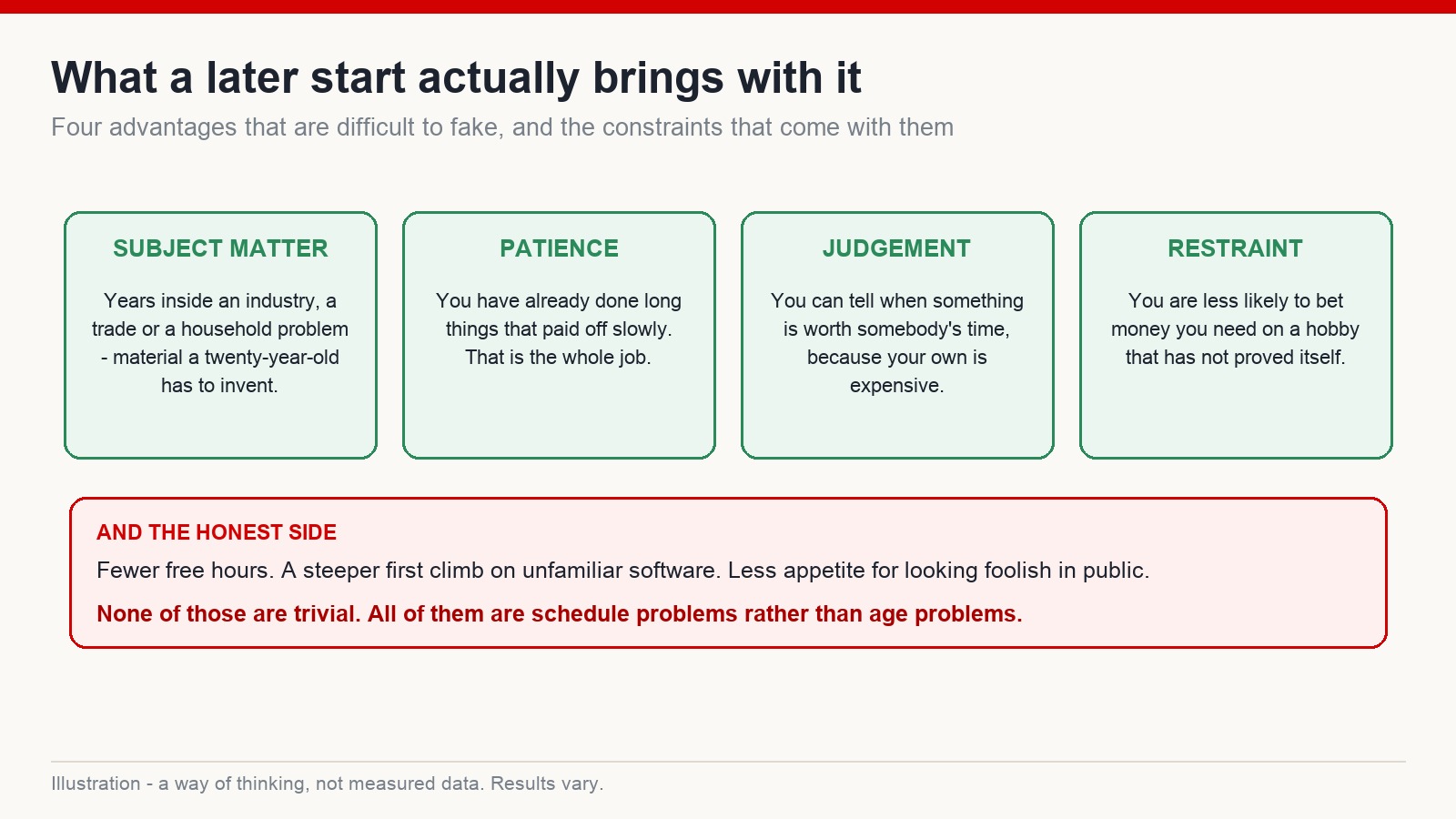
Starting later is not purely a handicap you have to overcome. Some of it is a genuine advantage, and it is the sort that is hard to fake.
Subject matter. Fifteen years inside an industry, a trade or a particular kind of household problem is material. Younger creators frequently have excellent production skills and nothing specific to say; you may have the opposite problem, which is the easier one to fix.
Patience. You have already done long things that paid off slowly – a career, a qualification, raising children. That temperament is most of this job.
Judgement. You can usually tell whether something is worth another adult’s time, because your own time is expensive and you have stopped pretending otherwise.
Restraint. You are far less likely to spend money you actually need on gear or courses for something that has not proved itself yet.
The honest other side: you have fewer free hours, the first climb on unfamiliar software is steeper, and there is genuinely less appetite for looking foolish in public. None of that is trivial. But notice that all of it is a schedule and ego problem rather than an age problem, and both of those have solutions.
What a part-time build looks like
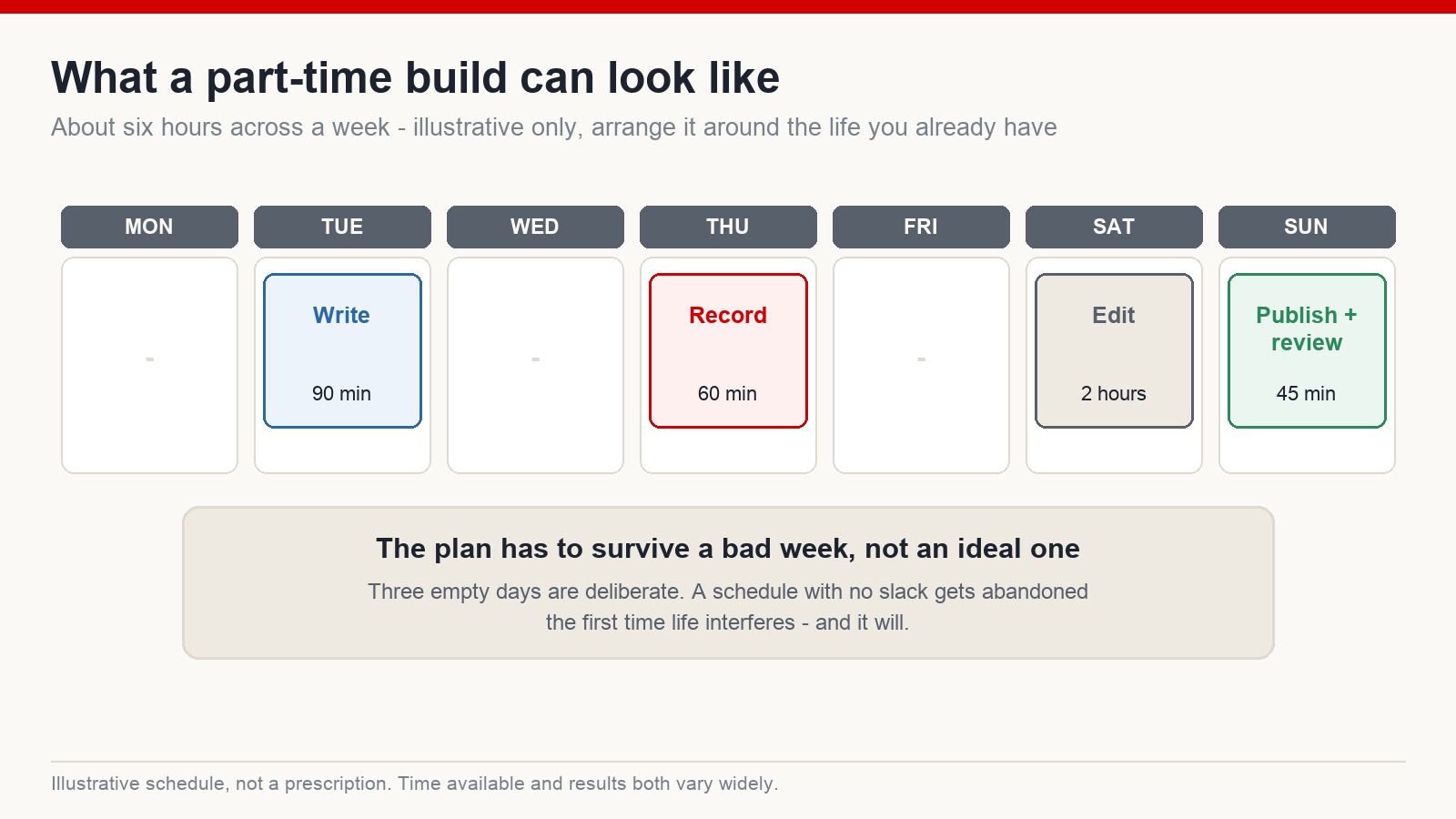
Nobody with a full life is going to sustain a plan built for someone with empty days. So build one that survives a bad week rather than an ideal one.
Roughly six hours across a week is workable: one evening to write, one shorter session to record, a longer block at the weekend to edit, and a short slot to publish and review. Three days with nothing on them at all.
Those empty days are the important part. A schedule with no slack gets abandoned the first time life interferes, and life always interferes. The version that keeps running is the one that assumed it would.
About running more than one channel
Once one channel is genuinely working, people naturally ask about a second. It is a real approach and worth being clear-eyed about.
Adding channels multiplies the work rather than duplicating the results. Each one needs its own subject, its own audience and its own production rhythm, and each one can fail independently. It also multiplies your exposure to policy changes and to your own quality slipping across all of them at once.
The order matters enormously. One channel that works, running on a routine you could hand to somebody else – then, maybe, a second. In the other order it is simply a way of being mediocre in several places at the same time.
Courage is not the absence of fear
The man I described did not stop being afraid before he started. He was afraid, he had bad nights about it, and he did it anyway. That is the only version of courage that is available to anyone; the version where the fear goes first does not exist.
What he avoided was more specific than failure. He avoided the particular ending where you spend the last stretch of a career wondering about a thing you never tested. Plenty of people stay in the safe version for another year, then three, then ten, and the question just gets more expensive to answer.
What I cannot promise you
I am not going to tell you a channel will change your circumstances, because for many people it will not. Audiences are unpredictable. Some serious, well-made channels stay small for years. Platform rules change, thresholds change, and nothing about this is a reliable income plan or financial advice.
What I will say is narrower and, I think, true. The decision that matters is not whether you pick correctly at the start. It is whether you begin at all, because everything you learn on the way is yours regardless of how the channel turns out. And age turns out to be a much smaller variable than the one nobody mentions: how many hours a week you can genuinely protect.
Frequently asked questions
Am I too old to start a YouTube channel?
There is no age at which the platform stops showing your videos to people. What actually constrains a later start is available hours and comfort with new software, and both of those are workable. Experience in a subject is an asset a younger creator has to go and acquire.
Do I need to appear on camera?
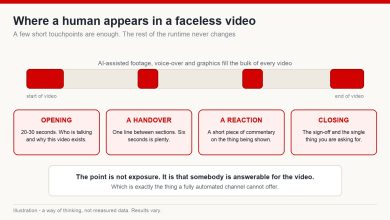
No. Plenty of channels are built without ever showing a face, using narration, footage, graphics or screen recordings. That removes the “looking foolish in public” objection almost entirely for people who feel it strongly.
How long before a channel can earn anything?
It varies enormously and nobody can give you a schedule. Monetisation programmes have thresholds that some channels reach in months, others never reach at all. Treat any specific timeline you are offered as a sales pitch.
Should I quit my job to do this properly?
No. Build it alongside stable income. The job pays the bills while the skill is being built, and removing financial pressure from the early period makes better decisions, not worse ones.
How many hours a week do I actually need?
Fewer than people assume, but they have to be consistent. Six protected hours a week beats twenty hours in one enthusiastic month followed by nothing.
If a defined sequence would help more than working it out alone, that is what we build at mmoyoutube.com for English-language channels. No promises about outcomes – only a clearer way to spend the hours you have.