Naming, Titles and Niche: Building a YouTube Channel as a System
For a while I believed that publishing enough videos would eventually force the recommendation system to notice me. Thirty uploads later, growth was essentially flat.
That was when the actual lesson landed. YouTube does not reward the hardest worker. It rewards whoever understands the system they are working inside.
Channels that grow quickly tend to combine two things: they are legible to the algorithm, and they understand the person watching. One without the other stalls. What follows is the whole structure – naming, titles, keywords, niche – treated as one system rather than a list of tips.
Why the system beats the video
Most people optimise a single upload. Meanwhile the platform is reading something much larger: the channel name, the topic, the content itself, the thumbnails, the titles, the publishing rhythm, and how viewers behave once they arrive.
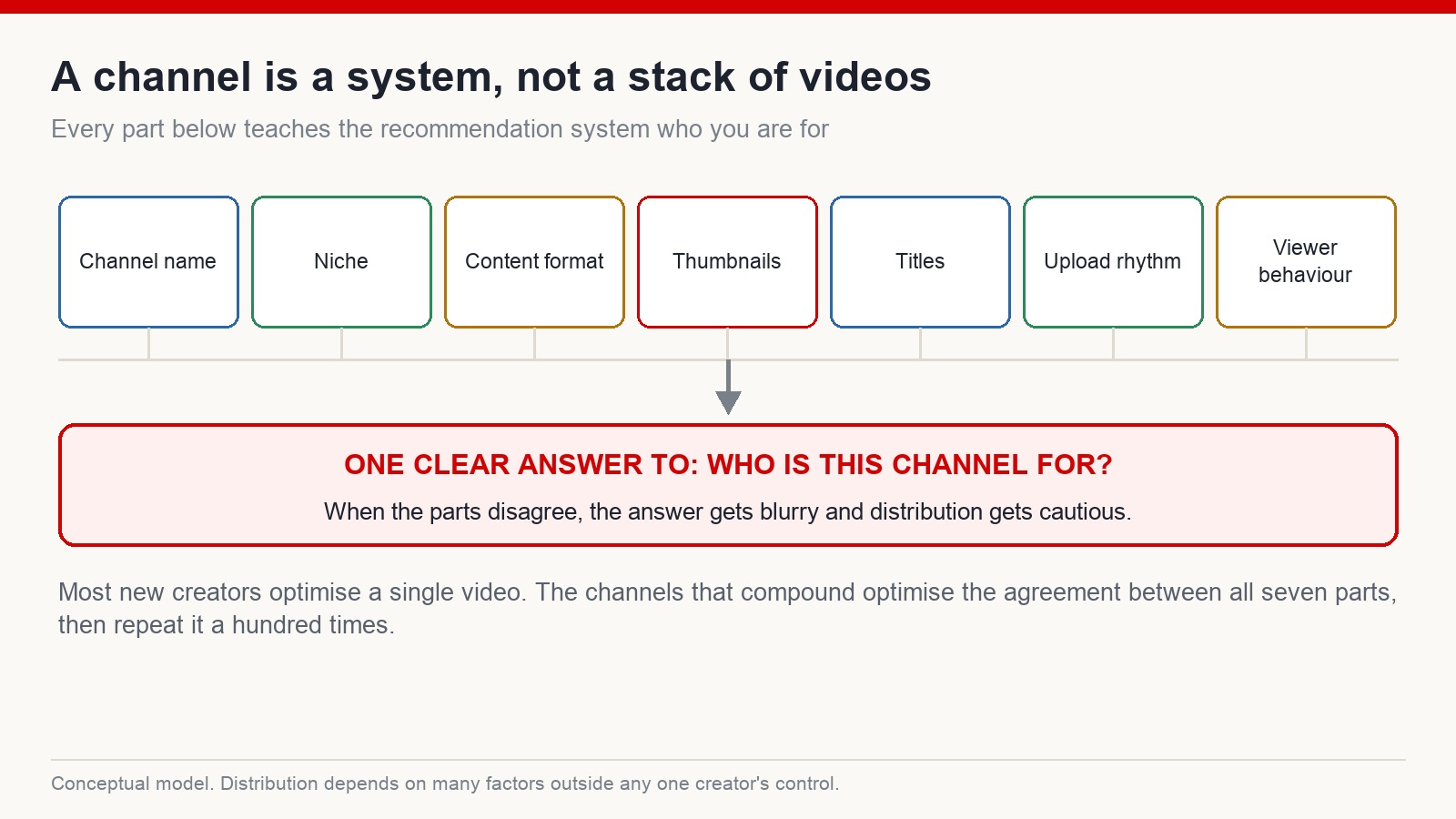
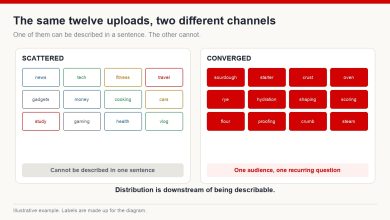
When those parts agree with each other, the system works out very quickly who your audience is. When they disagree – a name pointing one way, thumbnails another, an upload schedule suggesting a third – the answer stays blurry, and blurry channels get distributed cautiously.
That is the real reason some new channels move fast while others with equal effort do not. It is agreement, not volume.
Naming the channel
A channel name is not only branding. It is also the first thing that suggests what the channel is about, to viewers and to the system alike.
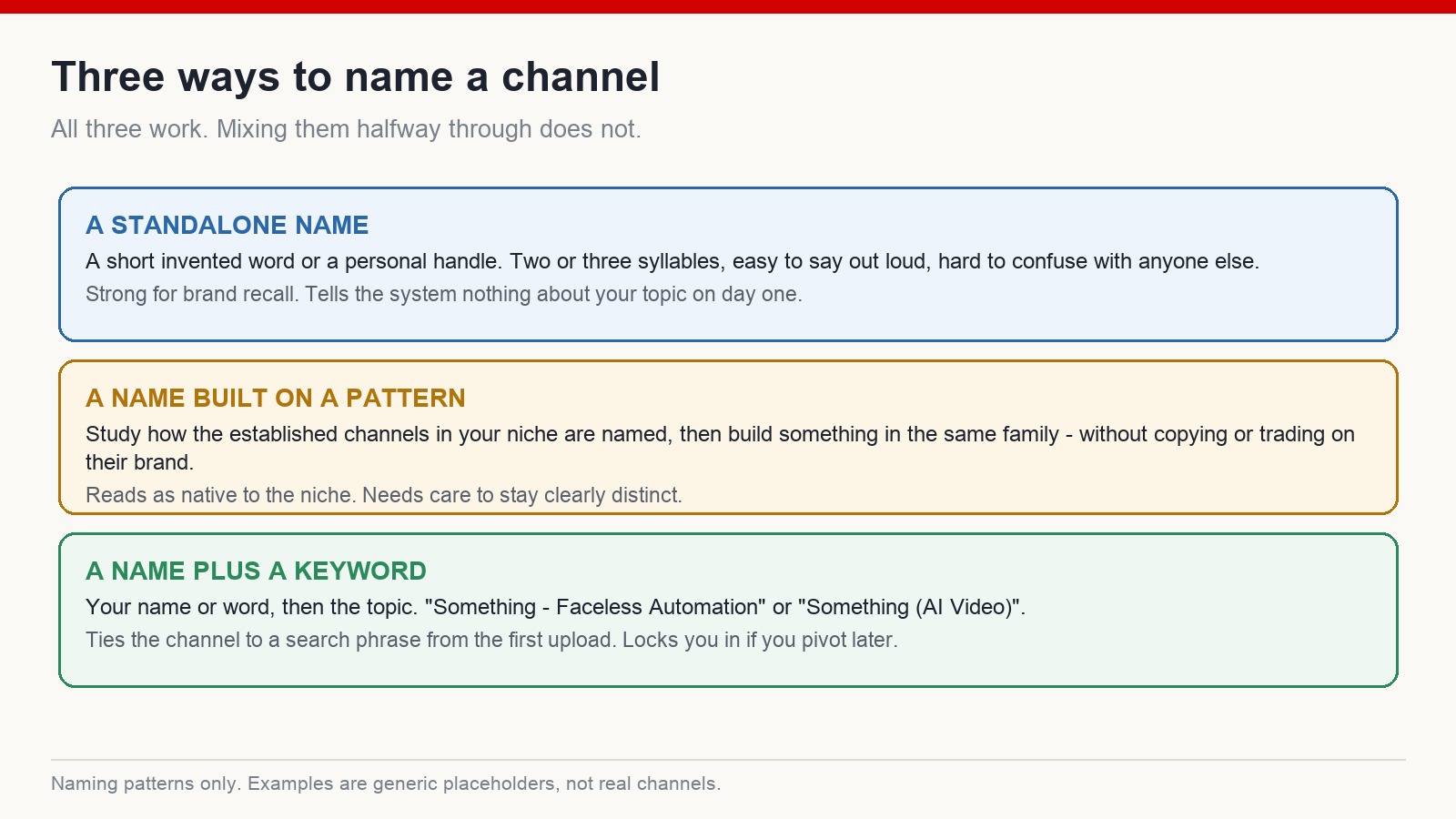
Three approaches that work
A standalone name. A short invented word or a personal handle. Two or three syllables, easy to say out loud, hard to confuse with anything else. Strong for recall; tells the system nothing about your topic on day one.
A name built on a pattern. Study how established channels in your niche are named, then build something in the same family. Not a copy, and nothing that trades on someone else’s brand – the goal is to read as native to the niche while staying clearly distinct.
A name plus a keyword. Your word, then the topic, in the form of “Something – Faceless Automation” or “Something (AI Video)”. This ties the channel to a search phrase from the very first upload. The cost is that it locks you in if you later want to pivot.
A few practical rules
- Keep it to two or three words
- Make it easy to say and easy to spell after hearing it once
- Write it identically everywhere – one capitalisation, one spelling, every platform
That last one sounds trivial and is not. Inconsistent presentation of the same name reads as careless, and carelessness is the one impression you cannot afford while a viewer is deciding whether to subscribe.
The majority of the channel is the channel
A channel is not evaluated on one video. It is evaluated on the whole picture, which produces a rule worth internalising: if most of your uploads are consistent, durable and aimed at the same audience, everything else you build sits on solid ground.
In practice that means a rotation. A common one is four foundation videos to one that chases something currently getting attention. The foundation keeps the channel legible; the fifth gives you a controlled way to reach new viewers without changing what the channel is.
Using AI without hollowing out the channel
AI saves a genuinely large amount of time – drafting, translating, narrating, assembling. Used as support, it is a straightforward advantage.
Used as a replacement for perspective, it produces videos that are technically fine and completely forgettable. Audiences have become good at detecting content with nobody behind it, and they leave.
And if a sequence was generated, say so. Transparency about what is real and what is illustration is how trust survives contact with these tools.
Titles: two jobs, not one
A title has to attract a click and match an existing intent. Miss either and the video underperforms for entirely different reasons.
Emotional titles – “the mistake that cost a channel everything”, “what a hundred days of testing actually taught me” – tend to earn strong click-through from the recommendation surfaces, because they promise a story.
Search-intent titles – “how to start a channel from zero”, “how to script a video with AI” – earn steadier traffic over a longer period, because people go looking for them deliberately.
You need both kinds in the library. A channel made only of emotional titles has no floor when recommendations go quiet; a channel made only of search titles rarely gets picked up and pushed.
The three keyword layers behind one video
A video that performs is usually built on three layers, each narrower than the last.
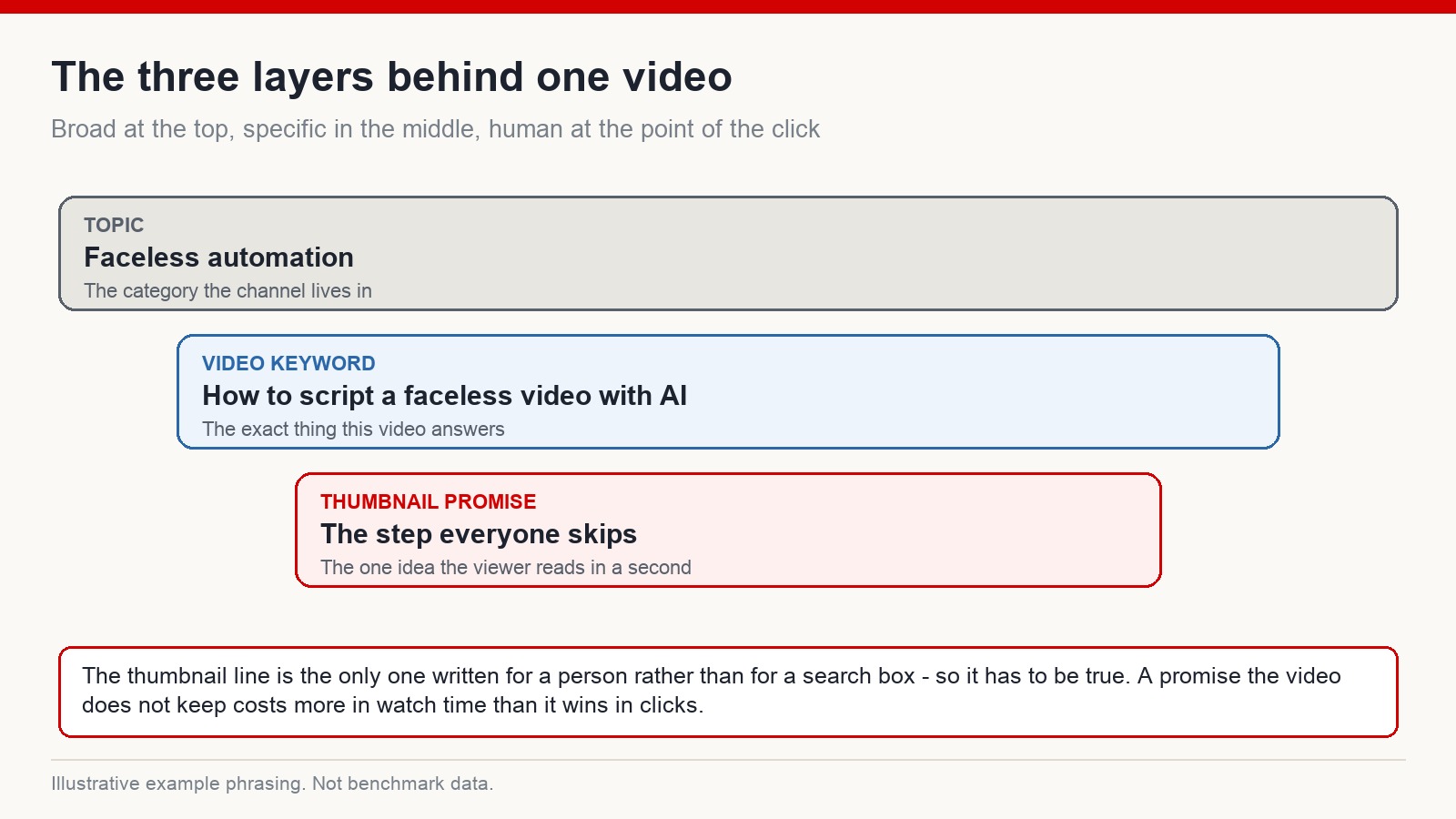
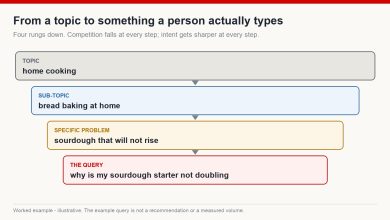
The topic is the category the channel lives in – broad, and shared with everyone else in the space. The video keyword is the exact thing this particular video answers, and it is where the searchable demand actually sits. The thumbnail promise is the single idea a viewer reads in about a second before deciding.
That third layer is the only one written for a human rather than a search box, which is exactly why it has to be true. A promise the video does not keep buys a click and loses the watch time, and watch time is the more expensive currency.
Building for higher-value ad markets
One of the larger differences between markets is revenue per thousand views. Advertisers in English-speaking countries – along with markets like Germany and Japan – bid considerably more for attention than advertisers in low-cost markets, and creators expand into those audiences for that reason.
AI has made the expansion far more practical than it used to be: translating titles, localising the script rather than merely translating it, generating subtitles, producing narration in another language. The language barrier is now a production problem rather than a wall.
Two things stay true regardless. The content still has to match what that audience actually wants – localisation is not the same as relevance. And the difference in ad rates varies by topic, season and format, so treat it as a multiplier on a working channel rather than as a plan on its own.
Numbers in titles, used honestly
Titles built around a count – three techniques, five mistakes, seven steps, ten ways – tend to stand out, because the viewer immediately knows the shape of what they are getting.
The condition is that the number has to be real. If the title says seven, the video contains seven, and each one is worth the time. Inflating a count to win a click is the same trade as an inflated thumbnail: cheap now, expensive later.
Reading competitors for ideas
Analyse rather than copy. The process I use:
- Pick a channel currently growing in the niche – not just a large one, a live one
- Watch ten to twenty of its strongest videos
- Write down every topic that repeats
- Note how the titles are constructed
- Study what makes the thumbnails readable at small sizes
- Find what is missing – the question they keep circling and never answer
That last line is where your version comes from. The gap in someone else’s coverage is usually more valuable than anything in it.
The niche process, condensed
If I were starting again tomorrow: find the established channels in the space. Analyse their best-performing videos. Identify the topic that repeats most. Then look at the small channels that are climbing fast, because they show you what is working now rather than what worked three years ago. Then build your own system rather than reproducing theirs.
What this adds up to
Success on YouTube rarely arrives as one video. It arrives as a structure that keeps producing viable videos.
A clear position. A consistent name. Sensible keyword layers. Content aimed at a defined audience. Thumbnails that earn the click honestly. Titles that match real intent. A repeatable way of researching the niche. With those in place, every new upload starts from a better position than the last one did.
Do not try to make one video with a million views. Build the thing that can make a hundred good ones.
Does the channel name affect SEO?
It helps, mostly through recognisability and consistency with your topic. But content, viewer satisfaction and topical consistency matter far more for whether videos get recommended.
Should I just chase viral videos?
No. A viral video can grow a channel fast and still leave you with an audience that does not want anything else you make. A balance of evergreen and timely content holds up better.
Can AI replace the creator entirely?
Not for the part that matters. It is a strong assistant for ideation, drafting, translation and editing. Perspective, judgement and the ability to connect with an audience are still what distinguish one channel from a thousand others.
If you want a system rather than a run of luck, start by understanding how the platform reads a channel, then test, measure and improve deliberately. Over time, consistency turns into the advantage that is hardest for anyone else to copy.
The full process I use for building faceless channels for international audiences is at mmoyoutube.com. Results vary, and platform policies change.