Why A Careful Multi-Account Setup Is Still Fake Engagement
Somewhere in every creator community there is a version of this pitch. It is presented as the careful, professional way to give a new video its first push: a set of separate email accounts, each in its own isolated browser profile, on its own connection. You use them like a normal person for a while first – watch unrelated videos, subscribe to a few channels, leave the occasional comment – so the accounts look lived-in. Then, when you publish, those accounts watch the video properly, leave a few thoughtful comments, and start a conversation for real viewers to join.
It is always framed as the responsible option. Not bots. Not bought views. Nothing crude. Just a clean, careful nudge.
I want to be direct about this, because I have watched people spend months building these setups: what I have described above is fake engagement, in full, by YouTube’s own definition. The care that goes into it changes nothing about which rule it falls under. I have been making YouTube content since 2017 and this is the single most expensive mistake I see people make deliberately.
What the policy actually covers
YouTube’s spam and deceptive practices policy defines fake engagement as views, likes, comments or subscribers that do not come from real people with genuine interest. That definition is about the source of the interaction, not the method used to produce it, and not how convincing it looks.
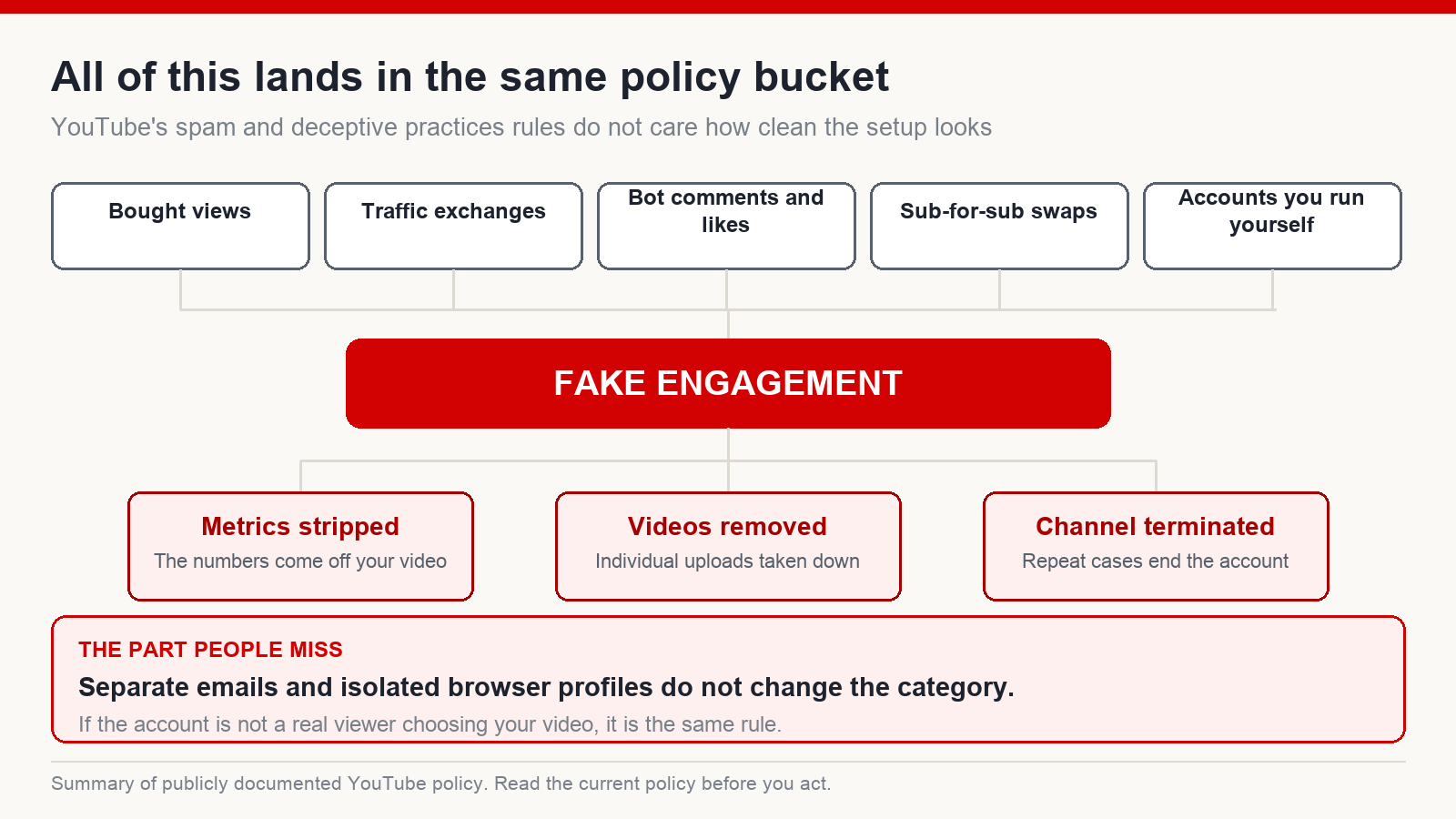
So bought views land there. Traffic exchanges land there – a view you received because you watched somebody else’s video to earn a credit is not a person who wanted your video. Sub-for-sub swaps land there. Bot comments land there. And accounts you personally own and operate land there too, because you are not a viewer who chose the video; you are the channel, wearing a different hat.
The documented consequences run in three stages: the affected metrics are removed, individual videos come down, and repeat cases end the channel. None of that requires anyone to prove intent. The metrics simply stop being counted, and if the pattern continues, the account goes.
“But my setup is isolated”
This is the objection I hear every time, and it misunderstands what is being detected.
Isolation is an argument about detection. It says: they will not be able to link these accounts to me. Even if that were true – and platform-scale behavioural analysis is a great deal better at this than most people building these systems assume – it has no bearing on the rule. The rule is not “do not get caught operating multiple accounts.” The rule is that engagement must come from real people with genuine interest. Separate emails do not manufacture genuine interest. Isolated browser profiles do not manufacture genuine interest. A month of warm-up browsing does not turn an account you control into a person who wanted to watch your video.
There is a practical dimension too. These systems fail as a group rather than one at a time. Shared recovery addresses, shared payment details, shared connections, the same browsing pattern repeated across accounts – people building at scale end up with a network that has a common fingerprint, and when one part of it is flagged the rest is sitting right next to it. That is why the failure mode people describe is rarely “one video lost its views.” It is usually several channels at once.
The argument that holds even if nothing is ever detected
Set the policy aside for a moment. Assume, generously, that you get away with it forever. It is still a bad trade, and this is the part that gets under-explained.
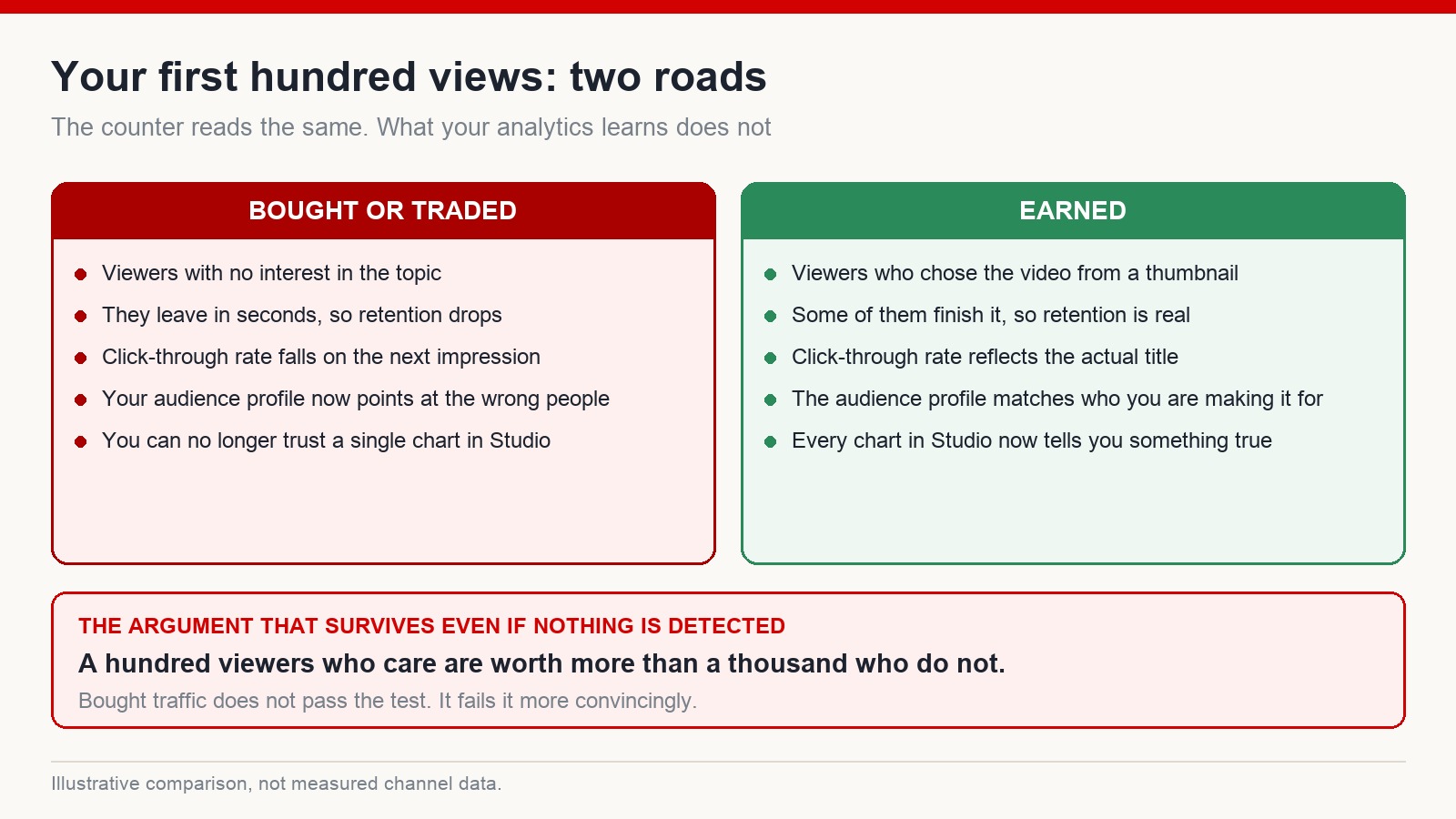
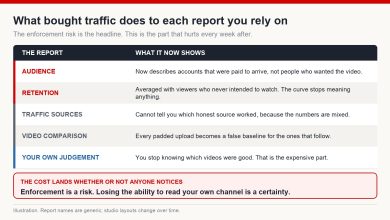
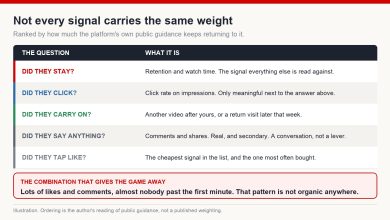
YouTube decides what to do with a new video by showing it to a small group and watching what they do. Every early viewer is a data point in that test. Put viewers into it who had no interest in the topic and you have not helped the test – you have corrupted the sample. They leave in seconds, so retention drops. They did not choose the thumbnail, so the click-through figure describes nothing real. Your audience profile now points at the wrong people, which shapes who the video is shown to next.
And then there is the cost you keep paying: you can no longer trust a single chart in your own analytics. You have removed the only instrument that tells you whether the work is any good. A hundred viewers who genuinely wanted the video will teach you more than a thousand who did not – and the thousand will actively mislead you.
What people are half-remembering when they say the first hours matter
The underlying observation is not wrong. The first day does matter, because that is when the sample gets collected. The mistake is concluding that the sample should therefore be manufactured.
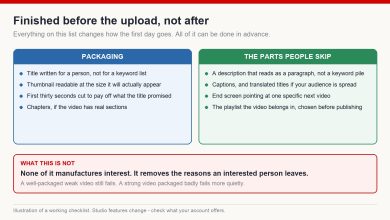
What you can honestly do in that window is unglamorous and it all happens before you publish. Channel setup and niche research do most of the work: knowing precisely who the video is for, so that the small group YouTube shows it to is a group that recognises it. A title and thumbnail that describe the actual video, so the people who click are the people who will stay. An opening that delivers what the thumbnail promised inside the first thirty seconds.
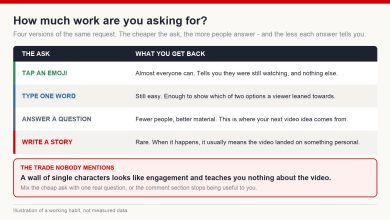
After publishing, the honest options are short. Tell the audience you already have – a community post, a Short that opens a loop the long video closes, a mailing list if you have one. Post the pinned comment immediately, from your own channel account, with a question in it. Answer the comments that arrive, as yourself. Share it where you are genuinely a participant, not where you are a stranger dropping a link.
That is the whole list. It is short because the honest list is short.
If you have already built one of these
Plenty of people reading this will have a setup running right now, because it was recommended to them as best practice. Stopping is straightforward, and worth doing before rather than after something breaks.
Stop using the accounts for anything connected to your channel – today, not after the current video finishes its run. Delete the comments you posted from them; they are the most visible and the most obviously patterned part of the whole thing. Do not “wind it down gradually”, because a gradual taper is still the same activity for however long it lasts. Cancel anything you are paying for that promises views, subscribers or engagement.
Then expect the numbers to correct. Some of your historical figures were never real, and the versions you see afterwards are the ones you can actually work from. Treat the first video published cleanly as a new baseline: whatever it does is what your channel genuinely does, and every decision you make from there is based on something true.
It feels like going backwards. It is the first point at which you are going anywhere at all.
Is it against the rules to run more than one YouTube account?
Owning several channels is normal and fine. Using accounts you control to view, like, comment on or subscribe to your own content in order to inflate engagement is what the policy prohibits.
Does using separate emails and isolated browser profiles make it acceptable?
No. Isolation is an attempt to avoid detection. The policy is about whether engagement comes from real people with genuine interest, and self-operated accounts do not.
What about traffic exchanges where everybody watches each other’s videos?
Same category. The viewer is there to earn a credit, not because they wanted your video, and the retention data those views produce is worse than useless.
What actually happens if a channel is flagged?
Publicly documented outcomes are removal of the affected metrics, removal of individual videos, and termination of the channel for repeated violations. Precise thresholds are not published.
So is there any safe way to give a new video a push?
Only by putting it in front of real people who might genuinely want it: your existing audience, your Shorts, communities you actually belong to. Anything that involves accounts you control or traffic you paid for is the same rule again.
The channels that last
The ones still publishing years later are not the ones that were best at working around the system. They are the ones that understood their audience most precisely – which is a slower thing to build and cannot be bought, borrowed or simulated with a set of warmed-up accounts.
If you want the process for building a faceless channel for an English-speaking audience without any of this, that is what we work through at mmoyoutube.com. Policies change, so check YouTube’s current spam and deceptive practices policy directly before you act on anything you read about this subject, here or anywhere else.