Title Teardown: Turning a Proven Title Into Keywords You Can Use
Viral is not the same as lucky
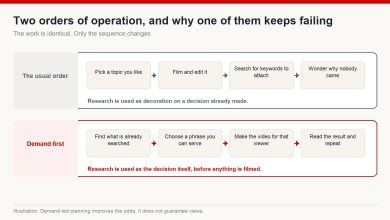
New creators tend to assume that videos with enormous view counts got there by accident. Some did. Most were built on phrases the market had already proved, packaged in a way that had already been tested by somebody else, and the creator behind them was not guessing.
The technique I keep coming back to for this is unglamorous: take a title that is already working, pull it apart, and find out which of its component phrases are carrying actual demand. It takes about twenty minutes and it turns “what should I make a video about” into a question with evidence attached.
Choose the right title to take apart
This step decides whether the rest is worth doing, and it is the step people rush.
Do not pull titles from videos with a few thousand views on a channel that has never had a hit. Nothing about that title has been validated; you would be copying a guess. Look instead for videos that clearly travelled well beyond their own channel — where the view count is far above what that channel normally gets, and where the format has been repeated since, which is the sign that it kept working rather than fired once.
One caution before you start. A video can travel because of a moment rather than a phrase. Anything attached to a news cycle, a release or a passing internet argument has a view count that reflects timing rather than durable demand. Those titles teach you nothing you can reuse next month. What you want is a video that has kept accumulating views over a long stretch, because that is what a phrase with a stable audience behind it looks like.
Take the title apart into three kinds of phrase
Here is where most explanations of this technique stop short. They tell you to break the title into fragments and check the demand on each. But the fragments are not equivalent, and treating them as one list is what produces those strange titles that are technically full of keywords and appeal to nobody.
Take a title like Why Quiet People Are Dangerous. Break it apart and you get three different things.
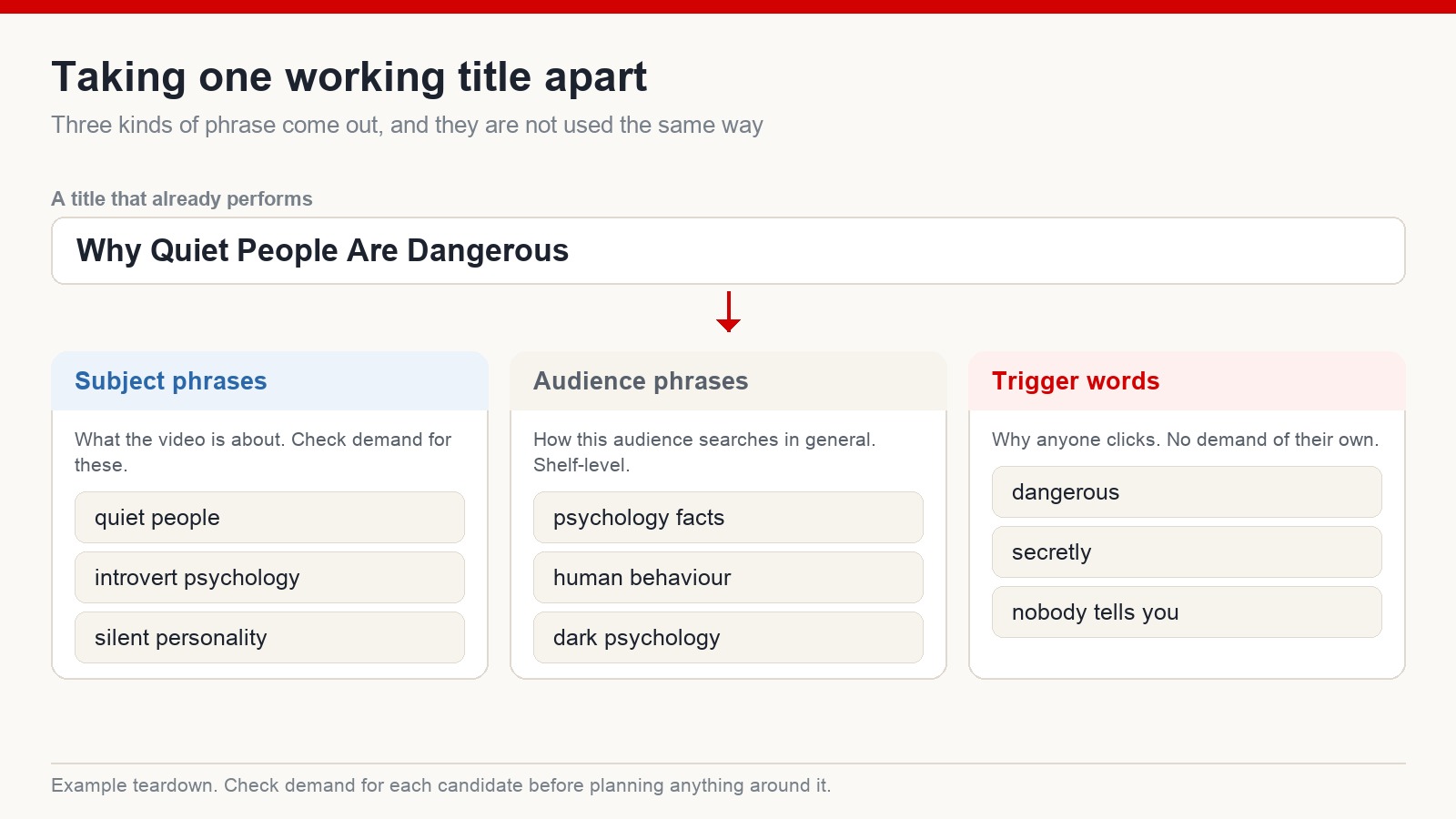
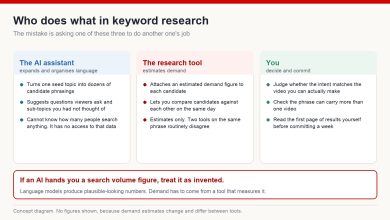
Subject phrases describe what the video is actually about: quiet people, introvert psychology, silent personality. These are your real candidates. They can be checked for demand, they can be built on, and one of them may end up being the phrase your next ten videos sit around.
Audience phrases are how this audience searches in general: psychology facts, human behaviour, dark psychology. Broad, heavily contested, and not usually worth targeting head-on from a small channel. Their value is that they tell you what shelf you would be standing on.
Trigger words are the ones doing the emotional work: dangerous, secretly, nobody tells you. They have no meaningful search demand of their own and checking them in a research tool tells you nothing. They belong to packaging, not to research.
Mixing those three categories together is exactly how people end up “researching” the word secretly and being confused by the result.
Check the subject phrases, and filter properly
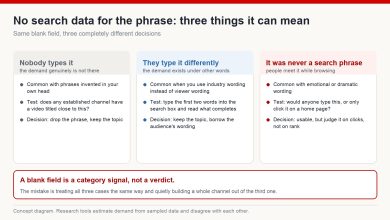
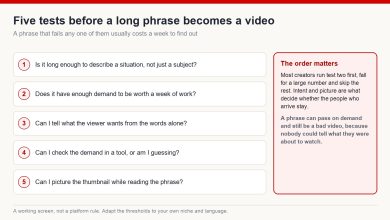
Now the subject phrases go into whatever research tool you use. Read four things for each: roughly how many people look for it, how contested it is, whether interest is rising or falling, and what neighbouring phrases the tool suggests that you had not thought of.
The filtering mistake here is reaching for the biggest number. Heavy demand is heavy demand for everyone, including channels with years of history and back catalogues you cannot match yet. A newer channel usually does better one step down, where enough people are looking to sustain a video but the existing answers are thinner.
Where exactly that band sits is not a constant, and I would be sceptical of anyone who quotes you a fixed range as though it were a rule. It depends on the language, how mature the subject is, and how much history your channel already has. In my experience of building keyword sets in low-demand niches, a surprising number of obvious-sounding phrases turn out to be too thin to carry a video at all, and you only discover that by checking each one rather than assuming.
Two minutes on the search results page tells you more than any composite score: search the phrase, read the first page, and ask how many strong channels are already answering it and how old their answers are.
The trigger words, used honestly
The subject phrase gets you found. It does not, on its own, make anybody look now. That is what the third group is for.
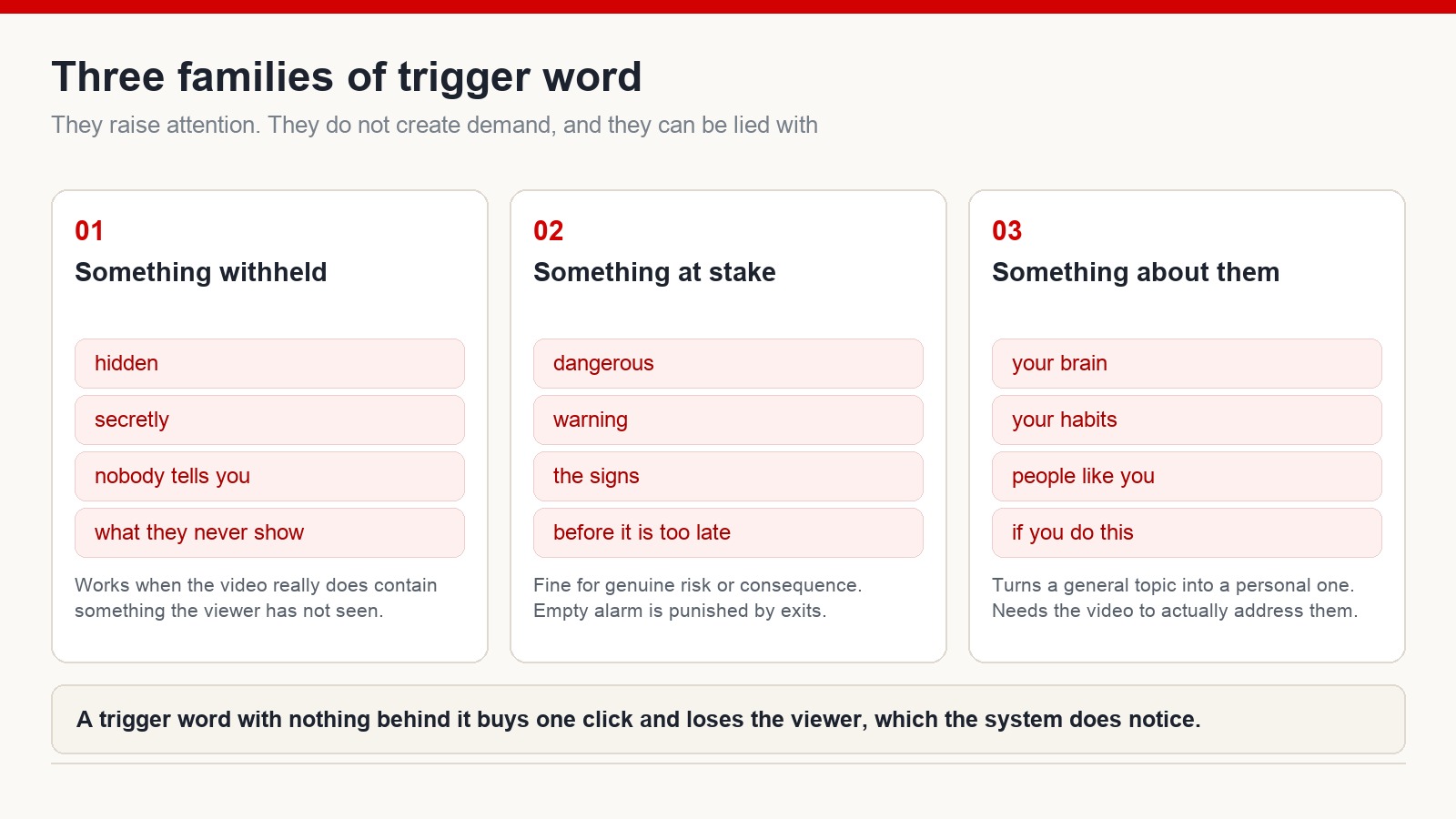
Most triggers that work fall into three families. Something withheld — hidden, secretly, nobody tells you. Something at stake — dangerous, warning, the signs. Something about the viewer — your brain, your habits, people like you.
They are strong, and they are borrowed credibility. A trigger word with nothing behind it buys a single click and loses the viewer within a minute, which is a pattern the platform reads accurately. Use them where the video genuinely contains something withheld, or a genuine consequence, or something that really does apply to the person watching. Otherwise you are trading long-term distribution for one afternoon of clicks.
The formats that keep reappearing
Once you have taken apart a few dozen titles in one niche, the same shapes turn up repeatedly. Three that keep working in explanatory subjects:
- [Number] [subject] facts about [group] — the number sets expectations about length and structure before anyone clicks.
- Why you always [behaviour] — turns a general topic into something about the viewer, which is why it holds attention past the first line.
- The hidden [subject] of [thing] — promises something beneath the obvious, and obliges you to actually have it.
These are containers, not scripts. Pour a phrase nobody searches into a perfect container and you still have a video nobody finds.
The step almost nobody takes: read the comments
After you have taken the title apart, go back to the video and read a few hundred comments.
The title told you what got people to click. The comments tell you what they actually wanted, which is frequently something slightly different. People repeat the same questions, correct the video on the same points, and describe the same situation from their own lives. Each of those is a phrase your audience uses naturally — and a candidate for the next video, arriving with proof that people were thinking about it.
This works especially well on faceless channels, where you have no personal following to fall back on. Without a face, your title and thumbnail carry the entire relationship, so the vocabulary your audience already uses is worth more than any wording you would invent.
Frequently asked questions
Does this work for short-form as well?
Partly. Short-form depends far more on the opening seconds than on search, so the subject phrases matter less and the trigger words matter more. The teardown still helps you understand why a piece of packaging worked.
Which research tool should I use?
Any of the mainstream ones will do for this. They disagree with each other, so use them to compare phrases against each other rather than treating one figure as fact.
Is copying a competitor’s title ever acceptable?
No. Aside from the obvious problem, a copied title arrives with none of the trust the original earned and caps you at being a lesser version of an existing channel. Take the structure, not the sentence.
How many titles should I pull apart before deciding anything?
Enough that you see repetition rather than coincidence. A phrase appearing across several successful videos in a niche is evidence; one appearance is an anecdote.
Which niches suit this best?
Anything explanatory or story-driven, where the title has to do the persuading — psychology, history, finance basics, mysteries, how-things-work. It works less well where discovery is driven by the thumbnail alone.
The market has already left its notes
The point of a teardown is not to end up with somebody else’s title. It is to understand why viewers clicked on it, which is a considerably more portable piece of knowledge.
Once you can see which part of a title carried the demand, which part described the audience and which part supplied the reason to look now, you stop inventing titles from nothing. You start assembling them from parts that have already been tested by an audience much larger than yours — and then you write the angle only you can write.
None of this guarantees anything. Plenty of well-researched titles go nowhere, because packaging is one factor among many and the platform changes constantly. What it does prevent is the most avoidable failure of all: spending a week on a video built around a phrase nobody was ever looking for.
If you want the whole process for building a faceless channel aimed at English-speaking audiences, that is what I teach at mmoyoutube.com.