Writing YouTube Titles for an Audience That Does Not Share Your Language
There is a specific kind of channel I get asked to look at a lot. The voiceover is in English. The footage would pass on any international channel. The editing is clean, the subject is chosen for a US or UK audience, and real money has gone into it.
Then you look at the title, and it was written in the creator’s own first language and run through a translator on the way out.
Everything above the title was built for one audience. The title was built for a different one. That single mismatch is enough to stall a channel that is otherwise doing everything right, because the title is where YouTube learns who the video is for, and where a stranger decides whether it is for them.
I have spent since 2017 building faceless channels aimed at English-speaking audiences, and getting the YouTube title keywords right is the part I would fix first on almost any of these channels. Here is how I think about it.
A Translated Title Is Not a Searched Title
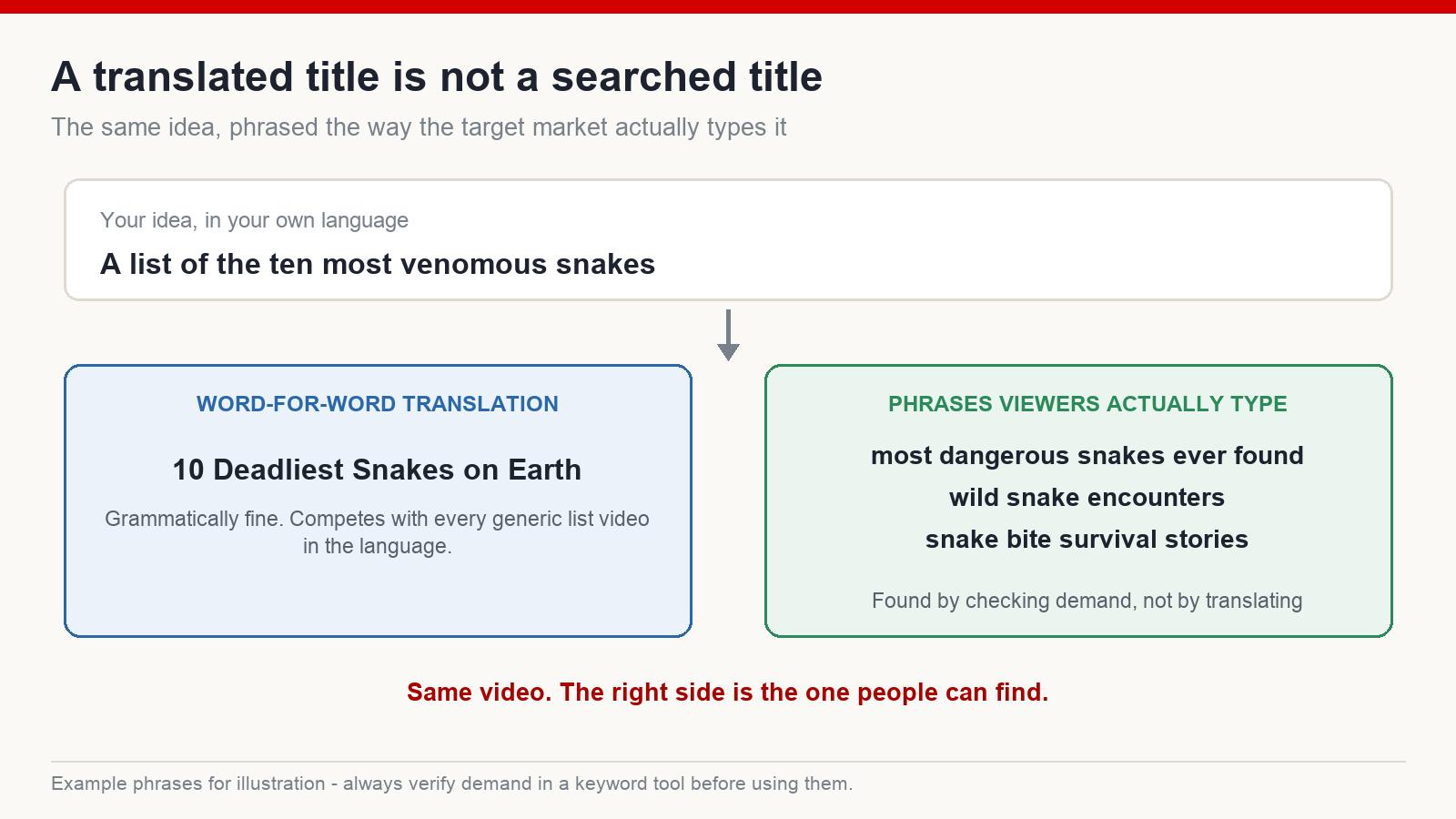
Say the idea for the video is a countdown of the world’s most venomous snakes. Translate that directly and you land on something like 10 Deadliest Snakes on Earth.
Nothing is wrong with that sentence. It is grammatical, it is clear, and it is competing with every other generic list video written the same way.
Spend twenty minutes in a keyword tool instead and you find people reaching for different phrasings entirely: most dangerous snakes ever found, wild snake encounters, snake bite survival stories. Same subject, different doors. Those phrases were not produced by translating anything. They were produced by looking at what people type when nobody is watching.
That is the whole distinction. Translation converts your sentence into another language. Research finds the sentence the audience was already using. Only the second one is a title strategy.
Two Layers of Words in One Title
Strong titles in English-language niches almost always carry two kinds of words, doing two different jobs.
User keywords — the words that describe the thing
These are the subject words your audience genuinely searches with. Wildlife. Nature. Mega machines. Healthy aging. They are unglamorous and they are the reason the video gets shown to the right people at all.
Ideal keywords — the words that carry the feeling
These are the charged words: incredible, amazing, hidden, peaceful, unbelievable. On their own they say nothing. Attached to a subject, they tell a viewer what the next ten minutes will feel like.
Put both layers into one line and you get something like Peaceful Wildlife Moments | 10 Incredible Forest Encounters. The subject is legible at a glance, and there is still a reason to click it today rather than scroll on.
Drop either layer and you know exactly what breaks. Subject words alone read like a filing label. Feeling words alone leave both the viewer and the recommendation system guessing what the video is even about.
Numbers Buy You the Half-Second
Titles carrying a digit tend to get noticed in a crowded feed — 5 Hidden Places, 7 Wildlife Secrets, 10 Amazing Animals, 50 Incredible Machines. The number creates a stop-scroll moment: the eye lands on it, and the rest of the title gets read in the pause that follows.
The number also tells the viewer the shape of what they are about to watch, which lowers the cost of clicking.
One rule though, and it is not negotiable: pick the number because it matches the video, not because it looks good. A title promising fifty things over a video containing twelve is not a clever hook. It is a retention problem you scheduled for yourself.
One Video, Several Doors In
Here is the habit that changes how much you get out of a library: stop assuming a video has one keyword.
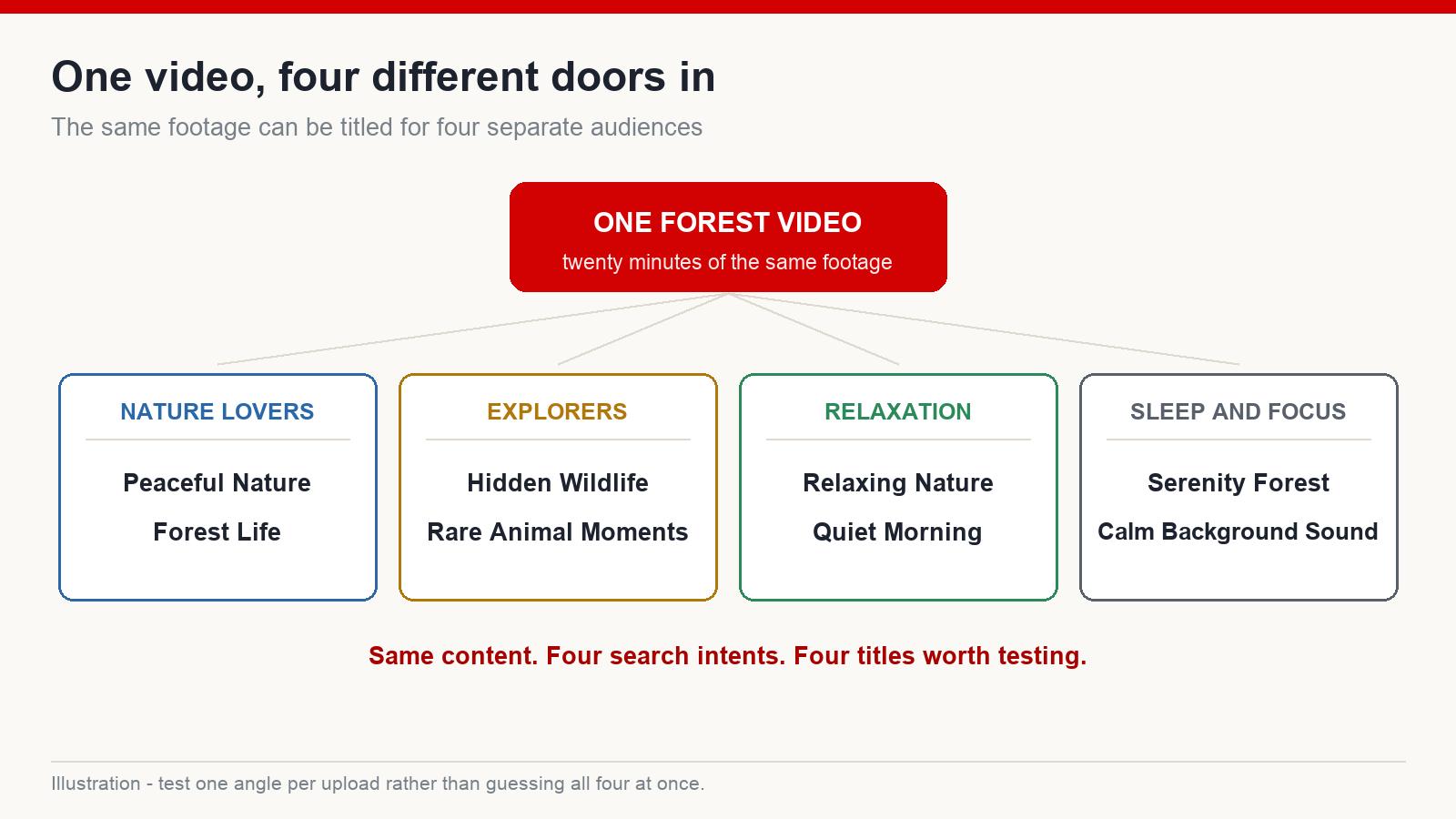
Take twenty minutes of forest footage. Most creators optimise it for animals and stop there. But that same footage answers several different intents, and each one is a different audience arriving for a different reason:
- People who love nature — Peaceful Nature, Forest Life, Calm Wildlife
- People who want to discover something — Hidden Wildlife, Rare Animal Moments
- People looking to unwind — Relaxing Nature, Quiet Morning
- People who want background for sleep or focus — Serenity Forest, Calm Background Sound
Same content. Four search intents. Four titles worth testing across four uploads rather than four ways of saying the same thing once.
This is also where new video ideas come from when a niche feels exhausted. It usually is not exhausted. You have only been entering it through one door.
Build the Keyword Set for the Channel, Not the Video
Optimising each upload in isolation is a slow way to work. The videos never reinforce each other, and the channel never develops a subject the system can recognise.
The alternative is to decide the channel’s keyword set up front — for a nature channel, something like peaceful nature, relaxing forest, wildlife documentary, calm animals, nature sounds — and then write every title from inside that set.
Two things follow. Your videos start supporting each other rather than competing, and a viewer who liked one upload finds the next one recognisable instead of random. Consistency here is worth more than cleverness on any individual title.
It is also worth thinking about phrasing per market. English is not one audience. Some phrasings pull well with a US audience and read as odd to a British or Australian one, and the reverse. If most of your watch time comes from one country, write for the way that country phrases things.
Where AI Helps, and Where It Does Not
AI tools genuinely speed up the boring half of this work. They are good at generating title variations, drafting descriptions, grouping keyword lists, and telling you whether a line reads naturally to a native speaker — which is a real advantage if English is not your first language.
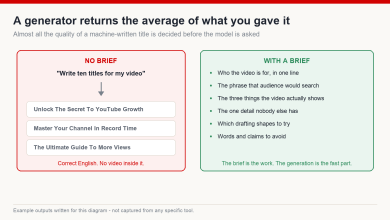
What they cannot do is decide. A model does not know which of your last ten videos held an audience, which phrasing your particular viewers respond to, or whether the title you are about to publish is one your video can actually pay off.
Treat AI output as research to check, not copy to paste. The version that goes live should be one you can defend.
Four Ways This Goes Wrong
- Translating instead of researching. A grammatical title aimed at nobody.
- Stuffing keywords. Six phrases jammed into one line reads as machine output, and a human still has to want to click it.
- Sensational words that do not match the content. The click arrives, the viewer leaves in fifteen seconds, and you are worse off than if nobody had clicked.
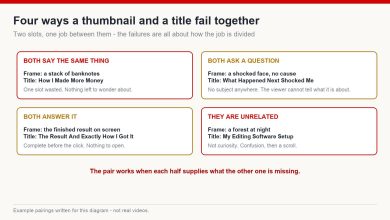
- Promising something the video does not deliver. The most expensive one, because the cost is delayed and lands on the whole channel.
The rule I hold myself to is simple enough to say in one sentence: whatever the title promises, the video pays. Break it and you lose the audience’s trust and the algorithm’s at the same time, and you will not get a notification telling you when it happened.
The Question to Ask Before You Publish
A good title is not decoration on top of the video. It is the bridge between what you made and the people it was made for, and it is the only part of your work a stranger reads before deciding anything.
So before the next upload, do not stop at does this title sound good? Ask the harder version:
If I were a viewer in the US or in Europe, what exactly would I type to find this video?
Then write that phrase down, check whether anyone actually searches it, and build the title around it. Results vary and discovery systems change, but the gap between a video that gets uploaded and one that gets found is very often that single question.
Do I need to be fluent in English to write good titles?
No. You need to understand how your audience searches. Fluency helps with the final polish, and AI tools plus a careful read-aloud check will cover most of that gap. What no tool covers is knowing your audience — that part is yours.
Should I use emotional words in titles?
Yes, when they describe what the video honestly delivers and sit alongside subject words rather than replacing them. A charged word attached to nothing specific is noise.
Should a channel keep one title style?
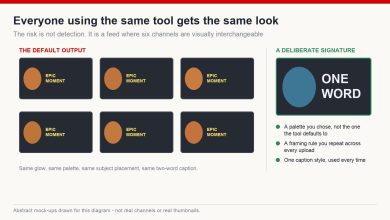
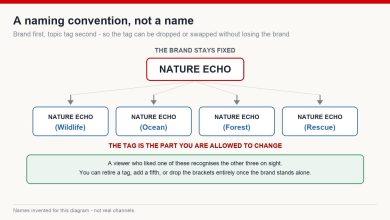
It should. A consistent structure and a consistent keyword set help viewers recognise you in a crowded feed, and help the system understand what the channel is about. Vary the ideas, not the format.
If you want the full version of this — picking the niche, validating the demand behind it, and packaging a faceless channel for an English-speaking audience end to end — that is what I work through at mmoyoutube.com.